
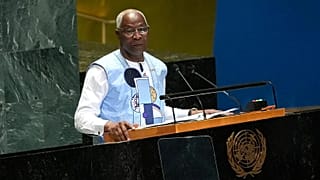

CONAKRY, Guinea — Less than two weeks after being sworn in as Guinea’s new president, Mamadi Doumbouya has reappointed Amadou Oury Bah as prime minister, signaling continuity in governance as the country transitions from military rule to a new constitutional order. The announcement was made Monday evening in a decree read on national television, alongside plans for a broad cabinet reshuffle.
Background: From Junta to Elected Government
Amadou Oury Bah previously served as prime minister for nearly two years under Doumbouya’s military junta. His cabinet resigned last week following Doumbouya’s inauguration, a procedural step to allow the new president to form his government.
Doumbouya’s election in December 2025 marked a turning point in Guinea’s political trajectory. Four years earlier, he had seized power by toppling the country’s first freely elected president, Alpha Condé, amid widespread discontent over corruption and governance failures. At the time, Doumbouya vowed not to run for president himself.
That pledge shifted in September 2025, when voters approved a new constitution in a referendum that allowed junta members to contest elections. Doumbouya subsequently stood for office and won a seven‑year term, consolidating his position as Guinea’s head of state.
Oury Bah’s Return
The reappointment of Oury Bah reflects Doumbouya’s preference for stability and continuity. Known as a pragmatic technocrat, Oury Bah has been a steady hand in government during a period of political turbulence. His return to the premiership suggests Doumbouya values his experience and administrative skills as Guinea embarks on a new phase of governance.
Observers note that Oury Bah’s reappointment may also reassure international partners, who have been closely monitoring Guinea’s transition. His reputation as a moderate figure could help balance Doumbouya’s assertive leadership style.
Structure of the New Guinea’s Government
In the same decree, Doumbouya announced that the new government will consist of 27 ministries and two secretaries‑general. Appointments to these positions are expected in the coming days, with speculation mounting over which figures will be included.
The expanded cabinet reflects Doumbouya’s ambition to consolidate power while addressing Guinea’s pressing challenges, including:
- Economic diversification beyond mining, particularly in agriculture and infrastructure.
- Youth unemployment, a major source of frustration in a country where the majority of the population is under 30.
- Institutional reform, aimed at strengthening governance and reducing corruption.
- Regional diplomacy, as Guinea seeks to rebuild ties with ECOWAS and other partners after years of strained relations under military rule.
Political Implications
Doumbouya’s decision to reappoint Oury Bah underscores his desire to project continuity while signaling that Guinea’s transition will not be a radical break from the junta era. Critics argue that this raises questions about whether the new government will truly embody democratic renewal or simply entrench existing power structures.
Still, the move may help Doumbouya consolidate legitimacy at home and abroad. By retaining a familiar figure at the helm of government, he can focus on broader reforms while ensuring day‑to‑day governance remains stable.
Regional Context
Guinea’s developments come against the backdrop of political upheaval across West Africa, where coups in Mali, Burkina Faso, and Niger have reshaped the regional landscape. Unlike those countries, Guinea has now transitioned to elected civilian rule, albeit under the leadership of a former junta chief.
ECOWAS and international observers will be watching closely to see whether Doumbouya’s government delivers on promises of reform and inclusivity. The composition of the new cabinet will be a key indicator of how broad‑based his administration intends to be.
Outlook
Amadou Oury Bah’s reappointment as prime minister marks the beginning of Guinea’s new political chapter under President Doumbouya. While the move suggests continuity, the coming weeks will reveal whether the government’s expanded structure translates into meaningful change.
For Guineans, expectations are high. After years of political instability, they are looking for improved governance, economic opportunity, and a genuine commitment to democratic principles. Whether Doumbouya and Oury Bah can deliver remains the central question as Guinea embarks on its next seven years.