

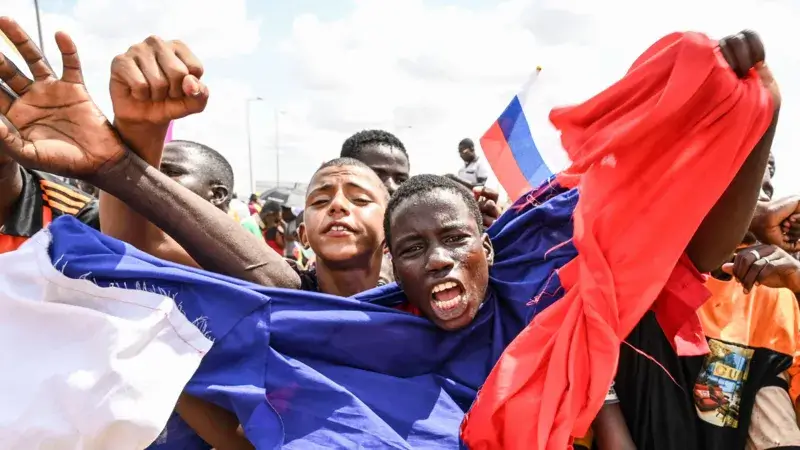
BAMAKO/OUAGADOUGOU/NIAMEY — The United States has announced a dramatic change in its approach to three West African countries — Mali, Burkina Faso, and Niger — whose military governments severed defence ties with France and turned toward Russia. The shift, unveiled by the State Department, reflects Washington’s growing concern over jihadist insurgencies in the Sahel and the geopolitical competition for influence in one of the world’s most unstable regions.
A New Course in Mali
The State Department confirmed that Nick Checker, head of the Bureau of African Affairs, will visit Mali’s capital Bamako to convey “respect for Mali’s sovereignty” and chart a “new course” in relations. The announcement explicitly acknowledges past “policy missteps” and signals a willingness to cooperate with Mali’s allies Burkina Faso and Niger on “shared security and economic interests.”
Absent from the agenda are the traditional U.S. priorities of democracy and human rights. During the Biden administration, military cooperation was halted after coups toppled elected civilian governments between 2020 and 2023. Niger’s ousted president Mohamed Bazoum remains under house arrest.
Trump’s Policy Shift
Since Donald Trump’s return to the White House in 2025, U.S. policy has narrowed sharply. Days after his inauguration, USAID — a key provider of development support — was shuttered in the region. Signals followed that Washington’s focus would be on security and mineral resources, sidelining governance and development.
Senior adviser Massad Boulos articulated the new stance last year: “Democracy is always appreciated, but our policy is not to interfere in the internal affairs of other countries. People are free to choose whatever system is appropriate for them.”
This marks a stark departure from the Biden era, when Gen Michael Langley, then head of U.S. Africa Command (Africom), emphasized good governance and environmental issues as complements to military support.
Russia’s Expanding Role
The policy shift comes as Russia deepens its footprint in the Sahel. Around 1,000 Russian security contractors are deployed in Mali, with smaller contingents in Burkina Faso and Niger. Moscow has also positioned itself as a partner in resource extraction: Niger’s junta seized control of its main uranium mine from French operator Orano and is now lining up Russia as its new partner.
Burkina Faso’s leader Capt Ibrahim Traoré has cultivated a pan‑Africanist image, presenting himself as a champion against “imperialism” and “neo‑colonialism.” His vigorous social media presence has boosted his popularity among young Africans, reinforcing the appeal of military regimes that reject Western models of governance.
Security Concerns
The U.S. shift is driven by mounting fears that the Sahel has become the “epicentre of global terrorism.” According to analysts, the region now accounts for nearly half of the world’s terrorism deaths.
The tri‑border region where Mali, Burkina Faso, and Niger converge is particularly volatile. The Islamic State in the Greater Sahara (ISGS) remains active, staging attacks that destabilize communities and threaten regional capitals. Just last week, gunfire and explosions near Niamey’s airport reminded residents of the scale of the threat.
Washington fears that the loss of government control over vast territories could allow jihadist groups to establish safe havens, posing long‑term international risks.
Minerals and Strategic Interests
Beyond security, the Sahel’s mineral wealth is a major factor. Mali is a significant producer of gold and lithium, while Niger holds uranium reserves critical for nuclear energy. These resources are strategically important for global markets, and Washington is keen to ensure they do not fall exclusively under Russian influence.
Outlook
The U.S. engagement with Mali, Burkina Faso, and Niger reflects a pragmatic recalibration. By prioritizing sovereignty, security, and resources, Washington hopes to counterbalance Russia’s growing role and prevent the Sahel from becoming a breeding ground for global terrorism.
Yet the sidelining of democracy and human rights raises questions about long‑term stability. Military regimes may welcome U.S. respect for sovereignty, but critics warn that ignoring governance risks entrenching authoritarianism and perpetuating cycles of instability.
For now, the message from Washington is clear: the fight against jihadist insurgencies and the safeguarding of strategic minerals outweigh concerns about democratic norms. As the Sahel becomes a focal point of global competition, the U.S. is determined not to leave Russia as the sole external defence partner of West Africa’s juntas.