

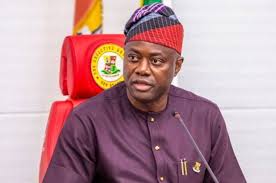
Presidential hopefuls ahead of the 2027 general election, including Governor Seyi Makinde, Peter Obi, Adewole Adebayo, and Omoyele Sowore, alongside former Minister of Education, Dr Oby Ezekwesili, have expressed concern over the state of Nigeria’s democracy.
They made their positions known at a high-level emergency stakeholders’ engagement on the 2027 polls organised by the Movement for Credible Elections (MCE), themed “Actualising Credible 2027 Elections in Nigeria.”
In his remarks, Oyo State Governor and PDP-APM presidential aspirant, Seyi Makinde, stressed that national security and stability cannot be achieved on a weak democratic foundation, insisting that democracy must be safeguarded at all costs. Speaking through his Executive Assistant on Administration, Rev. Idowu Ogedengbe, he said credible elections go beyond routine voting and represent the foundation of democratic governance.
He explained that credible polls ensure that elected leaders truly reflect the will of the people, giving them legitimate authority. According to him, leaders who emerge through a transparent process are accountable to citizens rather than political godfathers, thereby strengthening their capacity to govern effectively, enforce laws, and implement development policies.
Dr Oby Ezekwesili, who chairs the MCE convening committee, said Nigeria’s democracy has steadily weakened since 1999 and is now facing a deepening crisis of public trust. She noted that voter turnout in the 2023 presidential election dropped to about 23 percent, far below the African average of roughly 47 percent, indicating widespread apathy and distrust in the electoral system.
She argued that this decline reflects growing disillusionment with institutions responsible for elections, warning that Nigeria is drifting away from democratic standards. Ezekwesili expressed concern over increasing intimidation of dissenting voices, rising political harassment, and shrinking civic freedoms, warning that such trends threaten democratic stability ahead of 2027.
She further highlighted fears of electoral manipulation, defections allegedly influenced by political actors, and a lack of genuine choice for voters. According to her, public confidence in elections depends on the credibility of INEC, the judiciary, and security agencies, all of which she said are increasingly viewed with suspicion.
The former minister also raised concerns about the monetisation of politics and alleged corruption among political elites, linking it to Nigeria’s worsening fragility ranking. She warned that continued decline could push the country closer to state failure if urgent reforms are not undertaken. She also lamented weak political responses to insecurity and humanitarian crises, including school abductions.
Peter Obi, represented by Yunusa Tanko of the Obidient Movement, said Nigeria’s democratic challenges can only be addressed through credible elections anchored on a reliable voter register. He expressed concern about ongoing voter registration issues and alleged disenfranchisement in some regions, calling for urgent electoral reforms to ensure fairness and inclusivity.
Adewole Adebayo, the 2023 SDP presidential candidate, blamed President Bola Tinubu for what he described as interference in party politics and weakening democratic institutions. He accused the President of attempting to influence multiple parties and electoral outcomes, urging political organisations to protect their independence and strengthen internal democracy.
Omoyele Sowore, the African Action Congress presidential candidate, called for the removal of the current leadership through the ballot in 2027, while also warning Nigerians not to assume alternative politicians would automatically deliver better governance. He criticised political elites who seek endorsements from former leaders, describing it as part of the cycle sustaining poor governance.
He further urged Nigerians to break from what he described as entrenched political interests and work collectively for systemic change, while cautioning against repeating past mistakes.
Finally, Dr Sam Amadi of the Abuja School of Social and Political Thoughts called for stronger opposition unity, arguing that fragmented candidacies weaken the chances of defeating the ruling party. He urged political actors to build coalitions, harmonise interests, and present a unified front capable of driving democratic change.