

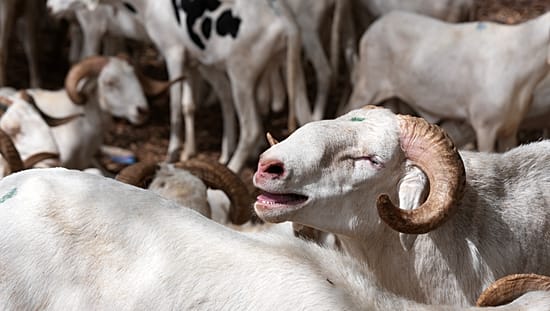
Burkina Faso has suspended the export of all livestock until further notice, aiming to stabilize meat prices and ensure animals remain available on the domestic market.
Traders Struggle
For livestock dealers, the measure has been devastating.
- Moussa Sangaré said he used to export 500 sheep annually to Côte d’Ivoire and Ghana, but this year “nothing has gone out.”
- Sheep bought for 100,000 CFA francs in rural areas are now being sold for 50,000 CFA francs locally.
- Exporter Abassé Kabré, whose Djallonke sheep are prized in Ghana, hopes the ban will be lifted after the Tabaski festival.
Consumers Relieved
Shoppers in Ouagadougou have welcomed the move, hoping for lower meat prices.
- Meat has fluctuated between 3,000 and 5,000 CFA francs per kilo in recent months.
- Resident André Tiendrébéogo said: “We hope that the price per kilogramme of meat will fall as a result of this suspension. It will be a real relief for consumers.”
Government’s Long-Term Plan
Authorities say the goal is to shift from exporting live animals to processed meat products, strengthening value chains and industrial capacity.
- In 2024, cattle, sheep, and goats ranked third among exports after gold and cotton, generating 11.8 billion CFA francs in revenue.
Outlook
While consumers may benefit from cheaper meat during Tabaski, traders face heavy losses. The government’s push toward processed meat exports could reshape Burkina Faso’s livestock economy — but for now, the ban leaves exporters in limbo.