

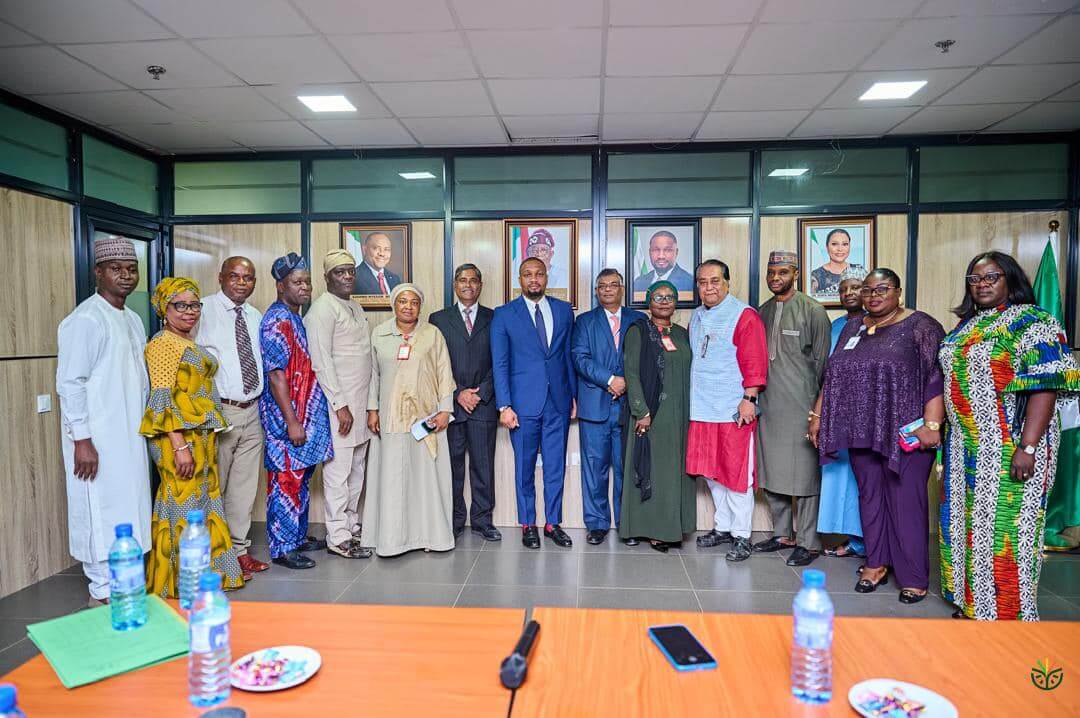
The Federal Government has inaugurated a committee to accelerate the digitalisation of Nigeria’s civil service and strengthen the use of technology in government operations.
The initiative, led through the Office of the Head of the Civil Service of the Federation (OHCSF), is part of ongoing efforts to modernise the public service, improve efficiency and move government processes away from manual systems. (Leadership News)
The committee is expected to support the Federal Government’s broader digital transformation agenda by developing and coordinating measures that will enable Ministries, Departments and Agencies (MDAs) to adopt more efficient digital workflows.
The move comes as the government continues to prioritise digital transformation as a major component of public-sector reform. President Bola Ahmed Tinubu has directed federal MDAs to sustain and deepen the digitalisation of their internal operations and service-delivery systems, with emphasis on speed, transparency, data-driven decision-making and citizen-centred services. (Voice of Nigeria)
The Head of the Civil Service of the Federation, Mrs Didi Esther Walson-Jack, has consistently identified digitalisation as central to the transformation of the Federal Civil Service.
Under the reform agenda, government is seeking to create a more efficient and responsive workforce while reducing bureaucratic delays associated with paper-based processes.
Push for Paperless Government
The establishment of the committee comes against the backdrop of the government’s wider push to achieve a fully digital and paperless civil service.
Walson-Jack had previously directed civil servants to move away from the use of personal email accounts for official transactions, stressing the importance of secure, traceable and institutional communication channels.
The government reported that more than 115,000 official GovMail accounts had been activated to support secure communication across the Federal Civil Service. (The Guardian Nigeria)
The transition is expected to improve the security of government information while ensuring that official communications remain within approved institutional systems.
Beyond email communication, the government has been deploying Enterprise Content Management (ECM) systems designed to digitise official documents, approvals, records and workflows.
The Federal Ministry of Works, for instance, migrated to the 1-GOV Enterprise Content Management platform in December 2025 as part of efforts to replace analogue processes with secure digital workflows. (Federal Ministry of Info)
Improving Efficiency and Service Delivery
The new committee is expected to contribute to the government’s objective of making the civil service faster, more transparent and more responsive to citizens.
Digital systems can enable government employees to process documents electronically, track approvals, access records more easily and collaborate across departments without relying heavily on physical files.
Such changes could help reduce administrative bottlenecks and minimise delays in government decision-making.
Digitalisation is also expected to strengthen accountability by creating electronic records of transactions and approvals, making it easier to track responsibilities and monitor the progress of official processes.
The government believes these improvements will ultimately translate into better service delivery for Nigerians.
Integration of Human Resource Systems
The latest initiative also builds on recent efforts to modernise personnel management within the Federal Civil Service.
In July 2026, the government launched harmonised Integrated Personnel and Payroll Information System (IPPIS) Human Resource modules to integrate major personnel functions into a single digital platform.
The system covers areas including biometric enrolment, staff onboarding, establishment management, payroll administration, employee mobility, self-service, reporting and data analytics. (Voice of Nigeria)
The development is expected to improve workforce management, strengthen accountability and provide government with more reliable data for personnel-related decisions.
Building a Digitally Skilled Workforce
While technology and infrastructure are important components of digital transformation, the success of the initiative will also depend on the ability of civil servants to effectively use digital tools.
The government has therefore continued to emphasise capacity-building and the development of a workforce capable of operating in a modern digital environment.
Training, digital literacy and change management are expected to remain important aspects of the transformation process as more MDAs migrate their operations to digital platforms.
The Head of Service has repeatedly urged senior civil servants to embrace innovation and lead the transition towards a more digitally enabled public service.
The government’s reform strategy also recognises digitalisation as one of the major pillars of the Federal Civil Service Strategy and Implementation Plan.
Following the completion of the end-term review of the 2021–2025 strategy, the government identified digitalisation, innovation, human-resource management and performance management among the areas that will shape the next phase of civil service reforms under FCSSIP 2026–2030. (Leadership News)
Strengthening Data and Transparency
Another expected benefit of civil service digitalisation is improved management and use of government data.
By moving records and processes into secure digital systems, government institutions can potentially access information more quickly and use data to support planning, monitoring and policy decisions.
Digital records can also help preserve institutional memory and reduce the risk of documents being misplaced or damaged.
The government has increasingly described data as a strategic national asset, with officials arguing that secure digital infrastructure is essential for modern governance.
At a digital transformation summit in Abuja earlier this year, Secretary to the Government of the Federation, George Akume, said the future of governance, economic competitiveness and public-service delivery would increasingly depend on the effective use of digital technology. (The Sun Nigeria)
Part of Broader Civil Service Reform
The committee’s inauguration therefore represents another step in the Federal Government’s wider effort to reposition the civil service.
The ultimate objective is to establish a public service that is more efficient, technology-driven, accountable and capable of responding quickly to the needs of citizens.
The initiative is also expected to encourage greater collaboration among MDAs and reduce the fragmentation that can occur when institutions operate separate manual systems.
As the committee begins its work, stakeholders will be watching to see how effectively its recommendations are translated into practical reforms across the Federal Civil Service.
The government is expected to continue expanding digital platforms, upgrading infrastructure and providing civil servants with the necessary tools and skills to operate effectively in the new environment.
With digital transformation now firmly established as a key component of Nigeria’s public-sector reform agenda, the committee’s work could play an important role in determining how quickly the Federal Civil Service moves towards a more seamless, paperless and citizen-focused system of administration.