

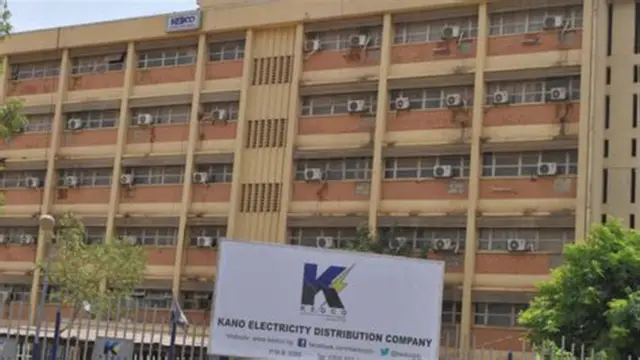
The Ministry of Finance Incorporated (MOFI) has raised concerns over the financial performance of one of Nigeria’s electricity distribution investments, revealing that the dividend earned from its stake in Kano Electricity Distribution Company (Kano DisCo) over 13 years is lower than the revenue generated by a solar power company in just one year. (leadership.ng)
The comparison has renewed attention on the need to improve the performance of government-owned assets and ensure that public investments generate stronger returns for the Nigerian economy.
MOFI’s position highlights the wider challenge of managing government investments in commercially viable businesses, particularly within the power sector, where inefficiencies, weak revenue collection and infrastructure constraints have continued to affect profitability.
Concern over returns from Kano DisCo
The revelation about the long-term dividend performance of Kano DisCo has raised questions about the financial value Nigeria has derived from its investment in the electricity distribution company.
For an asset held over more than a decade, investors would ordinarily expect consistent returns, particularly where the company operates within an essential economic sector.
However, the comparison made by MOFI suggests that the returns have been significantly below expectations when measured against the performance of other energy-related investments.
The agency’s assessment underscores the importance of evaluating government investments not simply by the value of the assets themselves but by their ability to generate sustainable income.
Solar investment provides contrast
The comparison with a solar company is particularly significant because renewable energy has increasingly emerged as an important part of Nigeria’s efforts to address its electricity challenges.
A solar asset capable of generating more revenue for government in one year than its 13-year dividend from Kano DisCo demonstrates the potential for alternative energy investments to deliver stronger commercial returns when properly structured and managed. (leadership.ng)
It also points to the changing dynamics of Nigeria’s energy market, where private investment in renewable power is expanding as businesses and households seek alternatives to an unreliable electricity supply.
Power sector investment under scrutiny
Nigeria’s electricity distribution sector has faced persistent challenges since its privatisation.
DisCos have struggled with revenue collection, infrastructure limitations, energy losses and difficulties in meeting financial obligations across the electricity value chain.
The challenges have contributed to weak returns and have raised questions about the effectiveness of existing investment and management structures.
Recent industry data have also pointed to significant gaps in electricity bill collection, highlighting the financial pressures facing distribution companies. (leadership.ng)
MOFI’s broader asset-management mandate
MOFI plays a central role in managing and optimising the Federal Government’s commercial investments.
Its objective is to ensure that government-owned assets are properly managed, commercially viable and capable of delivering value to Nigerians.
The Kano DisCo example illustrates why asset performance reviews are important.
Where an investment consistently generates weak returns, government may need to consider restructuring, improved management, additional investment or other measures to protect public value.
Need for stronger commercial discipline
The revelation could strengthen calls for greater commercial discipline in the management of public assets.
Government investments should be assessed based on clear performance indicators, including profitability, dividend generation, asset growth and long-term economic value.
Poor-performing assets can impose significant opportunity costs because capital tied up in them could potentially generate stronger returns elsewhere.
MOFI’s comparison therefore raises a broader question about whether government-owned investments are being managed with the same level of commercial discipline expected from private-sector investors.
Renewable energy gains importance
The strong performance highlighted by the solar investment also comes as Nigeria seeks to diversify its energy mix.
Solar power has become increasingly attractive because of Nigeria’s abundant sunlight and the relatively rapid deployment possible with distributed renewable-energy systems.
Solar projects can also provide electricity to communities and businesses that remain poorly served by the conventional grid.
The growth of renewable energy could consequently create new investment opportunities while helping to address Nigeria’s longstanding power deficit.
What the comparison means for investors
For investors, MOFI’s revelation could reinforce the importance of examining the underlying economics of Nigerian infrastructure and energy assets.
A sector may be strategically important without necessarily delivering strong financial returns.
Electricity distribution, for example, remains essential to economic development, but profitability depends on efficient billing, collection, infrastructure investment and effective regulation.
Renewable-energy projects, meanwhile, can benefit from growing demand for reliable electricity and the willingness of consumers and businesses to seek alternatives to grid power.
Reforming underperforming assets
The comparison between Kano DisCo and the solar investment may also strengthen the case for restructuring underperforming government assets.
Such reforms could involve stronger corporate governance, professional management, improved financial controls and clearer performance targets.
Where appropriate, government could also explore partnerships with private investors capable of providing capital and technical expertise.
The objective would be to ensure that public assets generate greater economic value without compromising their strategic importance.
Power sector needs sustainable investment
Nigeria’s electricity challenges cannot be solved without significant investment across generation, transmission and distribution.
However, investment alone is insufficient.
Projects must also be commercially sustainable and capable of generating enough revenue to support operations, maintenance and expansion.
MOFI’s assessment provides a reminder that the quality of investment matters as much as the quantity of capital deployed.
A lesson for public asset management
The Kano DisCo dividend comparison offers a broader lesson for Nigeria’s management of public assets.
Government must continually assess whether its investments are delivering appropriate returns and contributing meaningfully to national development.
Where assets underperform for extended periods, authorities may need to reconsider their management structures and investment strategies.
For MOFI, the objective is ultimately to maximise the value of government holdings and ensure that Nigerians benefit from the assets held on their behalf.
The revelation about Kano DisCo’s 13-year dividend performance, contrasted with the one-year revenue of a solar firm, therefore provides a striking example of the financial challenges facing some public investments.
It also highlights the growing importance of commercially viable renewable-energy projects as Nigeria seeks to attract private capital, strengthen electricity supply and improve returns from its strategic assets.