

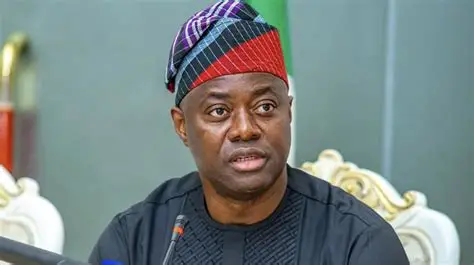
Oyo State Governor and presidential candidate of the Allied Peoples Movement (APM), Seyi Makinde, has said his party has the capacity to “reset Nigeria” within four years if given the opportunity to lead the country in 2027.
Makinde made the position part of his campaign message as he presented the APM as an alternative to the major political parties ahead of the 2027 presidential election. He has repeatedly argued that Nigeria requires a change in its approach to governance and economic management.
The governor said his proposed “Reset Nigeria” agenda would focus on improving governance, strengthening the economy, addressing insecurity and reforming key institutions of government.
According to Makinde, Nigeria cannot continue with what he described as a cycle of repeating old approaches while expecting different outcomes. He said his administration would prioritise competence, accountability and policies designed to have a direct impact on citizens.
At his emergence as the APM presidential candidate, Makinde said the country needed a new direction and outlined some of the areas he intends to address if elected.
One of the major areas highlighted by the governor is the petroleum sector. He has proposed reforms aimed at improving efficiency and accountability within the Nigerian National Petroleum Company Limited (NNPCL), while also advocating changes to the management and ownership structure of the country’s refineries.
Makinde also said Nigerians should derive greater benefits from the country’s status as an oil-producing nation. He proposed what he described as fair and transparent pricing mechanisms for petroleum products, arguing that consumers should be protected from arbitrary price increases.
On electricity, the governor has continued to make the power sector a major part of his political message. Speaking recently in Ibadan, he argued that the persistent electricity challenge has forced governments and businesses to depend on diesel-powered generators for essential services, including street lighting.
Security is another major component of the APM’s proposed national agenda. Makinde and the party have advocated reforms to the country’s security architecture, including greater decentralisation and stronger responses to insecurity.
The APM has also intensified its mobilisation ahead of the 2027 election. The Reset Nigeria Movement, a support organisation for Makinde’s presidential campaign, said in September that it had recruited more than 74,000 agents, volunteers and canvassers across the 36 states and the Federal Capital Territory. The organisation said its objective was to expand its network across the country’s 774 local government areas.
The political activities have also seen the movement seek support from young people, professionals and political groups as the party attempts to broaden its national presence.
In recent weeks, the APM has stepped up its criticism of the administration of President Bola Tinubu, particularly over issues relating to insecurity, economic hardship and government policy. The party has also called on Tinubu to withdraw from the 2027 presidential contest and support Makinde, while promoting the Oyo governor as its preferred candidate. These are the party’s political claims and positions, rather than findings established by a court or independent assessment.
Makinde’s emergence as the APM presidential candidate has therefore placed the party at the centre of his proposed national political project. His campaign has framed the 2027 election around the idea of resetting Nigeria’s governance and economic direction.
With political parties and presidential candidates already intensifying preparations for the 2027 election, the APM is expected to continue taking its message to voters across the country.
Makinde maintains that four years would provide sufficient time to begin implementing the reforms contained in his “Reset Nigeria” agenda. The extent to which the proposals can be implemented, however, would depend on electoral support, legislative cooperation, available resources and the institutional framework of the Federal Government.