

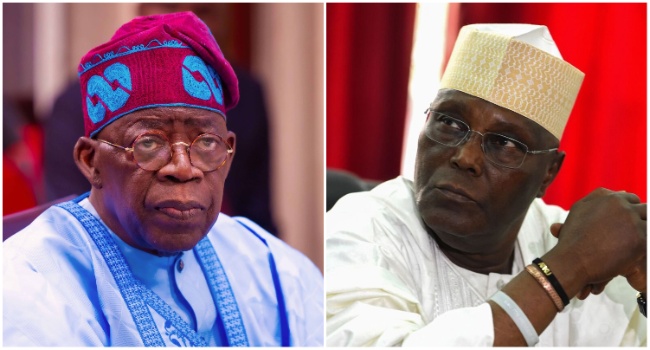
Former Vice President and presidential candidate of the African Democratic Congress, Atiku Abubakar, has criticised the Federal Government over plans to secure fresh loans totalling $1.5 billion from the World Bank.
Atiku’s criticism comes as Nigeria’s public debt rose to N166.79 trillion as of June 30, 2026, according to the latest figures from the Debt Management Office.
The Federal Government is currently discussing three separate $500 million financing facilities with the World Bank. The proposed loans are intended to support climate resilience, social protection and early childhood development programmes.
One of the facilities is an additional $500 million financing for the Agro-Climatic Resilience in Semi-Arid Landscapes project, known as ACReSAL. The proposed funding would expand the project, which operates across 19 northern states and the Federal Capital Territory, and support activities including land restoration, flood and erosion control, irrigation, water management and community climate resilience.
Another proposed $500 million facility is for the Household Prosperity and Empowerment-Social Protection Project, while a third $500 million facility is being considered for early childhood development.
The proposed borrowing has attracted scrutiny because of the increase in Nigeria’s overall debt stock. The DMO reported that the country’s total public debt increased from N159.35 trillion in March 2026 to N166.79 trillion by the end of June, representing a quarterly increase of about 4.67 per cent.
External debt also increased during the period, while Nigeria’s obligations to the World Bank Group reached $20.73 billion at the end of June 2026. The World Bank exposure represented about 38 per cent of the country’s $54.52 billion external debt stock at the time.
Reacting to the latest borrowing plans, Atiku called for greater transparency and accountability in the management of Nigeria’s debt. He had earlier demanded a comprehensive reconciliation of the country’s public debt, including new borrowings, Treasury Bills and other liabilities.
Through his campaign communications team, Atiku questioned why the government continued to accumulate new obligations amid the rising debt burden and called for details of loans contracted by the administration.
“A government that says more money is coming in must explain why it keeps borrowing and why the people paying for its policies cannot see the promised gains,” Atiku was quoted as saying.
He also asked the government to distinguish between newly contracted debt and increases in the naira value of foreign obligations caused by exchange-rate movements.
The former vice president argued that Nigerians deserve a clearer account of the country’s borrowing activities, particularly as debt-service obligations compete with spending on infrastructure, social services and other public priorities.
However, the proposed World Bank facilities are intended to finance specific development programmes rather than general government spending. The ACReSAL financing, for instance, is targeted at addressing land degradation, water insecurity, climate vulnerability and declining agricultural productivity.
An economist, Adewale Abimbola, noted that borrowing from multilateral development institutions such as the World Bank differs from obtaining loans at commercial market rates because such facilities can come with longer repayment periods and more favourable financing terms.
He argued that the key issue is how borrowed funds are utilised, stressing that loans directed towards productive projects could support economic growth if properly managed.
The Federal Government has similarly maintained that borrowing can be justified when funds are channelled into projects capable of supporting development, improving infrastructure and strengthening the economy.
The latest proposed World Bank facilities therefore come amid an ongoing national debate over Nigeria’s borrowing strategy, debt sustainability and the need to ensure that borrowed funds produce measurable benefits.
As discussions over the $1.5 billion financing continue, attention is expected to remain focused on the terms of the facilities, their intended uses, repayment obligations and the mechanisms that will be put in place to ensure transparency and accountability in their implementation.
Make my article shorter and sharperStrengthen my opening and headline