
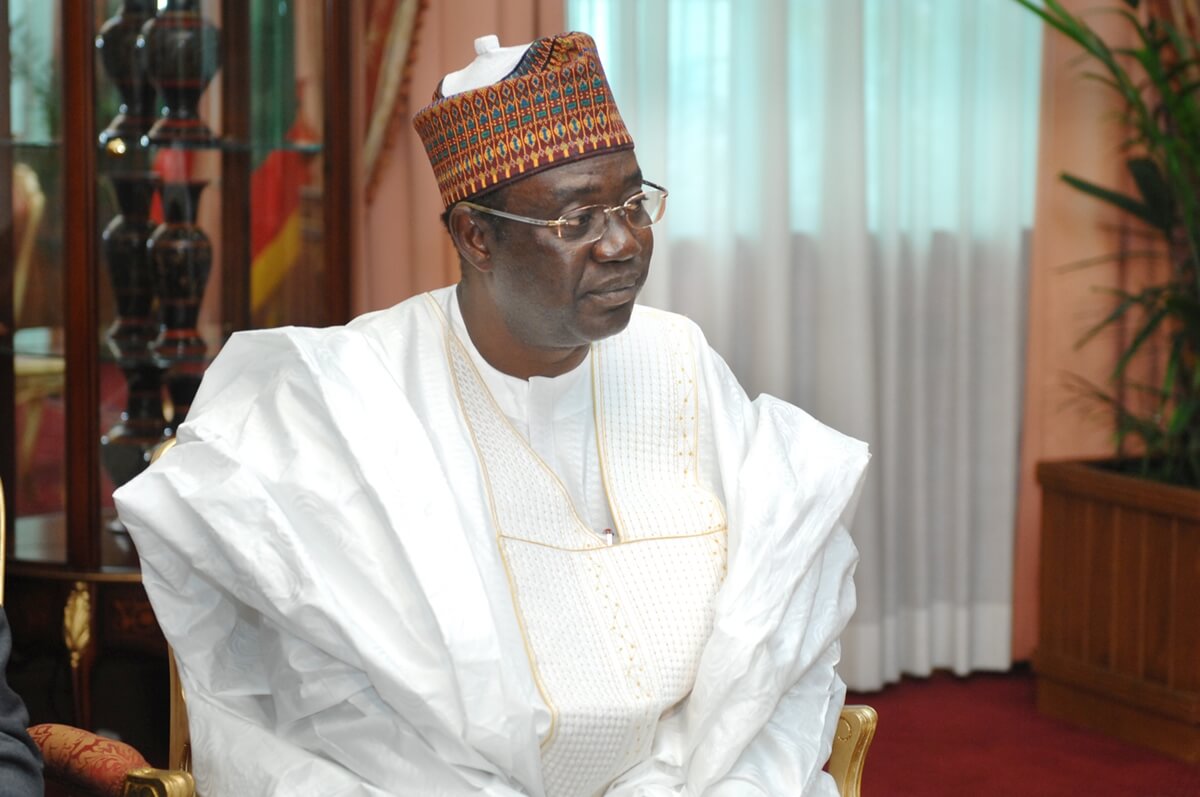


The senator representing Ondo South Senatorial District, Jimoh Ibrahim, has defended the Federal Government’s continued resort to borrowing, insisting that Nigeria must take advantage of the global lending market despite its rising $103.94bn debt profile.
The lawmaker and Ambassador-designate disclosed in a detailed interview with The PUNCH.
Ibrahim, an outspoken advocate of debt-financed development, argued that President Bola Tinubu has little choice but to sustain borrowing if the country hopes to meet its infrastructure and economic growth targets.
His comments come against the backdrop of fresh data released by the Debt Management Office, showing that Nigeria’s total public debt rose to N153.29tn as of September 30, 2025, up from N152.40tn in June, an increase of N893.87bn within three months.
So This Happened (EP 377):Tinubu halts NNPCL deductions, orders audit of power sector subsidy claims
0:00 / 0:00
In dollar terms, the country’s debt stock climbed from $99.66bn in June to $103.94bn in September, reflecting a $4.28bn increase, representing a 4.29 per cent rise over the quarter.
According to the DMO, external debt stood at $48.46bn (N71.48tn), accounting for 46.63 per cent of the total debt stock, while domestic debt rose to $55.47bn (N81.82tn), representing 53.37 per cent.
The figures were converted using the Central Bank of Nigeria’s official exchange rate of N1,474.85 to the dollar.
Despite mounting public concern over the steady build-up of obligations, Ibrahim dismissed fears that Nigeria’s debt level is unsustainable.
Defending Nigeria’s dependence on foreign loans to fund budgets and infrastructure, the senator warned that delaying borrowing could shut the country out of global credit opportunities.
He said, “The Federal Government will be wasting its time if it doesn’t borrow now. Because the lending market will dry up very soon. The global lending market will disappear. And once that disappears, even when you want loans, you can never get them.
“So the strategy is to have enough money now to face your development and start facing repayment of those loans. For instance, Dubai, a population of 12 million people, owes $186bn.
“Nigeria’s total debt is about $103.94bn. This means that Dubai owes much more than Nigeria, and there are 12 million people, while Nigeria has about 250 million. Why are you people crying ‘debts’ all over the place?”
The senator added that Dubai has since transitioned from borrowing to repayment.
“Now Dubai has finished borrowing. They don’t borrow anymore. They are now repaying. They pay about $20bn back every year, and they have enough revenue to do that.
“Look, if you don’t borrow, how do you develop? I don’t understand. Borrowing is an extra gear in development. It’s like you putting your car in Gear 4, and then there’s a Gear 5. It gives you more comfort.Related News
- Wike says PDP hasn’t learnt, backs Tinubu again
- How NASENI Is Positioning Nigeria for Indigenous Industrial Growth in 2026
- Nearly 9% may remain in extreme poverty by 2030 — UN
“But if you put your car in Gear 2 and you want to race at 120 kilometres, that engine will just knock off. So the key point here is that resources are available.
“It’s not enough to serve the economy to the trillion you want to take your GDP to. So you need that extra support. And if you don’t borrow now, the lending market will disappear.
“The GDP to debt ratio in America is 127 per cent, meaning that America has borrowed by 27 per cent. In London, it’s 95 per cent. In Britain, $195 have been used to borrow money.
“So, which country are you really copying? Ghana is the fourth largest debtor to the IMF World Bank. So if Nigeria’s GDP-to-debt ratio is 40 per cent, you still have 60 per cent room to borrow. If you are now saying, don’t borrow and the lending market disappears, you can’t lend even to yourself,” he stated.
When asked how Nigeria intends to repay if borrowing continues at the current pace, Ibrahim said loan repayment is typically structured over long periods and can be refinanced.
He said, “The repayment strategy will take a long time. It’s not something that you borrow and return in one year. So you spread your balance sheet.
“You can even borrow more to clear the $100bn, right? And then you are now zero debt and can now repay what you borrowed to clear the $100bn over a period of 10 to 20 years. The lender will agree with you on that.
“But where you don’t borrow at all, and the lending market disappears, you cannot lend money to yourself.
“That means you are going to use ways and means by cutting money to fund the economy. That means you will have inflation. You will also have unemployment. The value of the naira will come down. And of course, the world will come down.”
Responding to criticisms over fresh borrowing tied to the 2025 budget and reports of limited implementation, the senator described part of the approvals as rollover arrangements.
“The borrowing approved by the Federal Government last year is cumulative borrowing that has become due. So you have to get a resolution to turn over, to roll over those debts when they mature, so that your book can be clean.
“It’s a management of debt at that level. What we are talking about is first the borrowing and injection of capital.
“Look, Buhari did a N30tn ways and means, meaning that he printed N30tn higher. You cannot clear the effect of that in two years. You printed N30tn domestically, and borrow N68bn outside and want to clear it in two years? You will be a magician to do that. Because N30tn Ways and Means is just too much.
“I don’t think it’s the best way to handle the economy. We will actually have financial danger with this,” he added.
As debate intensifies over Nigeria’s debt sustainability and fiscal direction, Ibrahim maintained that strategic borrowing remains indispensable for economic expansion, insisting that avoiding loans altogether could worsen inflation, weaken the naira and stall development.
- Global credit access
- $104bn Debit