


ACCRA, Ghana — Ghana’s Statistical Service has announced that the country’s multidimensional poverty rate has declined for the third consecutive quarter, marking a significant improvement in living conditions across the nation. The latest data shows the index fell from 23.9% in Q1 2025 to 21.9% in Q3, translating into nearly one million Ghanaians moving out of poverty within a year.
Understanding Multidimensional Poverty In Ghana
Unlike traditional poverty measures that focus solely on income, the multidimensional poverty index (MPI) captures deprivation across several critical areas:
- Health: access to healthcare and nutrition.
- Education: literacy, school attendance, and completion rates.
- Living conditions: access to clean water, sanitation, electricity, and housing quality.
- Employment: opportunities for decent work and income stability.
By measuring poverty in this holistic way, the MPI provides a clearer picture of how households experience hardship and where interventions are most needed.
The Numbers Behind the Decline
The drop from 23.9% to 21.9% may seem modest, but in a country of 35 million people, it represents a substantial shift. Nearly one million individuals have seen improvements in their living conditions, whether through better access to clean water, improved sanitation, or expanded educational opportunities.
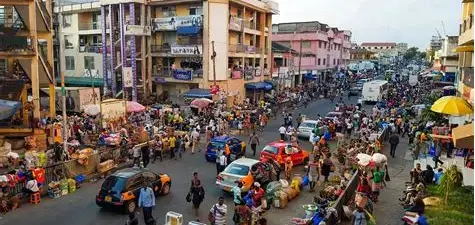
Government officials attribute the decline to targeted social programs, infrastructure investments, and improvements in basic services. Yet, they caution that the underlying drivers of poverty remain largely unchanged, meaning progress could stall without sustained reforms.
Uneven Gains Across Society
Despite the encouraging trend, poverty reduction has not been evenly distributed. The data shows that households headed by individuals with no formal education continue to experience the highest levels of deprivation. Vulnerable groups — including rural communities, women, and children — bear a disproportionate burden.
This highlights the persistent challenge of inequality in Ghana. While urban centers like Accra and Kumasi benefit from infrastructure development and job creation, rural areas often lag behind, with limited access to healthcare, schools, and clean water.
Government Response and Warnings
The Government Statistician praised the progress but warned against complacency. “The reduction reflects improvements in overall living conditions, but the structural drivers of poverty — such as limited access to quality education, healthcare disparities, and unemployment — remain largely unchanged,” he said.
This caution underscores the need for policies that go beyond short‑term relief and address systemic issues. Without tackling root causes, gains could be reversed by economic shocks, climate change, or political instability.
Regional and Global Context
Ghana’s progress stands out in a region where poverty reduction has been uneven. Across West Africa, countries like Nigeria and Sierra Leone continue to grapple with high poverty rates, exacerbated by insecurity and weak infrastructure. Ghana’s ability to reduce poverty steadily over three quarters demonstrates resilience and effective policy implementation.
Globally, Ghana’s success aligns with the United Nations Sustainable Development Goals (SDGs), particularly Goal 1: ending poverty in all its forms. The country’s experience offers lessons for other developing nations on the importance of multidimensional approaches to poverty measurement and reduction.
Challenges Ahead
Despite the positive trajectory, several challenges remain:
- Youth unemployment: Ghana’s large youth population faces limited job opportunities, risking social unrest.
- Education gaps: Disparities in access to quality education continue to perpetuate cycles of poverty.
- Healthcare access: Rural communities often lack adequate medical facilities, leaving them vulnerable to preventable diseases.
- Climate vulnerability: Floods, droughts, and other climate shocks threaten livelihoods, especially in agriculture‑dependent regions.
Addressing these challenges will require sustained investment, policy innovation, and international cooperation.
Outlook
The decline in Ghana’s multidimensional poverty rate is a cause for cautious optimism. It demonstrates that progress is possible when governments prioritize social development and invest in basic services. Yet, the persistence of inequality and structural barriers reminds policymakers that poverty reduction is a long‑term struggle.
For ordinary Ghanaians, the numbers reflect real improvements — cleaner water, better schools, safer housing. But for those still trapped in deprivation, the promise of a better future depends on whether the government can sustain momentum and tackle the deeper roots of poverty.
As Ghana moves forward, the challenge will be to ensure that progress is not just statistical but transformative, lifting all citizens into a life of dignity and opportunity.