

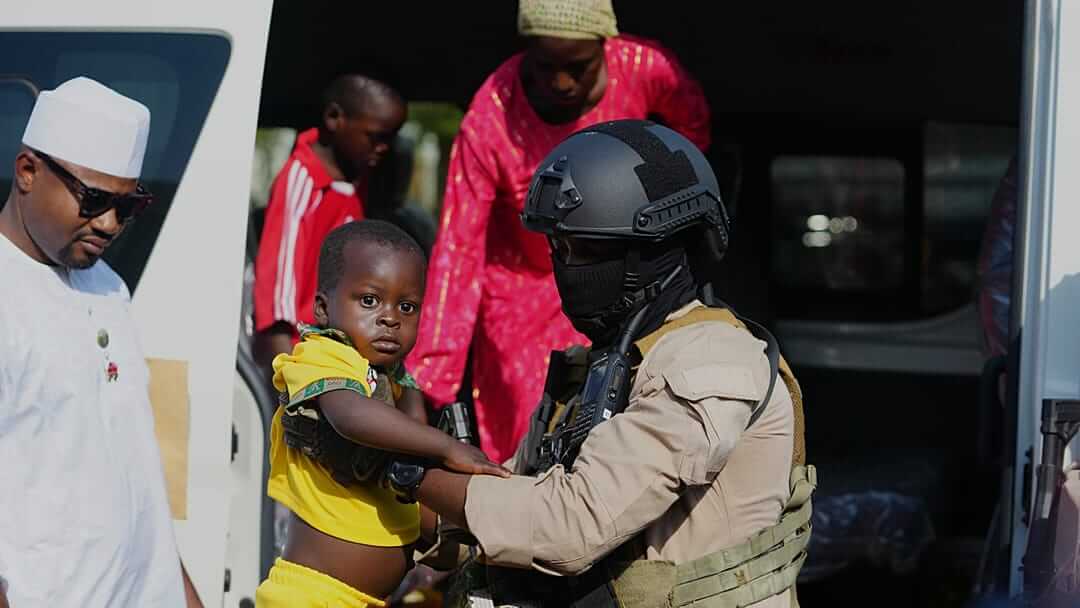
ZAMFARA, Nigeria — Nigerian troops have freed 62 hostages and killed two militants in a major operation in Zamfara state, even as the army mourns the loss of five soldiers and one police officer in a deadly ambush earlier this week. The events highlight both the successes and the continuing challenges of Nigeria’s fight against banditry and insurgency in its troubled northwest.
The Ambush
On Monday, troops were ambushed in Zamfara state, a region notorious for bandit activity. Army spokesman David Adewusi confirmed the attack, describing the assailants as “terrorists.”
“Despite the surprise of the ambush, the troops responded gallantly, engaging the terrorists and preventing further harm to nearby communities,” Adewusi said. “Regrettably, five soldiers and one police officer paid the supreme sacrifice during the encounter.”
The ambush followed earlier operations in Zamfara last week, during which three suspects were arrested and weapons recovered.
Hostage Rescue
In a separate operation on Wednesday, Nigerian soldiers rescued 62 hostages from the Munhaye Forest, a notorious hideout of bandit leader Kachalla Alti. Army spokesman Olaniyi Osoba confirmed the release, noting that efforts are underway to reunite the freed hostages with their families.
The rescue operation is a significant achievement in a region where kidnappings for ransom have surged in recent years. Schools, highways, and rural communities have been repeatedly targeted, leaving families traumatized and communities destabilized.
The Broader Crisis in Northern Nigeria
Northern Nigeria remains the hardest‑hit part of the country, facing overlapping security crises:
- Banditry in the northwest and north‑central regions, driven by criminal gangs seeking ransom payments.
- Insurgency in the northeast, led by Boko Haram and its offshoot, the Islamic State West Africa Province (ISWAP).
Boko Haram, Nigeria’s homegrown jihadist group, began its insurgency in 2009, opposing Western education and seeking to impose a radical version of Islamic law. Over time, the conflict has evolved, with ISWAP emerging as a powerful faction aligned with the global Islamic State network.
The insurgency has spilled into neighboring countries, including Niger, Chad, and Cameroon. According to the United Nations, the violence has killed about 35,000 civilians and displaced more than 2 million people.
International Dimension
Last month, the United States launched airstrikes in northern Nigeria, targeting Islamic State positions after allegations that Nigeria had failed to rein in attacks on Christian communities. The strikes underscore the international concern over the spread of jihadist violence in West Africa, where fragile states struggle to contain armed groups.
Human Cost and Community Impact
The ambush in Zamfara and the hostage rescue illustrate the dual realities of Nigeria’s security struggle: progress in dismantling bandit networks, but continued losses among security forces.
For families of the freed hostages, the rescue brings relief after weeks or months of captivity. Yet for the families of fallen soldiers and police officers, the cost of Nigeria’s fight against insecurity remains painfully high.
Communities across Zamfara and neighboring states continue to live under the shadow of violence. Farmers are often unable to access their land, schools are frequently closed due to abductions, and trade routes are disrupted by bandit attacks.
Government Response
The Nigerian government has pledged to intensify military operations in the northwest, deploying additional troops and equipment to Zamfara and neighboring states. Authorities argue that sustained pressure on bandit hideouts will eventually weaken their networks.
However, analysts caution that military action alone may not be enough. Addressing the root causes of insecurity — poverty, unemployment, and weak governance — is essential to breaking the cycle of violence.
Outlook
The rescue of 62 hostages is a morale boost for Nigeria’s armed forces, but the ambush that claimed six lives is a stark reminder of the dangers they face. As banditry and insurgency continue to destabilize northern Nigeria, the government must balance military operations with broader reforms to restore trust and security.
For now, Zamfara remains a flashpoint in Nigeria’s struggle against armed groups, a place where victories are hard‑won and losses are deeply felt.