

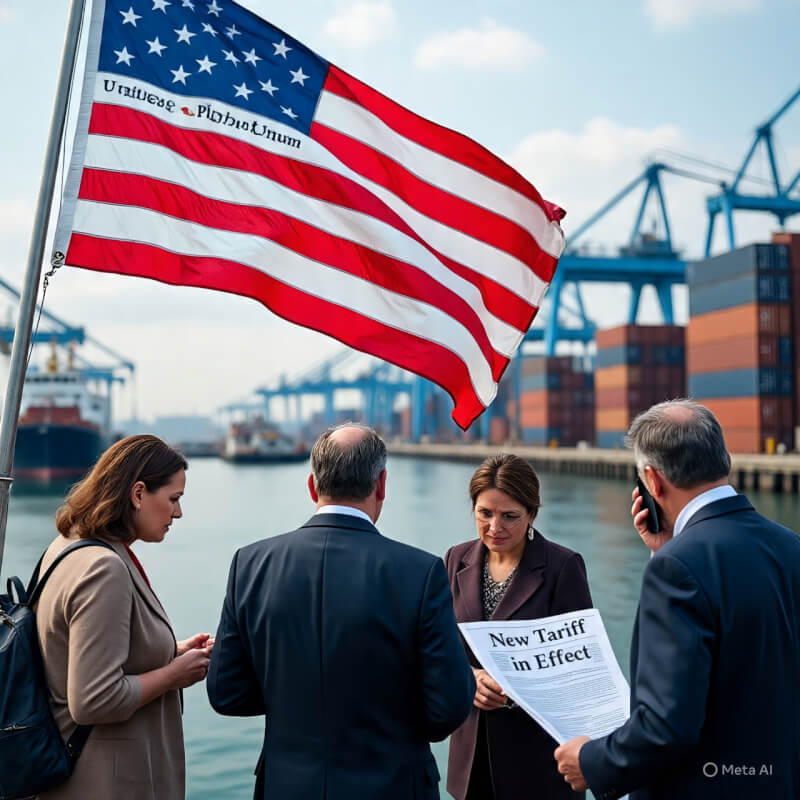
The US is back to the same level of trade uncertainty as last year, with a higher risk of a full-blown tariff war, according to a statement on the BBC’s Today programme. President Trump signed an executive order imposing a 10% import duty to address international payments issues and rebalance trade relationships, citing Section 122 of the 1974 Trade Act. This allows the president to impose the charge for 150 days without congressional approval.
The goal is to reduce America’s trade deficit, but it hit a record high of $1.2 trillion last week. The US has collected $130bn in tariffs using the International Emergency Economic Powers Act (IEEPA), but the Supreme Court ruled the president overstepped his authority, potentially leading to billions in refunds.¹ ²
Countries are evaluating their next steps, with the UK and EU expressing concerns. Trump has threatened higher tariffs on countries “playing games” with trade deals, while experts doubt the US will hand back tariffs.³
Would you like to know more about the impact of these tariffs on specific countries or industries?US President Donald Trump’s new global tariffs have come into effect at 10% despite a pledge to introduce them at a higher rate.
After the Supreme Court blocked many of his sweeping import taxes on Friday, the president said he would introduce a 10% global rate. He then said on Saturday that the rate would be 15%.
However, according to official documents, the tariffs have been set at the lower rate from Tuesday with no directive to increase the rate issued. The BBC has contacted the White House for comment.
“I think it simply adds to the chaos and mess,” said Carsten Brzeski, an analyst with investment bank ING, referring to the fast-changing tariffs and their effects on businesses.