

Trust Nigerian leaders and, indeed, my fellow citizens—to leave undone what ought to have been addressed decades ago, only to rush into action without fully considering some of the most far-reaching consequences.
As the French novelist Honoré de Balzac once quipped, “I am beginning to wonder how many fools it takes to make the term ‘my fellow citizens.'” While his remark was made in a different era and context, it offers a thought-provoking lens through which to view our recurring national tendency to embrace hasty solutions to long-neglected problems.
The proposed amendment to the 1999 Constitution has now been hurried through the National Assembly and transmitted to the various State Houses of Assembly for ratification. Yet, surprisingly few Nigerians appear to be fully aware of the implications of what is being proposed in their name.
It may well be a coincidence that the amendment is being pursued with unusual speed at a time when terrorist activities have spread into the South-West, with reports of teachers and schoolchildren being held hostage. But one is entitled to question whether this sudden urgency is purely coincidental. Nigerian politicians are rarely known for acting with such speed unless there is something substantial at stake. It is therefore reasonable to ask whether there is an agenda that has yet to be fully disclosed to the public.
Predictably, the move has been presented as a response to “the voice of the people.” That claim, however, raises several important questions.
First, whose voice is being heard?
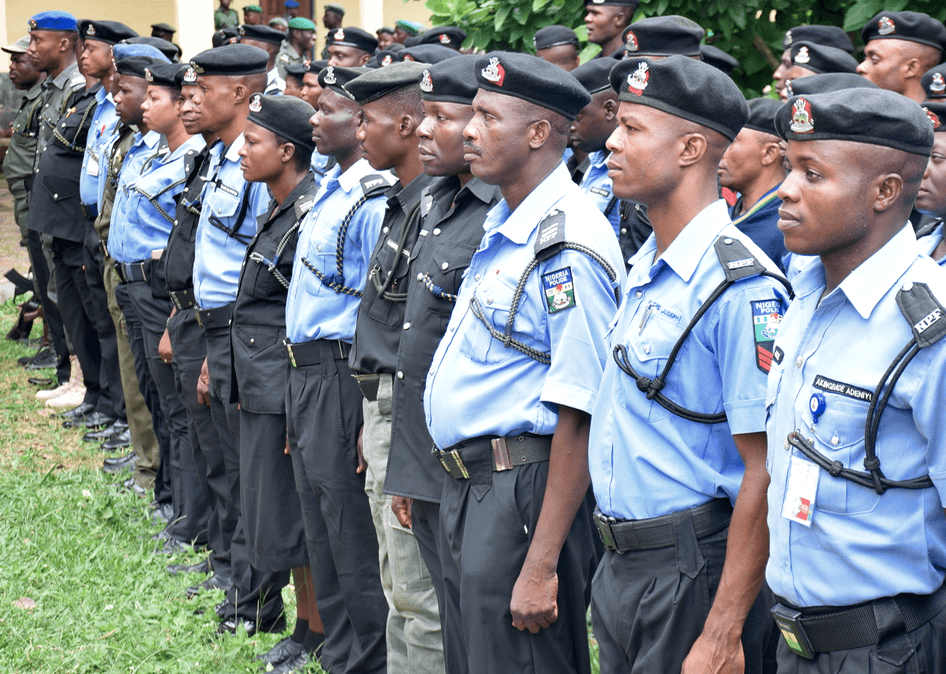
For decades—even under successive military administrations—sections of the country have consistently advocated the establishment of state police, while others have remained firmly opposed. Throughout those years, successive federal governments showed little interest in responding to either side of the debate.
The next question naturally follows: why now?
And perhaps the most important question of all is this: who stands to benefit from this constitutional amendment, one that could fundamentally reshape Nigeria’s security architecture and produce consequences that extend well beyond policing?
These are questions that deserve honest answers before irreversible decisions are taken.
National Desperation on Display
“There are no desperate situations; only desperate men.” — Joseph Goebbels (1897–1945)
Nigeria today appears gripped by desperation, and desperate moments often produce poor decisions. Panic clouds judgment and makes individuals, institutions, and even nations susceptible to choices they might otherwise avoid.
From childhood, many of us were taught the timeless proverb, “Haste makes waste.” Experience has repeatedly shown that haste also creates confusion, unintended consequences, and, in many cases, avoidable crises.
History teaches that decisions taken under intense pressure are rarely the wisest. In moments of national anxiety, emotion often displaces careful analysis. Politicians, unfortunately, tend to perform at their worst under such circumstances, prescribing remedies before properly diagnosing the illness. More often than not, the proposed cure proves more damaging than the original problem.
It is precisely at moments like these that calmer voices must insist on caution. Public policy, particularly constitutional reform, should never be driven solely by urgency. It must also be informed by rigorous analysis, careful planning, and a full appreciation of the long-term consequences.
Counting the Costs—Now and in the Future
“Anything that does not make economic sense will not work.” — H. L. Mencken (1880–1956)
“The economist, like anyone else, must concern himself with the ultimate aims of man.”
Much of the current debate surrounding state police has focused almost exclusively on security. Far less attention has been paid to what may ultimately determine whether the proposal succeeds or fails: its economic sustainability.
Creating and maintaining state police forces would require enormous and recurring financial commitments. Recruitment, training, salaries, pensions, housing, equipment, intelligence gathering, communications infrastructure, forensic laboratories, patrol vehicles, logistics, and operational support all demand substantial and continuous funding.
These are not one-time expenditures. They represent permanent obligations that will increase year after year.
Before embracing state police as the solution to Nigeria’s security challenges, policymakers must answer several critical questions. Can all 36 states realistically finance professional police forces without compromising other essential public services? How many states currently generate sufficient internally generated revenue to sustain such institutions independently? What safeguards exist to prevent underfunding, political interference, or the emergence of poorly equipped state police organisations that could become liabilities rather than assets?
These questions are not arguments against state police. Rather, they are reminders that every major policy reform carries economic consequences that cannot be ignored.
Security is indispensable, but so too is fiscal responsibility. A reform that strengthens security while weakening public finances may ultimately solve one problem only to create several others.
As the debate continues, Nigeria must resist the temptation to legislate in haste. Constitutional reforms should be guided not only by present security concerns but also by careful consideration of their long-term economic, institutional, and political implications. Only then can the country adopt solutions that are both effective today and sustainable for generations to come.