

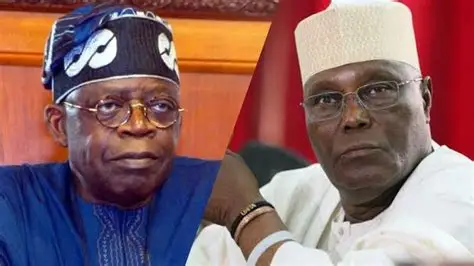
Former Vice President and African Democratic Congress (ADC) presidential candidate, Atiku Abubakar, has welcomed the Federal Government’s decision to suspend the proposed increase in registration fees for the West African Senior School Certificate Examination (WASSCE) and the National Examinations Council (NECO) Senior School Certificate Examination (SSCE), describing it as a victory for students, parents and civil society groups.
However, Atiku criticised the administration of Bola Ahmed Tinubu, accusing it of introducing unpopular policies without sufficient consultation. He argued that Nigeria “is not a laboratory for reckless policy experiments.”
The Federal Government had earlier announced the suspension of the planned fee hike following widespread public backlash. In a statement issued by the Federal Ministry of Education and signed by its Director of Press and Public Relations, Folasade Boriowo, the ministry said the proposal had been withdrawn to allow for broader stakeholder consultations.
While acknowledging that rising costs influenced the proposed increase, the government reiterated its commitment to ensuring access to quality education through inclusive and evidence-based policymaking.
Reacting through his media aide, Phrank Shaibu, Atiku said the reversal vindicated earlier concerns that higher examination fees would worsen educational inequality and limit access for disadvantaged students.
“The suspension is welcome, but it also raises an important question: why must the government wait for public outrage before correcting policies that should not have been introduced in the first place?” he queried.
He maintained that governance should not be based on trial and error, stressing that effective leadership requires consultation before policy decisions are made.
Atiku further argued that the proposed fee increase would have imposed additional financial pressure on families already burdened by inflation, rising transport costs, increased electricity tariffs and declining purchasing power.
“Education should be a pathway out of poverty, not a privilege reserved for a few,” he said.
He commended parents, teachers, labour unions, student groups and other stakeholders whose opposition, he noted, compelled the government to reverse the decision, adding that democracy works best when citizens hold leaders accountable.
While welcoming the suspension, Atiku urged the government to engage stakeholders in developing a sustainable funding framework for WAEC and NECO without transferring additional costs to households.
He also called for a shift towards evidence-based policymaking rooted in consultation, dialogue and sensitivity to citizens’ realities.
“A government that listens only after Nigerians protest is one that is no longer listening to the people it was elected to serve,” he said.
Looking ahead to the 2027 elections, Atiku said Nigerians would ultimately choose between what he described as “trial-and-error governance” and leadership grounded in experience, consultation and foresight.