

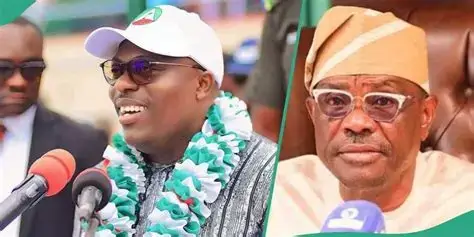
A former governor of Rivers State, Nyesom Wike, has explained why his successor, Siminalayi Fubara, was allegedly not allowed to pursue a second term, citing political disagreements and issues surrounding loyalty and governance.
Speaking on the matter, Wike suggested that the decision was rooted in deepening rifts within the state’s political structure, particularly disagreements over control, leadership direction, and adherence to established political alliances. He indicated that such divisions made it difficult to sustain a unified front necessary for continuity in office.
According to him, political succession often depends on trust, alignment, and the ability to maintain the vision of the administration that facilitated a candidate’s rise to power. He implied that where such expectations are not met, support structures that are critical for re-election may be withdrawn.
The remarks come amid ongoing political tensions in Rivers State, where factions within the ruling establishment have been at odds over governance and influence. Analysts say the situation reflects broader challenges in Nigerian politics, where internal party conflicts can significantly impact electoral prospects.
Observers note that Wike’s comments highlight the role of political godfatherism and power dynamics in shaping leadership trajectories, especially at the state level. They argue that beyond performance in office, relationships within the political elite often play a decisive role in determining whether an incumbent secures backing for another term.
Supporters of Governor Fubara, however, have maintained that leadership should ultimately be determined by the electorate, stressing the importance of democratic principles over internal party disputes.
As the political landscape continues to evolve, stakeholders say developments in Rivers State will remain closely watched, given their potential implications for party cohesion and future elections.