

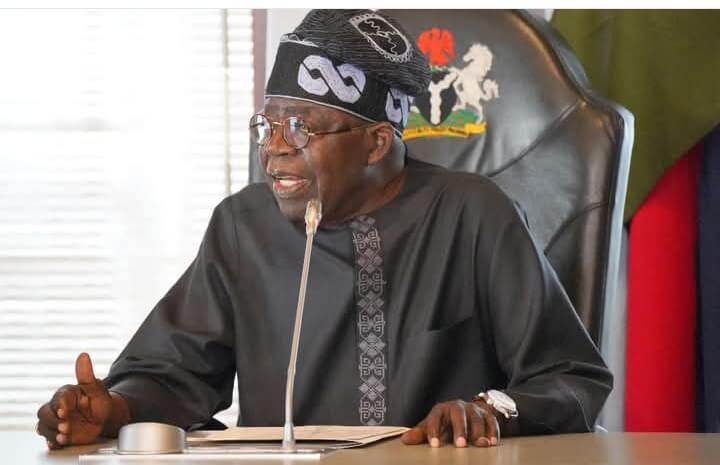
President Bola Ahmed Tinubu has introduced a new incentive framework aimed at reviving investment in Nigeria’s deep offshore oil and gas sector, with the Federal Government projecting that the initiative could unlock as much as $50 billion in fresh investments.
The new policy is designed to provide investors with clearer and more predictable fiscal terms, replacing the previous approach in which individual offshore projects often required separate negotiations with the government.
The framework has been formalised through the Deep Offshore Oil and Gas Projects Incentives (Tax Remission) Order, 2026, which provides a standardised set of incentives for qualifying offshore developments.
One of the immediate beneficiaries of the new policy is expected to be the Bonga South West project, an offshore development estimated to require about $10 billion in investment. However, government officials stressed that the framework is broader and is intended to support several deep offshore projects in the years ahead.
The initiative is part of the administration’s efforts to restore investor confidence in Nigeria’s oil industry and encourage the development of offshore reserves that have remained largely untapped because of regulatory uncertainty, high project costs and concerns over the stability of fiscal terms.
The idea for the new framework reportedly followed discussions between President Tinubu and Shell Chief Executive Officer Wael Sawan, during which the president directed his administration to explore measures capable of unlocking fresh investment in Nigeria’s offshore petroleum sector.
Rather than negotiate separate incentives for individual companies, the government opted to establish a broader policy framework that could apply to all projects meeting the stipulated requirements.
The Nigerian National Petroleum Company Limited (NNPC Ltd) has also been authorised to amend existing contractual arrangements where necessary to enable eligible projects to benefit from the new incentives.
Focus on local economic benefits
Beyond attracting foreign capital, the government said the policy is expected to create employment opportunities and stimulate activity across Nigeria’s oil and gas value chain.
The Special Adviser to the President on Energy, Olu Verheijen, said companies benefiting from the framework would be encouraged to maximise the use of Nigerian expertise and businesses where commercially viable.
She explained that activities such as engineering, equipment fabrication, logistics, marine services and other aspects of project development could generate opportunities for Nigerian companies and skilled workers.
The policy is therefore expected to contribute not only to increased oil production but also to the development of local capacity and businesses operating within the petroleum industry.
Tackling investment uncertainty
Nigeria has significant offshore oil and gas reserves, but several major projects have experienced prolonged delays.
Industry stakeholders have frequently cited uncertainty over fiscal terms, lengthy negotiations, high operating costs and concerns about policy consistency as some of the factors discouraging long-term investment in deep offshore developments.
The Federal Government believes the new framework can address some of these concerns by giving investors greater clarity about the incentives available to qualifying projects.
The policy was developed following consultations involving the presidency, relevant ministries and government agencies, NNPC Ltd, petroleum regulators and international oil companies.
Officials said the objective was to create a more predictable investment environment rather than rely solely on tax concessions to attract capital.
Tinubu seeks long-term investment
President Tinubu said countries seeking to attract sustainable investment must prioritise certainty and predictable policies.
“The countries that attract long-term investment are not necessarily those with the greatest natural resources. They are the ones that provide the greatest certainty,” the president said.
The administration hopes the new framework will strengthen Nigeria’s position as one of Africa’s leading destinations for offshore oil and gas investment.
Attention will now turn to the response of major international oil companies, particularly Shell, and whether the new incentives will facilitate a final investment decision on the Bonga South West project.
The government will also be watching to see whether other stalled offshore developments receive fresh investment commitments under the new framework.
If successfully implemented, the policy could mark a significant shift in Nigeria’s approach to offshore petroleum investment, potentially bringing billions of dollars into the sector, increasing oil production, creating jobs and generating additional government revenue.