

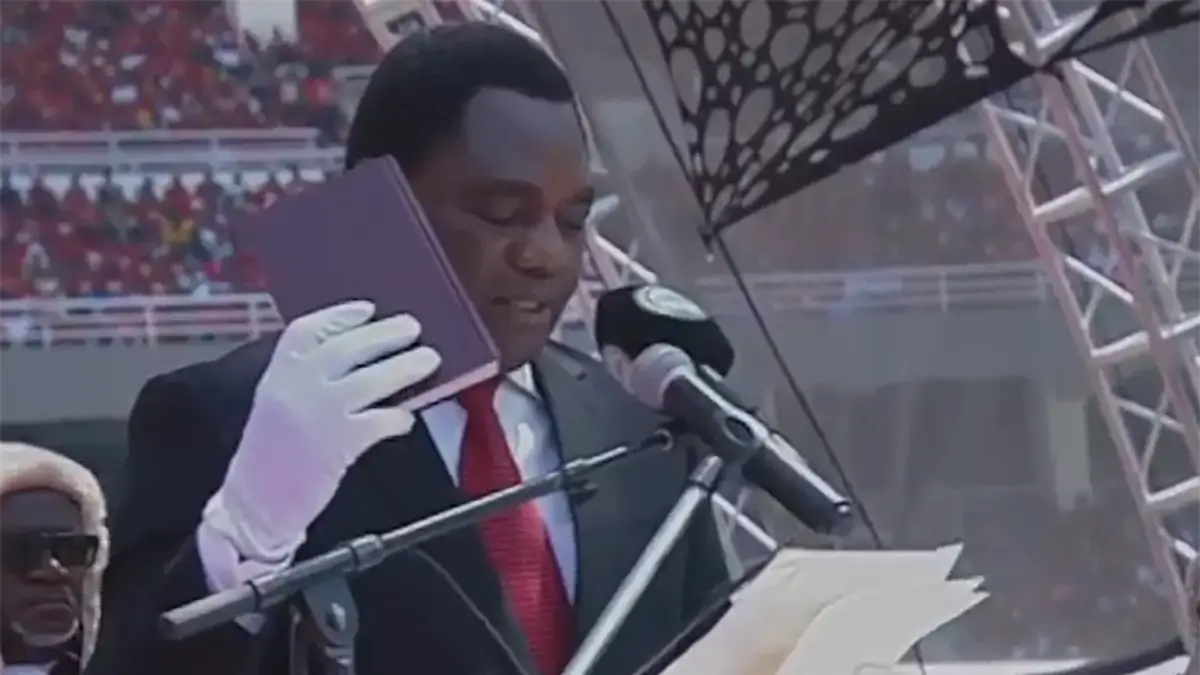
Zambian President Hakainde Hichilema Sworn in
Zambian President Hakainde Hichilema has been sworn in for a second five-year term following a contentious election that has been overshadowed by allegations of vote irregularities and the detention of his main rival.
Election Victory and Dispute
According to official results, Hichilema secured 60% of the vote in the 13 August presidential election, comfortably defeating opposition candidate Brian Mundubile, who received 38%.
However, Mundubile rejected the outcome, alleging electoral manipulation. His efforts to challenge the results were frustrated when courts were reportedly inaccessible on the final day for filing a legal petition.
Election observers generally described voting day as peaceful but raised concerns about the tallying process. European Union observers cited weaknesses in result verification and noted that some tallying centres did not immediately record announced results.
Opposition Arrests
Political tensions escalated shortly after the election when security forces raided a property linked to Mundubile in Lusaka.
The operation resulted in the death of a former cabinet minister and the arrest of several opposition figures. Authorities accused the opposition of plotting an armed uprising, allegations that opposition leaders strongly denied.
Mundubile and his running mate, Makebi Zulu, went into hiding before being arrested last week. Both now face treason charges, further deepening concerns among critics about the political climate.
Economic Record
Hichilema’s first term was largely defined by efforts to stabilise Zambia’s struggling economy.
When he assumed office in 2021, Zambia was grappling with:
- A sovereign debt default
- Inflation above 24%
- Strained relations with international creditors
His administration negotiated debt restructuring agreements and worked to rebuild confidence among lenders and investors. Inflation has declined significantly, although many Zambians continue to face high living costs.
Before the election, Hichilema told the BBC that his government inherited a country whose economy was in decline and argued that reforms over the last five years had laid a foundation for future growth.
Regional Support
The inauguration ceremony at National Heroes Stadium in Lusaka attracted several African leaders, including presidents from:
- Kenya
- Botswana
- Zimbabwe
- Namibia
- Tanzania
Hichilema was sworn in alongside Vice-President Mutale Nalumango as thousands of supporters celebrated his return to office.
Looking Ahead
As he begins his second term, Hichilema faces the challenge of balancing economic reforms with growing concerns about political freedoms and democratic institutions. While supporters point to improved economic management, critics argue that the disputed election and detention of opposition leaders cast a shadow over the start of his new mandate.
The coming months will likely determine whether Zambia can maintain both its economic recovery and its reputation as one of Southern Africa’s more stable democracies.