

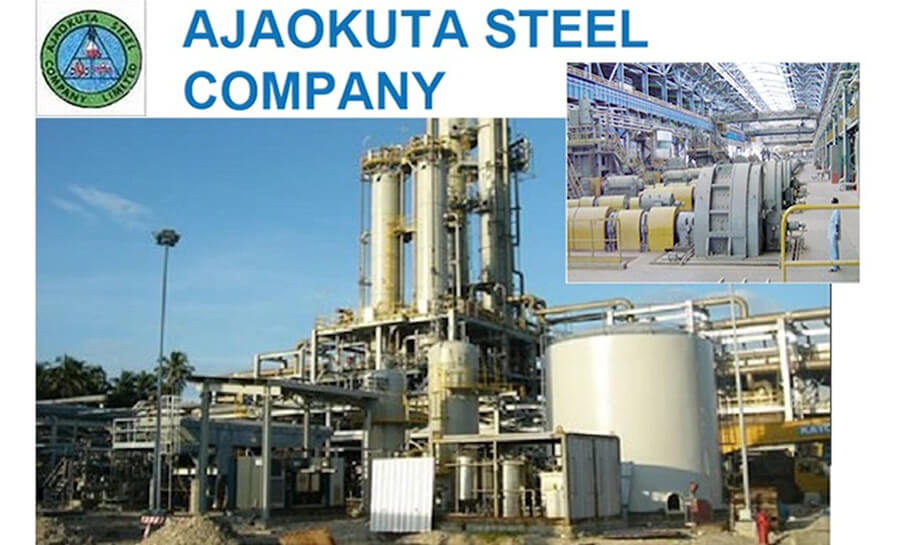
Nigeria continues to spend more than ₦1 trillion annually on steel imports, despite years of government investment in the Ajaokuta Steel Complex and other efforts to revive domestic steel production.
The development has renewed concerns over Nigeria’s inability to fully utilise its steel-making capacity, with stakeholders warning that continued dependence on imported steel is putting pressure on the country’s foreign exchange reserves, weakening local manufacturing and limiting the contribution of the steel sector to economic growth.
The latest concerns also come against the backdrop of the Federal Government’s continued efforts to reposition the Ajaokuta Steel Complex and establish a viable domestic steel industry capable of meeting a substantial portion of Nigeria’s demand.
Over the years, billions of naira have been committed to maintaining, rehabilitating and developing the complex. Yet, the country remains heavily dependent on imports to satisfy the needs of the construction, manufacturing, engineering and infrastructure sectors.
Ajaokuta’s Unfulfilled Potential
Established as one of Nigeria’s most ambitious industrial projects, the Ajaokuta Steel Complex was designed to provide the foundation for an integrated steel industry.
The complex was expected to produce steel locally, supply raw materials to downstream industries and support the development of engineering and manufacturing capabilities.
However, decades after the project was initiated, Ajaokuta has failed to operate at the level originally envisaged.
Successive administrations have announced plans to revive the complex, while substantial public funds have been allocated to rehabilitation and related activities. Despite these interventions, Nigeria has yet to achieve the level of domestic steel production required to significantly reduce its dependence on imports.
The latest figures showing steel imports of about ₦1 trillion therefore highlight the gap between government spending and actual industrial output.
Heavy Dependence on Imports
Steel remains one of the most important inputs for Nigeria’s developing economy.
The construction industry relies heavily on steel for buildings, bridges, roads, transmission infrastructure and other major projects. Manufacturers also require steel for machinery, equipment, vehicles and industrial components.
When domestic production is insufficient, businesses are forced to turn to foreign suppliers.
This creates additional costs for local manufacturers, particularly when the naira is under pressure and foreign exchange becomes more expensive.
Import dependence can also expose the economy to fluctuations in international steel prices, shipping costs and global supply-chain disruptions.
For Nigeria, the challenge is particularly significant because the country has long sought to diversify its economy away from crude oil while developing local manufacturing capacity.
Billions Spent, Limited Output
The reported ₦7.2 billion expenditure associated with Ajaokuta has once again raised questions about the effectiveness of government interventions in the complex.
Stakeholders argue that the key issue is not simply how much money has been spent, but whether the investment has translated into sustainable production, jobs, industrial development and reduced import dependence.
They have called for greater transparency over government spending on Ajaokuta, including details of contracts, rehabilitation projects, equipment purchases and the current operational status of the facility.
According to critics, continuing to spend money on the complex without establishing a clear and commercially sustainable production model could lead to further expenditure without delivering the expected economic benefits.
Steel Industry Crucial to Industrialisation
Economists and industrial experts have consistently identified steel as a strategic sector for national development.
A functioning domestic steel industry can serve as a foundation for several other industries, including construction, automobile manufacturing, engineering, defence production, machinery and energy infrastructure.
The sector can also generate thousands of direct and indirect jobs while supporting the growth of small and medium-sized businesses involved in fabrication, metal processing and engineering services.
A strong steel industry would therefore have implications far beyond reducing imports.
It could strengthen Nigeria’s industrial base and contribute to the government’s broader efforts to promote local production and economic diversification.
Government Faces Pressure to Revive Ajaokuta
The Federal Government has repeatedly expressed its commitment to reviving Ajaokuta and developing Nigeria’s steel sector.
The challenge, however, has been turning political commitments into sustained industrial production.
Experts have called for a comprehensive strategy that goes beyond rehabilitation of the complex itself. Such a strategy would need to address access to reliable electricity, availability of raw materials, transportation infrastructure, financing, management, technology and market access.
There are also concerns about ensuring that any future investment is protected from the inefficiencies and administrative challenges that have affected the project in the past.
Private Sector Participation
One possible solution being advocated is greater private-sector participation in the steel industry.
Rather than relying entirely on government funding, authorities could create an investment framework that encourages credible local and international companies to invest in steel production, processing and downstream manufacturing.
Such partnerships could bring capital, technology and technical expertise while reducing the financial burden on government.
However, experts also stress the need for strong regulatory oversight to ensure that strategic national assets are managed transparently and that investors meet clearly defined production and investment targets.
Economic Cost of Import Dependence
Nigeria’s continued expenditure on imported steel also raises broader questions about the country’s industrial policy.
Every year, significant amounts of foreign exchange are used to purchase products that stakeholders believe Nigeria has the potential to manufacture domestically.
Reducing this dependence could help conserve foreign exchange, strengthen the naira, create employment and increase tax revenues.
It could also help Nigerian manufacturers become more competitive by ensuring a more predictable supply of locally produced industrial inputs.
However, local steel must also be competitive in terms of quality and price. Simply restricting imports without improving domestic production could increase costs for businesses and consumers.
The Road Ahead
The renewed debate over Ajaokuta and Nigeria’s ₦1 trillion steel import bill presents the government with an opportunity to rethink its approach to the sector.
Rather than treating Ajaokuta as an isolated industrial project, experts say it should be integrated into a broader national steel development strategy that connects mining, processing, manufacturing, infrastructure and export development.
Nigeria possesses significant mineral resources and a large domestic market capable of supporting a viable steel industry.
What has remained lacking is the combination of effective management, infrastructure, investment, policy consistency and long-term commitment required to transform that potential into productive capacity.
The continued importation of more than ₦1 trillion worth of steel is a reminder of the economic price of failing to do so.
For a country seeking to industrialise, create jobs and reduce its dependence on imports, the revival of the steel industry could represent one of the most important steps towards achieving those goals.
The question now is whether the Federal Government can finally transform decades of promises and billions of naira in expenditure into a functioning steel industry capable of meeting Nigeria’s needs and competing in the global market.