

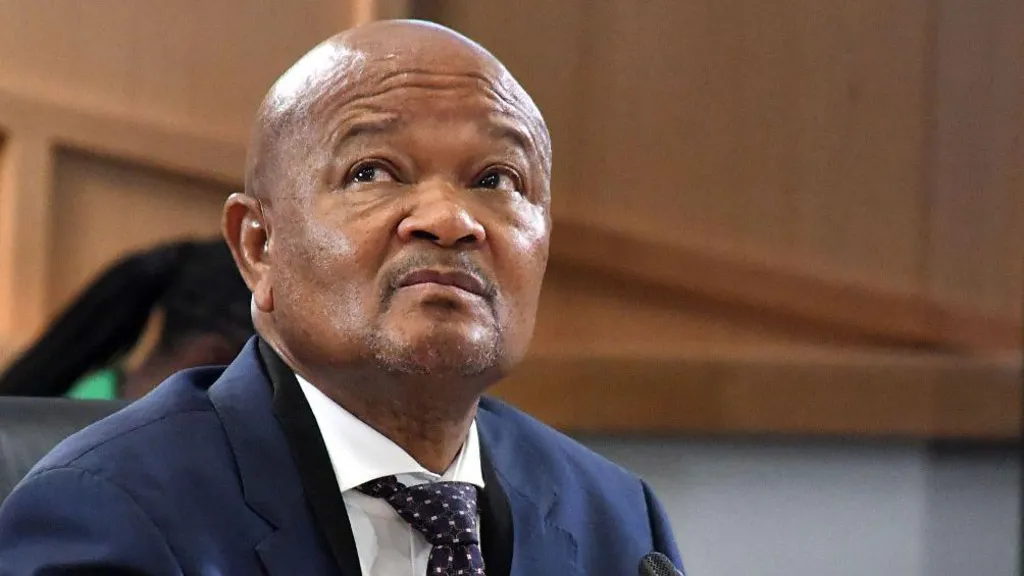
JOHANNESBURG — South Africa is grappling with explosive allegations of police corruption, organised crime infiltration, and political interference, as two parallel public inquiries continue to uncover disturbing evidence.
The scandal centres on Police Minister Senzo Mchunu, suspended after senior officer Lt‑Gen Nhlanhla Mkhwanazi claimed that organised crime groups had penetrated government structures. Mchunu, a senior ANC figure and ally of President Cyril Ramaphosa, denies wrongdoing.
The “Big Five” Cartel Allegations
Police crime intelligence boss Lt‑Gen Dumisani Khumalo testified that a drug trafficking cartel known as the “Big Five” operates across several provinces, with tentacles in politics and the justice system. He alleged the cartel is involved in narcotics, contract killings, cross‑border hijackings, and kidnappings, while manipulating investigations to protect its interests.
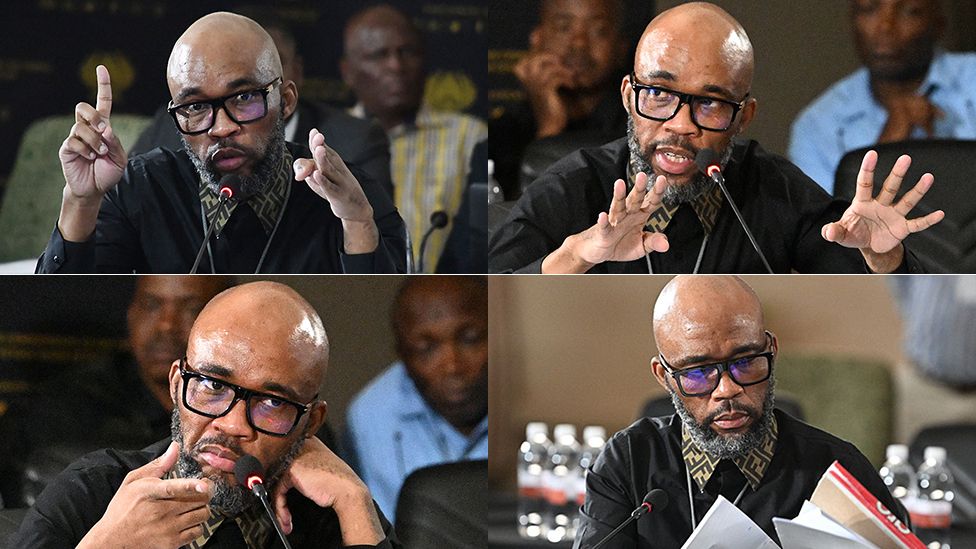
One alleged leader is businessman Vusimusi “Cat” Matlala, currently facing 25 criminal charges including attempted murder. Despite his denials, witnesses described Matlala’s close ties to senior police officials and politicians, including alleged financial support for ANC activities.
Murder of a Commission Witness
The inquiries took a darker turn when Marius van der Merwe, a former police officer who testified about corruption, was murdered outside his home in early December — just weeks after appearing before Judge Mbuyiseli Madlanga’s commission. His death sparked outrage and renewed concerns about the targeting of whistleblowers in South Africa, with rights groups warning of systemic retaliation against those who expose wrongdoing.
Political Fallout
Mchunu has rejected claims that he benefited from Matlala’s financial support, insisting he has “never been accused of corruption, not once.” Former Police Minister Bheki Cele also faced scrutiny after Matlala alleged he demanded a facilitation fee to stop police harassment. Cele admitted knowing Matlala but denied receiving money.
What Happens Next
President Ramaphosa is reviewing an interim report from the Madlanga Commission, which is proceeding in three phases:
- Phase 1: Witnesses present allegations.
- Phase 2: Implicated officials respond.
- Phase 3: Witnesses return to clarify testimony.
The final report is expected in 2026, alongside findings from Parliament’s own inquiry. South Africans are asking whether these investigations will finally force the government to confront entrenched corruption within the police service.
Wider Context
South Africa has long struggled with organised crime and corruption scandals. The revelations about the “Big Five” cartel echo past concerns about state capture, raising fears that criminal networks may be undermining democratic institutions. Analysts warn that unless the government acts decisively, public trust in law enforcement could erode further.