

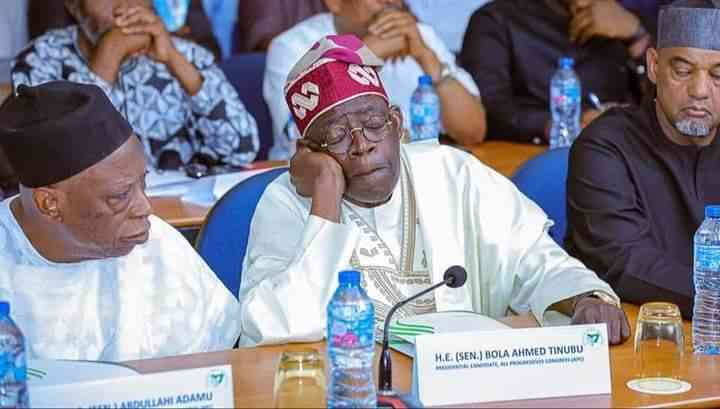
The presidential candidate of the Social Democratic Party (SDP), Prince Adewole Adebayo, has criticised President Bola Ahmed Tinubu for failing to personally attend the signing of the National Peace Accord ahead of the 2027 general elections.
Adebayo described the President’s absence from the ceremony in Abuja as a troubling development, arguing that Tinubu’s physical presence would have demonstrated a stronger commitment to peaceful, free, fair and credible elections.
Presidential candidates and representatives of political parties participating in the 2027 elections signed the National Peace Accord on Tuesday, pledging to conduct their campaigns peacefully and focus on issues rather than violence or inflammatory rhetoric. (Premium Times Nigeria)
Speaking after the ceremony, Adebayo said the President’s decision not to attend could send the wrong message to political actors, security agencies and government officials responsible for maintaining law and order during the electoral process.
According to him, the President, as the country’s highest political authority, should have personally participated in an initiative aimed at securing peaceful elections.
Adebayo argued that Tinubu’s attendance would have reassured political parties and the electorate that the Federal Government was fully committed to protecting the integrity of the electoral process.
He urged the President to explain the reason for his absence and make a public statement reaffirming his commitment to peaceful elections.
The SDP candidate maintained that the importance of electoral peace goes beyond political considerations, describing the credibility and peaceful conduct of elections as matters of national security.
He argued that democratic continuity depends heavily on the ability of political actors to respect electoral rules and ensure that disputes are resolved through lawful means rather than violence.
Adebayo also questioned the decision to have the Secretary to the Government of the Federation, George Akume, represent the President at the event.
He said the President’s direct participation would have carried greater significance because the peace accord was intended to secure commitments from political leaders and presidential candidates ahead of a crucial national election.
The SDP candidate recalled that former President Muhammadu Buhari attended the signing of a similar peace accord ahead of the 2023 elections, despite not being a candidate in that election. (Sahara Reporters)
Adebayo argued that the precedent demonstrated the importance of senior political leaders personally identifying with initiatives designed to promote peaceful elections.
He maintained that the peace accord should not be treated as merely a ceremonial event, but as an opportunity for political leaders to demonstrate by example the standards they expect from their supporters.
According to him, political leaders must be willing to make personal commitments to peaceful conduct if they expect their supporters and campaign organisations to reject violence.
The National Peace Accord was organised by the National Peace Committee as part of preparations for the 2027 general elections. Participants committed themselves to peaceful conduct and issue-based campaigns before, during and after the elections. (Premium Times Nigeria)
Several major political figures and presidential candidates participated in the signing ceremony, including Peter Obi of the Nigeria Democratic Congress, Omoyele Sowore of the African Action Congress and Adebayo of the SDP. (Premium Times Nigeria)
Adebayo said the signing provided an important opportunity for political actors to reassure Nigerians that the 2027 electoral contest could be conducted without violence or intimidation.
He stressed that political disagreements should be settled through democratic institutions and the courts rather than through confrontation or the use of force.
The criticism comes as political activities intensify ahead of the 2027 elections, with political parties already mobilising supporters, strengthening their structures and preparing campaign strategies.
The approaching election is expected to generate intense competition, particularly as opposition parties seek to challenge the ruling All Progressives Congress and present alternative political platforms to voters.
Against this background, concerns about electoral violence, inflammatory rhetoric and the conduct of political campaigns are likely to remain prominent throughout the election season.
Adebayo therefore called on the President to publicly reaffirm his commitment to the peace process, arguing that such a declaration would help reassure political parties, security personnel and Nigerians generally.
He maintained that the credibility of the electoral process would depend not only on the actions of the Independent National Electoral Commission but also on the conduct of political parties, candidates, security agencies and government officials.
The SDP candidate’s comments have added to the wider debate over the responsibilities of political leaders in ensuring peaceful elections.
As preparations for 2027 gather momentum, stakeholders are expected to place greater emphasis on preventing violence, curbing hate speech and ensuring that political competition remains within the boundaries of democratic practice.
For Adebayo, however, the President’s personal involvement in the peace process is essential to sending a clear message that the Federal Government will support a peaceful and credible electoral environment.
He urged Tinubu to address concerns surrounding his absence and demonstrate through words and actions that the administration remains committed to safeguarding Nigeria’s democratic process.
With political campaigns expected to intensify in the months ahead, the implementation of the commitments contained in the National Peace Accord will be closely monitored by political parties, civil society organisations, security agencies and the electorate.