

The Managing Director of the Niger Delta River Basin Development Authority (NDRBDA), Prince Ebitimi Amgbare, has expressed optimism that ongoing investments in education, agriculture and rural development will strengthen public support for President Bola Ahmed Tinubu’s administration.
Amgbare, who has been highlighting the impact of the Federal Government’s programmes, said tangible projects that directly improve the lives of citizens would be critical to sustaining confidence in the administration ahead of the 2027 general elections.
According to him, government policies would gain greater acceptance when Nigerians can see their benefits in practical areas such as education, farming, employment and access to basic infrastructure.
He emphasised the importance of implementing projects that address the everyday needs of citizens, particularly people living in rural communities who depend heavily on agriculture and government-supported social services.
Amgbare said investment in education remained essential to Nigeria’s long-term development, noting that providing young people with access to quality learning and relevant skills would improve their prospects and contribute to economic growth.
He also pointed to agriculture as another area capable of generating widespread benefits for Nigerians, particularly through increased food production, job creation and improved livelihoods for farmers.
The NDRBDA boss said agricultural interventions should go beyond the provision of inputs by supporting farmers with irrigation, mechanisation, improved farming techniques and access to markets.
He stressed that strengthening agricultural production would not only improve food security but also create opportunities for young Nigerians and reduce dependence on imported food products.
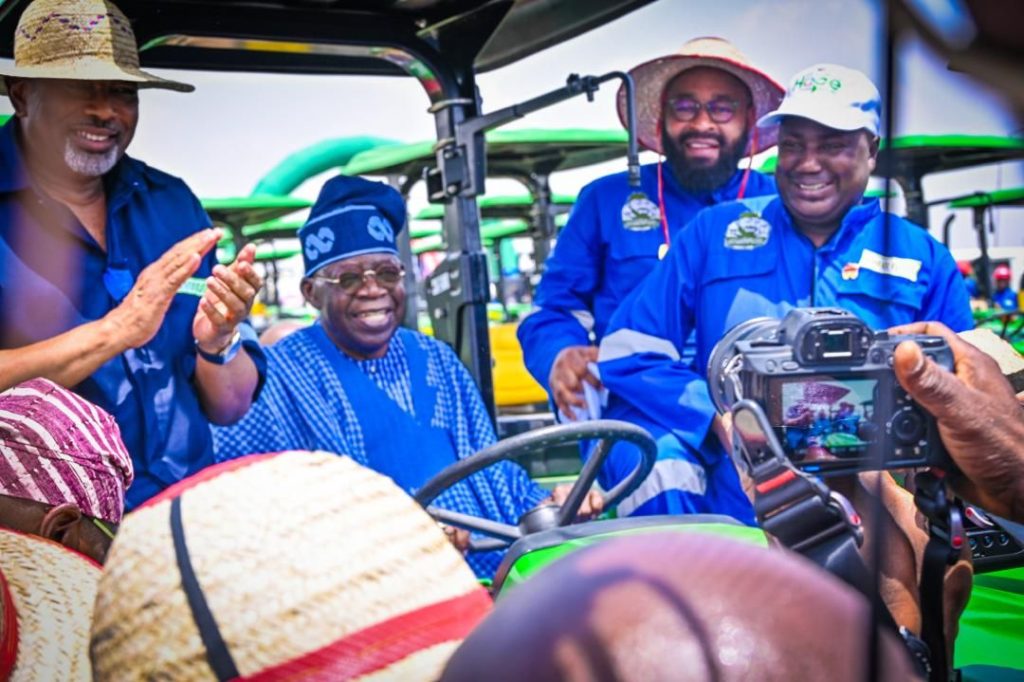
Amgbare’s position comes amid the Federal Government’s renewed emphasis on agriculture and food security. President Tinubu’s administration has introduced several initiatives aimed at increasing agricultural productivity, including the nationwide deployment of tractors and other farm equipment under the Renewed Hope Agricultural Mechanisation Programme.
The Federal Government has also pursued initiatives focused on improving soil health, increasing fertiliser efficiency and raising farmers’ yields as part of its broader food-security agenda.
Amgbare argued that the success of such programmes would depend largely on their effective implementation and ability to reach ordinary Nigerians.
He called for greater attention to communities that have historically faced limited access to infrastructure and economic opportunities, saying development projects should be spread across different regions and communities.
According to him, projects in education and agriculture could have a multiplier effect by improving human capital, strengthening household incomes and creating employment opportunities.
He further maintained that government interventions should be accompanied by adequate monitoring to ensure that resources allocated to development programmes produce measurable results.
Agriculture as a Tool for Economic Empowerment
Amgbare identified agriculture as one of the sectors with the greatest potential to transform Nigeria’s economy and improve the standard of living of millions of citizens.
He said farmers need access to modern equipment, financing, irrigation facilities, improved seedlings and other inputs required to increase productivity.
The NDRBDA, which has responsibilities connected to water resources and agricultural development, has continued to emphasise the importance of irrigation and water infrastructure in supporting farming communities.
Amgbare has previously called for increased funding for the authority to enable it to rehabilitate water projects and better fulfil its mandate in the Niger Delta region.
He has also highlighted the need to revive moribund water and agricultural projects while exploring renewable energy solutions to make rural water infrastructure more sustainable.
The renewed focus on agriculture is particularly significant as Nigeria continues to grapple with food-price pressures and the need to increase domestic production.
Amgbare said sustained investment in farming could help reduce pressure on household incomes by increasing food availability while creating new sources of income for rural communities.
Education and Youth Development
On education, the NDRBDA managing director stressed that the country’s future depended heavily on the quality of opportunities available to young people.
He said investment in schools, vocational training and skills development would help prepare young Nigerians for a changing economy and enable them to contribute meaningfully to national development.
The Federal Government has also highlighted education, mechanised agriculture and technology skills as important components of its development strategy. Vice President Kashim Shettima previously said the administration had increased its focus on education and supported initiatives linking universities with mechanised farming and entrepreneurship.
Amgbare argued that government policies capable of improving educational opportunities and creating pathways to employment would have a direct impact on public perception of the administration.
He said young Nigerians should be given practical skills and opportunities that enable them to become employers and productive participants in the economy rather than remain dependent on government assistance.
Visible Projects and Public Confidence
The NDRBDA boss also stressed the importance of visible development projects in building public confidence in government.
He noted that citizens are more likely to support policies when they can directly experience improvements in their communities.
For rural residents, such improvements could include functional irrigation schemes, access roads, schools, healthcare facilities, potable water and agricultural support programmes.
Amgbare therefore urged government agencies responsible for implementing federal programmes to ensure that projects are properly executed and maintained.
He said the effectiveness of government should ultimately be measured by the positive changes citizens experience in their daily lives.
As political activities gradually intensify ahead of the 2027 elections, the performance of government programmes is expected to remain a major factor in public discourse.
For Amgbare, sustained investment in sectors such as education and agriculture could provide the practical foundation needed to strengthen support for Tinubu’s administration.
He maintained that development should remain the central focus of governance and that government must continue to prioritise programmes capable of improving livelihoods, expanding opportunities and strengthening economic resilience.
With agriculture, education and infrastructure occupying prominent positions in the Federal Government’s development agenda, Amgbare expressed confidence that effective implementation of these initiatives would deepen public confidence in the administration.
He consequently called for continued collaboration among federal agencies, state governments, communities and private-sector stakeholders to ensure that development programmes achieve their intended objectives.
According to him, the ultimate measure of any government policy is its impact on the people, and projects that deliver tangible improvements in education, farming and economic opportunities could play a significant role in shaping public support for the Tinubu administration.