

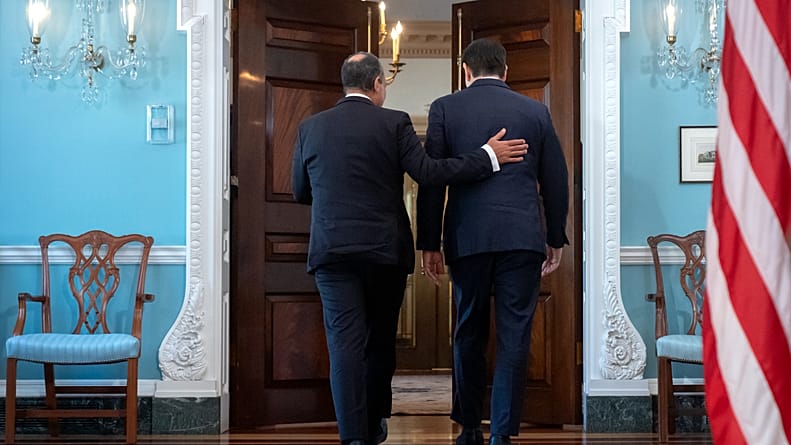
CAIRO, Egypt — Egyptian Foreign Minister Badr Abdel‑Aty met with U.S. Deputy Secretary of State Christopher Landau in Cairo on Sunday for high‑level talks aimed at strengthening the strategic partnership between Egypt and the United States. The meeting underscored the importance of bilateral cooperation at a time when the Middle East and Africa face overlapping crises of conflict, humanitarian emergencies, and geopolitical competition.
Gaza: Egypt’s Role in Peace Efforts
One of the central topics was the situation in Gaza, where Egypt has long played a pivotal role as mediator. Abdel‑Aty reiterated Cairo’s support for the next phase of the peace plan, which includes:
- Rapid deployment of an international stabilization force to secure the territory.
- Opening of the Rafah border crossing in both directions to facilitate humanitarian aid and movement of civilians.
- Israeli withdrawal to enable reconstruction and sustained humanitarian relief.
Egypt’s position reflects its dual role as both a regional stabilizer and a frontline state directly affected by Gaza’s instability. The Rafah crossing, which links Gaza to Egypt’s Sinai Peninsula, has historically been a lifeline for Palestinians but also a flashpoint in Egyptian‑Israeli relations.
Sudan: Call for Humanitarian Truce
The talks also addressed the ongoing conflict in Sudan, where fighting between rival military factions has devastated the country since April 2023. Abdel‑Aty emphasized Egypt’s call for:
- A humanitarian truce to halt violence.
- Establishment of safe corridors for civilians and aid delivery.
- A Sudanese‑led political process that preserves national unity and institutions.
Egypt, which shares a long border with Sudan, has been directly impacted by the crisis, hosting thousands of refugees while warning of the destabilizing effects on the wider region.
Horn of Africa: Somaliland and Regional Stability
Abdel‑Aty also raised concerns about the Horn of Africa, warning that any recognition of Somaliland would violate Somalia’s sovereignty and threaten stability in both the Horn and the Red Sea corridor. Egypt’s position aligns with the African Union’s stance on maintaining Somalia’s territorial integrity, but it also reflects Cairo’s broader interest in safeguarding maritime security in one of the world’s most strategic waterways.
The Nile: Egypt’s Lifeline
Perhaps the most sensitive issue discussed was the Grand Ethiopian Renaissance Dam (GERD), a massive hydroelectric project on the Blue Nile. Egypt and Sudan have long expressed fears that the dam could reduce water flow downstream, jeopardizing agriculture, drinking water supplies, and national security.
Abdel‑Aty reaffirmed that the Nile is Egypt’s lifeline, stressing cooperation with Nile Basin states to reach a fair and sustainable solution. While Ethiopia insists the dam is essential for its development, Egypt views it as an existential threat, making the dispute one of the most pressing diplomatic challenges in Africa.
US‑Egypt Strategic Partnership
The visit by Deputy Secretary Landau reflects Washington’s interest in maintaining strong ties with Cairo, a longstanding ally in the Middle East. The U.S. sees Egypt as a critical partner in:
- Counterterrorism operations in the Sinai and broader region.
- Mediation efforts in Gaza and Sudan.
- Maritime security in the Red Sea and Suez Canal.
For Egypt, U.S. support provides both diplomatic leverage and economic assistance, particularly in times of regional turbulence.
Outlook
The Cairo talks highlight Egypt’s central role in regional diplomacy, balancing its national interests with broader efforts to stabilize neighboring states. From Gaza to Sudan, the Horn of Africa to the Nile Basin, Egypt’s foreign policy is deeply intertwined with regional crises that have global implications.
While the meeting reaffirmed U.S.‑Egypt cooperation, the challenges ahead remain formidable. Achieving peace in Gaza, resolving Sudan’s civil conflict, managing the GERD dispute, and safeguarding Red Sea stability will require sustained engagement, compromise, and international support.
For now, Egypt’s message is clear: it seeks to remain a cornerstone of regional diplomacy, leveraging its strategic partnership with the United States to navigate one of the most complex geopolitical landscapes in the world.