

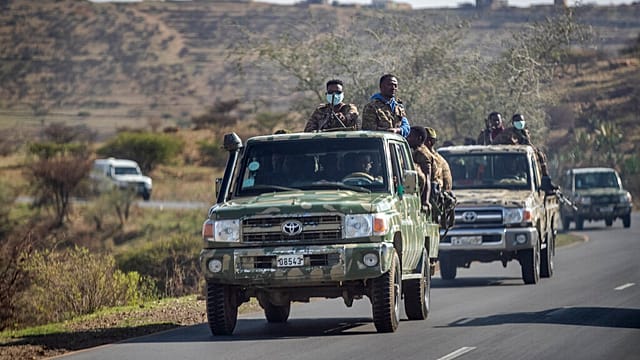
ADDIS ABABA, Ethiopia — A tragic drone strike in Ethiopia’s Amhara region has killed at least 40 pro‑government fighters, according to local officials and healthcare workers, raising fresh questions about the military’s use of aerial weaponry in a conflict already marked by confusion and mistrust.
The Incident
The strike occurred on January 15 in the Waghemira area, where a camp housing militia fighters allied with the government was mistakenly targeted. Witnesses described scenes of devastation as smoke and flames engulfed the camp.
“I immediately saw smoke and flames… I rushed to the scene… I saw body parts of the dead and wounded people writhing in pain,” a local official told AFP, speaking anonymously. The official reported that 36 people died instantly, while two more succumbed to injuries in hospital. A nurse, Abebaw Zinabu, confirmed that “more than 40” were killed.
The Ethiopian army reportedly informed local authorities the following day that the strike was a “mistake”, though witnesses noted the drone hovered over the camp for some time before firing.
Background: Amhara’s Insurgency
Amhara, Ethiopia’s second most populous region with about 23 million people, has been gripped by insurgency since April 2023, when the federal government moved to disarm local ethnic militias known as the Fano. These militias had long fought alongside government forces, defending territory against insurgents and rival groups.
The disarmament campaign sparked widespread resistance, with Fano fighters turning against federal authorities. Since then, Amhara has become one of Ethiopia’s most volatile regions, with drone strikes frequently deployed to suppress insurgent activity.
Drone Warfare and Civilian Risks
The Ethiopian army has increasingly relied on drones to target insurgents, but the January 15 strike highlights the risks of misidentification and collateral damage. According to the Armed Conflict Location & Event Data Project (ACLED), more than 70 drone strikes have been carried out in Amhara since 2023, killing at least 669 people.
Critics argue that drone warfare, while effective against insurgent hideouts, often lacks precision in complex environments where militias, civilians, and government allies intermingle. The Waghemira strike underscores the dangers of deploying such technology without robust safeguards.
Official Silence
An army spokesperson told AFP they had not “received any information” about the incident, fueling frustration among locals who demand accountability. For residents, the silence from Addis Ababa deepens mistrust in the government’s handling of the crisis.
“How could an attack be carried out by our own forces on a well‑known camp that has for six years housed militia members defending the government, fighting in deserts and valleys, far from their families and loved ones?” the local official asked.
Wider Security Challenges
Ethiopia is currently facing multiple insurgencies, particularly in Amhara and Oromia, alongside rising tensions with neighboring Eritrea. The fragile peace following the 2020–2022 Tigray war has not resolved underlying ethnic and political grievances. Instead, new conflicts have emerged, threatening national stability.
In Amhara, the government’s attempt to disarm militias has backfired, creating a cycle of resistance and repression. In Oromia, insurgent groups continue to challenge federal authority. Meanwhile, relations with Eritrea remain tense, with accusations of cross‑border interference.
Humanitarian Impact
The Waghemira strike adds to the mounting humanitarian toll. Families of the victims, many of whom had fought loyally for the government, now face grief and uncertainty. Civilians across Amhara live under constant fear of drone attacks, insurgent raids, and military reprisals.
Aid organizations warn that displacement is rising, with thousands fleeing violence. Access to food, healthcare, and shelter remains limited, exacerbating the crisis.
Outlook
The mistaken strike in Waghemira is a stark reminder of the complexities of Ethiopia’s conflicts. As the government struggles to contain insurgencies, reliance on drone warfare risks alienating allies and deepening mistrust among civilians.
Without transparency, accountability, and renewed dialogue, Ethiopia faces the danger of escalating violence across multiple fronts. For the people of Amhara, the tragedy of January 15 is not just a military error — it is a symbol of a conflict that continues to consume lives, communities, and trust in the state.