

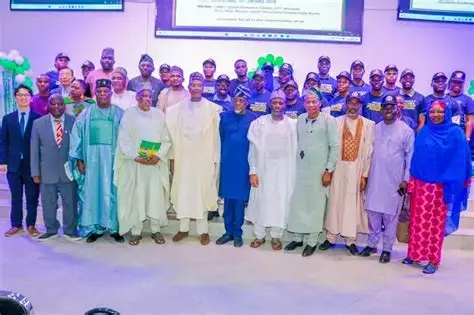
The Federal Government has launched a nationwide learning assessment to address declining literacy and numeracy levels across Nigeria’s basic and secondary education system.
As part of the exercise, the Minister of Education, Dr. Tunji Alausa, on Friday visited selected schools in Kuje, Federal Capital Territory (FCT), to monitor the assessment process.
The schools visited included Government Secondary School, Kuje; Junior Secondary School, Kuje Central; and Topaz Model Primary School on Kango Road, Kuje.
Speaking during the tour, Alausa said the assessment forms part of the government’s renewed efforts to evaluate learning outcomes and determine what pupils and students are actually learning at different stages of their education.
He explained that the exercise covers pupils in Primary 2, Primary 3 and Primary 5, as well as students in Junior Secondary School (JSS) 2 and JSS 3, alongside selected Senior Secondary School subjects, including English Language, Mathematics and Basic Science.
According to the minister, the assessment is designed to generate credible national data that will guide education policies and interventions.
“We are conducting a national learning assessment to understand how our students are performing in core subjects across primary, junior secondary and senior secondary levels,” he said.
“Nigeria has not conducted a comprehensive national learning assessment in some time. The last exercise was carried out in 2023 by the Universal Basic Education Commission (UBEC), while the previous one was conducted by the Federal Ministry of Education in 2018.”
Alausa disclosed that the government plans to institutionalise the assessment every three years to ensure the availability of consistent data for evidence-based policymaking.
“Going forward, this assessment will be conducted every three years so that we can track progress, identify gaps and respond appropriately,” he added.
The minister expressed concern over the country’s high level of learning poverty, noting that many children are unable to attain expected literacy and numeracy standards.
He said the initiative aligns with President Bola Ahmed Tinubu’s broader education reform agenda.
“Education is central to the President’s vision of building a one-trillion-dollar economy. We must ensure that what is taught in our classrooms translates into measurable learning outcomes,” he said.
Reflecting on his inspection tour, Alausa said he observed the assessment process in both public and private schools and noted differences in infrastructure and classroom conditions.
“I visited a primary school, a government secondary school and a private school today. The students were actively engaged, and the learning environment is improving in many places.
“Some public schools have been renovated and now provide a more conducive learning environment. Although some private schools face challenges such as overcrowded classrooms, they continue to play an important role in keeping many children in school,” he said.
He added that private schools remain a vital component of Nigeria’s education system and should be supported through effective regulation rather than exclusion.
Also speaking, the Mandate Secretary of the FCT Education Secretariat, Dr. Danlami Hayyo, described the nationwide assessment as a significant step towards improving education quality across the country.
He said the FCT Administration, under the leadership of Nyesom Wike, has invested heavily in upgrading educational infrastructure throughout the territory.
“We have renovated more than 120 educational facilities, including classrooms, toilets and other critical infrastructure. This assessment aligns with the President’s education agenda and will help us accurately measure the academic performance of our students at the national level,” Hayyo said.
He reaffirmed the FCT Administration’s commitment to supporting the Federal Government’s education transformation agenda through sustained investment and collaboration.