

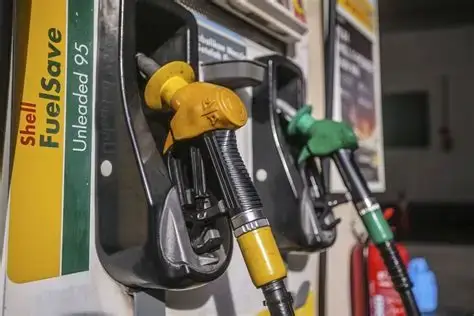
The Federal Government has reaffirmed that it will not reinstate fuel subsidies or impose price controls, emphasizing its continued commitment to a market-driven economic system. This position was made clear by Taiwo Oyedele, the Minister of Finance and Coordinating Minister of the Economy, during remarks delivered on Tuesday in Paris.
According to Oyedele, subsidy regimes have historically created distortions within the economy, making them unsustainable and counterproductive. For this reason, the government has firmly ruled out any return to such policies. At the same time, he dismissed the possibility of introducing price controls, stressing that the administration believes in allowing market forces to determine prices. However, he noted that this does not mean a lack of oversight. Regulatory mechanisms will remain in place to ensure fairness and prevent abuse within the supply chain, including among suppliers, traders, and manufacturers.
Oyedele further explained that while the government supports a liberalized pricing environment, it is equally committed to protecting consumers from exploitation. He emphasized that responsible regulation will be enforced to strike a balance between free-market operations and consumer protection.
In addition, the minister highlighted how global geopolitical developments—particularly tensions involving Iran—pose both risks and opportunities for Nigeria. He pointed out that such dynamics could create favorable conditions for attracting investment into the energy sector and boosting national revenue under the current pricing structure.
The government’s broader economic strategy, he said, is focused on increasing revenue generation and directing those funds toward resolving supply-side constraints. This approach is also intended to help manage inflation in a sustainable way.
Nigeria has experienced a sharp rise in inflation since the removal of petrol subsidies in May 2023. Data from the National Bureau of Statistics shows that headline inflation increased from 22.41 percent in May 2023 to 34.19 percent by June 2024, marking a record high. This surge has been largely driven by higher costs of fuel, food, and transportation.
Earlier, Bola Ahmed Tinubu addressed investors, stating that the removal of the fuel subsidy has contributed significantly to stabilizing Nigeria’s foreign exchange market. He described the subsidy as a heavy burden on the nation’s finances and noted that its removal has helped improve foreign exchange stability, according to a statement shared by his special assistant, Dada Olusegun.
Overall, the government’s stance reflects a clear shift toward market-oriented reforms, with an emphasis on fiscal sustainability, increased investment, and economic stability, while maintaining regulatory safeguards to protect citizens.