

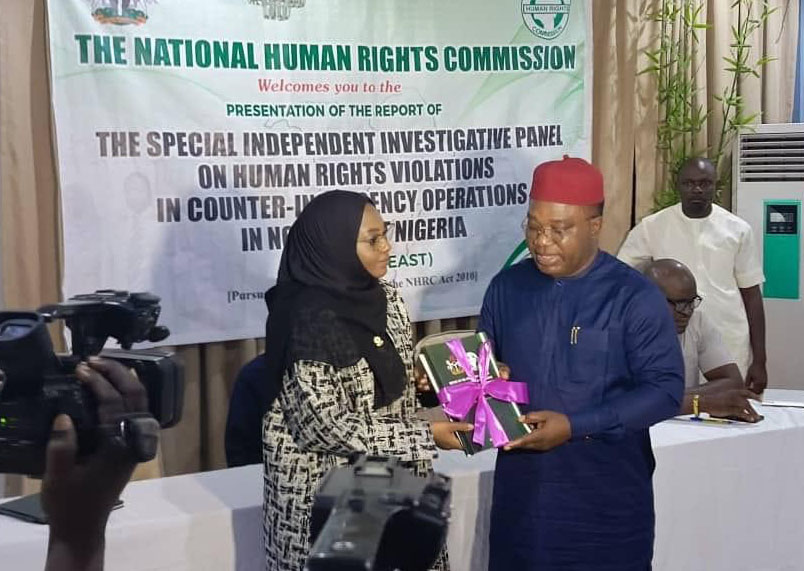
The National Human Rights Commission (NHRC) has disclosed that no fewer than 600 cases of human rights violations were recorded in Borno State, raising fresh concerns over the protection of fundamental rights in the conflict-affected region.
The Commission revealed this during a recent assessment of rights conditions in the state, noting that the cases span a range of abuses linked to insecurity, displacement, and socio-economic challenges.
Nature of Reported Violations
According to the National Human Rights Commission, the documented cases include unlawful detention, gender-based violence, child abuse, denial of access to basic services, and other forms of rights infringements. Many of the incidents were reported in communities heavily impacted by insurgency and humanitarian crises.
The Commission noted that vulnerable groups—particularly women, children, and internally displaced persons (IDPs)—account for a significant proportion of the victims.
Impact of Prolonged Insecurity
Borno State has remained one of the epicentres of insurgency in Nigeria’s North-East, with years of conflict disrupting livelihoods and weakening institutional structures. The NHRC observed that the prolonged insecurity has created conditions where rights violations can occur with limited oversight.
Displacement camps and host communities, in particular, were identified as areas where residents face heightened risks due to overcrowding, limited resources, and inadequate protection mechanisms.
Call for Urgent Action
In response to the findings, the National Human Rights Commission called on government agencies, security forces, and humanitarian partners to intensify efforts to safeguard human rights across the state.
The Commission urged authorities to ensure accountability for perpetrators and to strengthen systems that allow victims to report abuses without fear of retaliation.
Need for Awareness and Support
The NHRC also emphasised the importance of public awareness, noting that many victims remain unaware of their rights or the channels available for seeking redress. It called for expanded outreach programmes, legal aid services, and psychosocial support for affected individuals.
Stakeholder Reactions
Human rights advocates have described the report as a sobering reminder of the challenges facing conflict-affected regions. They stress that beyond documentation, concrete steps must be taken to address the root causes of violations, including poverty, insecurity, and weak institutional capacity.
Ongoing Monitoring
The National Human Rights Commission reaffirmed its commitment to continuous monitoring and reporting of human rights conditions nationwide. It pledged to work closely with relevant stakeholders to promote justice, accountability, and the protection of citizens’ rights.
Looking Ahead
As efforts to stabilise Borno State continue, stakeholders agree that safeguarding human rights must remain a central priority. The latest figures highlight the urgency of coordinated interventions to ensure that all residents, particularly the most vulnerable, can live with dignity and security.