

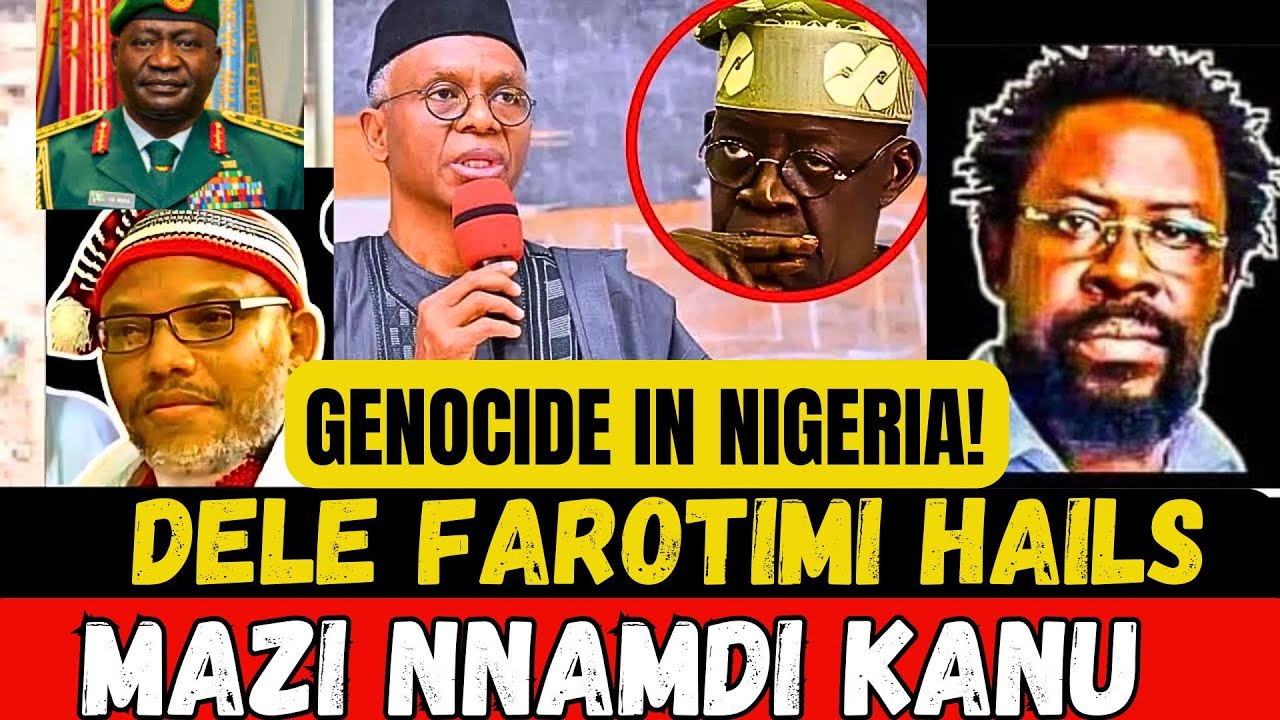
Human rights lawyer and activist, Dele Farotimi, has expressed strong support for the views of the detained leader of the Indigenous People of Biafra (IPOB), Nnamdi Kanu, describing him as being “110 per cent correct” in his assessment of Nigeria and the challenges confronting the country.
Farotimi made the remarks while discussing the state of the Nigerian nation, governance and the persistent problems that have continued to fuel public dissatisfaction across different parts of the country.
According to him, several of the concerns repeatedly raised by Kanu about Nigeria’s political, economic and social conditions deserve serious attention rather than outright dismissal.
He argued that the country’s problems could not be adequately addressed by ignoring the grievances expressed by individuals or groups who feel marginalised by the existing political and economic system.
Farotimi Backs Kanu’s Position
Farotimi’s comments represent a strong endorsement of Kanu’s longstanding criticisms of Nigeria’s political structure and governance system.
Kanu has for years raised concerns about what he describes as structural inequalities, political marginalisation and poor governance in Nigeria. His agitation has largely centred on the demand for greater self-determination for the South-East and, at various points, the creation of an independent Biafran state.
Farotimi, however, said the issues raised by Kanu should be examined within the broader context of Nigeria’s history and the experiences of its citizens.
He maintained that disagreements over the methods adopted by political activists should not prevent Nigerians from considering the substance of their arguments.
According to him, some of the problems highlighted by Kanu are visible in the country’s political institutions, economic policies and social conditions.
Nigeria’s Persistent Challenges
The lawyer pointed to a number of challenges confronting Nigeria, including poverty, unemployment, insecurity, corruption, weak institutions and limited access to basic services.
He argued that these problems have persisted despite decades of political transitions and changes in government.
Farotimi suggested that addressing the country’s difficulties would require more than changing political leaders. He said Nigerians must also critically examine the structures and institutions responsible for governance.
He further maintained that national development could only be achieved when citizens have confidence in government and believe that public institutions serve their interests fairly.
Debate Over Kanu’s Agitation
Kanu’s activities and the separatist agitation associated with IPOB have remained among the most controversial political issues in Nigeria.
Supporters of the movement argue that the South-East has suffered political and economic marginalisation and deserves greater autonomy or the opportunity to determine its own political future.
The Federal Government, however, has historically opposed separatist activities and has maintained that Nigeria’s unity remains non-negotiable.
The dispute has contributed to prolonged political and security tensions in parts of the South-East, with successive governments attempting to address the underlying grievances while also responding to security concerns associated with separatist activities.
Farotimi’s comments are therefore likely to generate further debate about the extent to which Kanu’s criticisms reflect broader concerns about Nigeria’s governance.
Calls for Honest National Conversation
The activist has consistently advocated for a more fundamental conversation about Nigeria’s political future.
Rather than dismissing criticisms of the country as threats to national unity, Farotimi has argued that grievances should be openly discussed and addressed through democratic processes.
He believes that genuine national dialogue could help Nigerians understand the historical and contemporary factors responsible for the country’s divisions.
According to this perspective, national unity should be built around justice, equality and respect for citizens rather than simply demanding that people remain united despite unresolved grievances.
Governance and Accountability
Farotimi also linked Nigeria’s challenges to what he described as weaknesses in accountability and leadership.
He argued that public officials must be held responsible for decisions that affect the lives of millions of Nigerians, particularly in areas such as public spending, security, education, healthcare and economic management.
The lawyer maintained that citizens should not be discouraged from questioning government policies or demanding explanations from public officials.
He further stressed the importance of strong institutions capable of operating independently and enforcing laws without fear or favour.
Kanu’s Continued Relevance
Despite the controversy surrounding his activities, Kanu remains an influential figure in discussions about Nigeria’s political structure, particularly in the South-East.
His supporters continue to demand his freedom and insist that the issues behind the separatist movement must be addressed politically.
Opponents of the movement, on the other hand, argue that separatist agitation threatens Nigeria’s territorial integrity and should not be allowed to undermine national security.
Farotimi’s comments add another prominent voice to the debate, particularly because of his longstanding involvement in discussions about constitutional reform, democracy, human rights and governance.
Need to Address Root Causes
The latest comments have once again drawn attention to the argument that Nigeria’s political problems cannot be solved solely through security measures.
While maintaining law and order remains a responsibility of government, proponents of dialogue argue that addressing grievances, inequality and perceived marginalisation is equally important.
They contend that sustainable peace requires citizens to have confidence that their concerns can be heard and addressed through legitimate political institutions.
For Farotimi, the issues raised by Kanu should therefore form part of a broader national conversation about how Nigeria is governed and how its diverse communities can coexist under a system that guarantees justice and equal opportunity.
A Debate That Will Continue
The debate over Kanu’s statements and political demands is unlikely to disappear soon, particularly as Nigeria continues to grapple with questions about governance, federalism, regional development and national identity.
Farotimi’s assertion that Kanu was “110 per cent correct” is likely to provoke strong reactions from both supporters and critics of the IPOB leader.
While supporters may see the statement as validation of their longstanding concerns, opponents may argue that criticism of government policies should not be confused with support for separatism.
Ultimately, the renewed discussion underscores the need for Nigerians to engage seriously with the structural and governance challenges confronting the country.
Whether through constitutional reform, stronger institutions, greater accountability or sustained dialogue among Nigeria’s diverse communities, the central challenge remains finding peaceful and democratic ways to address grievances while building a country in which citizens feel adequately represented and protected.