

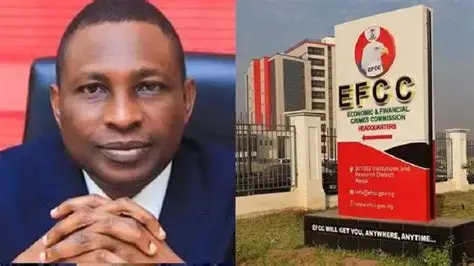
The Chairman of the Economic and Financial Crimes Commission, Ola Olukoyede, has assured Nigerians that assets recovered through the anti-graft agency will not be mismanaged under his leadership.
Olukoyede made the declaration while responding to the ongoing debate over the management and disposal of assets recovered from individuals and organisations accused of financial crimes.
The EFCC chairman said the commission remained committed to ensuring that recovered assets were properly managed, disposed of transparently and ultimately deployed in the public interest.
EFCC Rejects Single Asset Management Agency
Olukoyede also rejected calls for the establishment of a single government agency to manage all assets recovered by different law-enforcement and government agencies.
According to him, such an arrangement would be impractical considering the huge volume and diverse nature of assets recovered across the country.
He argued that agencies involved in asset recovery were better positioned to manage assets connected to their respective mandates, provided that appropriate accountability and transparency mechanisms were maintained.
Over 10,000 Assets Forfeited
The EFCC has recorded significant asset recoveries under Olukoyede’s leadership.
According to figures released by the commission, courts granted interim and final forfeiture orders covering 10,053 tangible assets between October 2023 and July 2026.
The assets include 1,177 real estate properties, 370 automobiles, 251 plots of land and 8,198 electronic items, in addition to schools, factories, hotels, shops, oil rigs, barges, machinery and aircraft. The commission also secured the forfeiture of about 102 tonnes of solid minerals.
The EFCC disclosed that proceeds from the disposal of assets covered by final forfeiture orders amounted to approximately ₦12.07 billion, which had been paid to the Federal Government.
₦1.23tn Recovered in 34 Months
Olukoyede recently disclosed that the EFCC recovered more than ₦1.23 trillion and $684 million in proceeds of crime during the first 34 months of his administration.
The commission said the recoveries between October 2023 and July 2026 also included £373,905.78 and €9.34 million, alongside funds recovered in several other currencies.
Of the naira recoveries, about ₦397.26 billion was recovered directly for the Federal Government, while approximately ₦836.34 billion was recovered on behalf of ministries, departments and agencies, state revenue services, companies, individuals and other beneficiaries.
From Recovery to Public Benefit
Olukoyede has repeatedly maintained that asset recovery should go beyond merely taking possession of proceeds of crime.
He said recovered wealth should ultimately be returned to rightful beneficiaries or deployed to productive purposes that benefit Nigerians.
The EFCC chairman cited the use of recovered funds to support institutions such as the Nigeria Education Loan Fund and the Nigerian Consumer Credit Corporation as examples of how proceeds of crime could be redirected towards national development.
He also pointed to the conversion of a forfeited private university into the Federal University of Applied Sciences, Kachia, Kaduna State, as an example of recovered assets being transformed into public infrastructure. The institution reportedly had 1,909 students as of December 2025.
Commitment to Transparency
The latest assurance comes amid growing public interest in how recovered properties, vehicles, cash and other assets are managed after court-ordered forfeiture.
Olukoyede’s position is that the credibility of Nigeria’s anti-corruption campaign depends not only on tracing and recovering stolen wealth but also on ensuring that such assets are properly accounted for and ultimately serve the public interest.
He therefore pledged that the EFCC under his watch would continue to strengthen its asset-recovery and management processes while working within the provisions of Nigeria’s laws.
The commission has also highlighted the Proceeds of Crime Act as an important legal framework for improving the recovery, management and disposal of assets linked to financial crimes.
Olukoyede’s declaration is expected to further fuel discussions around transparency, accountability and the effective utilisation of recovered assets as the government intensifies its fight against corruption and financial crimes.