

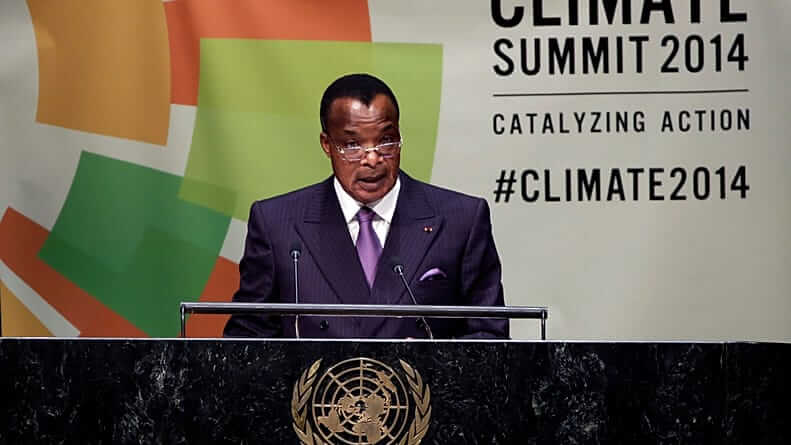
BRAZZAVILLE, Republic of Congo — The Republic of Congo has officially scheduled its next presidential election for March 15, 2026, according to government spokesperson Thierry Moungalla. The announcement sets the stage for another high‑stakes contest in a country where political continuity has long overshadowed democratic alternation.
Constitutional Timeline
By law, the presidential election must be held 30 to 40 days before the end of the current presidential term. Incumbent President Denis Sassou Nguesso, who was sworn in on April 16, 2021, is nearing the completion of his mandate. The electoral administration has yet to announce deadlines for submitting candidacies, but preparations are underway.
Sassou Nguesso’s Candidacy
The ruling Congolese Labour Party (PCT) has already nominated Sassou Nguesso as its candidate. At 82 years old, he remains one of Africa’s longest‑serving leaders, having first taken power in 1979. His political career has been marked by resilience, controversy, and longevity.
Sassou Nguesso briefly lost power in 1992, when Pascal Lissouba won Congo’s first multi‑party elections. That peaceful alternation was rare in Central Africa, but it ended in 1997, when Sassou Nguesso returned to power after a civil war with Lissouba’s forces. Since then, he has consolidated control, amending the constitution in 2015 to remove the two‑term limit that had previously restricted presidential tenure.
Opposition Figures
While Sassou Nguesso’s candidacy was expected, other potential challengers are emerging:
- Frédéric Bintsamou, better known as Pastor Ntumi, a former rebel leader who has long been a thorn in the government’s side.
- Dave Mafoula, the youngest candidate in the last presidential election, who represents a new generation of political voices.
Whether these figures can mount a serious challenge remains uncertain, given the dominance of the ruling party and the state’s control over institutions.
Political Landscape
The Republic of Congo’s political environment has been shaped by decades of Sassou Nguesso’s rule. His government has emphasized stability and continuity, but critics argue that this has come at the expense of democratic freedoms and institutional independence.
The opposition has often struggled to organize effectively, facing restrictions on political activity and limited access to media. Analysts suggest that unless opposition forces unite behind a single candidate, Sassou Nguesso is likely to secure another term.
Corruption Allegations
Beyond domestic politics, Sassou Nguesso’s government has faced international scrutiny. In 2017, French authorities indicted individuals close to the president in the so‑called “ill‑gotten gains” affair, a high‑profile investigation into alleged laundering of public funds. The case also targeted ruling families in Gabon and Equatorial Guinea, highlighting concerns about governance and accountability in Central Africa.
While Sassou Nguesso himself has not been directly implicated, the affair has cast a shadow over his administration, reinforcing perceptions of entrenched elite privilege.
Regional Context
The Republic of Congo’s election comes at a time when Central Africa continues to grapple with questions of leadership succession. Across the region, long‑serving leaders have resisted democratic alternation, citing stability and continuity as justifications for extended rule. Sassou Nguesso’s candidacy fits this pattern, raising questions about the prospects for genuine political competition.
Outlook
As March 15 approaches, the focus will be on whether opposition figures can galvanize support and whether the electoral process will be perceived as credible. For many Congolese citizens, the election represents not just a political contest but a test of the country’s democratic institutions.
Sassou Nguesso’s reappointment by the ruling party signals continuity, but the presence of challengers like Pastor Ntumi and Dave Mafoula suggests that alternative voices will at least be heard. Whether they can translate that into meaningful change remains to be seen.
For now, Congo prepares for another election under the shadow of a leader whose tenure has defined the nation’s modern history.