

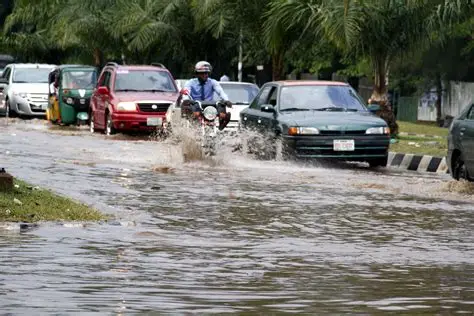
Residents and motorists in parts of Abuja were left stranded after a heavy downpour triggered flash flooding across several districts of the Federal Capital Territory.
The downpour, which occurred over the weekend, overwhelmed roads and drainage channels in several locations, disrupting movement and leaving some vehicles submerged or damaged by rising floodwaters.
Among the areas affected were Wuse 2, Gudu, Lokogoma, Gaduwa, Durumi, Katampe, Mabushi, Lugbe, Gwarimpa, Asokoro, Maitama, Utako and Wuye.
In Wuse 2, particularly around Adetokunbo Ademola Crescent, floodwaters accumulated rapidly following the heavy rainfall, affecting motorists and residents in the area.
The situation was similarly severe around the Delight Event Centre in Gudu, where floodwaters reportedly covered surrounding areas and disrupted activities.
The bridge linking Gaduwa and Durumi was also heavily flooded, leaving motorists unable to cross between the two communities for several hours. Videos shared by residents showed vehicles struggling to navigate the flooded roads, while some motorists were forced to abandon their journeys.
One resident who filmed the flooded Ebeano-Gudu road appealed to the Federal Capital Territory Administration to intervene urgently, saying the inundation had effectively cut off movement between the two areas.
Some businesses in affected areas were also forced to shut temporarily as floodwaters entered their premises or made access difficult.
Several vehicles were reportedly submerged or damaged, although authorities had yet to release a comprehensive assessment of the extent of property damage or the number of residents affected at the time of reports.
The flooding has generated fresh concerns among residents about Abuja’s drainage infrastructure, urban planning and the management of waterways across the nation’s capital.
Residents have also raised concerns about blocked drainage channels, poor waste disposal and the conversion of green areas and natural waterways, which they believe could be contributing to the city’s increasing vulnerability to flash floods.
The latest incident is particularly significant because Abuja was designed with an extensive network of drainage channels and green areas intended to support effective water management. However, rapid urbanisation and development have increased pressure on existing infrastructure in many parts of the city.
The flooding also occurred amid warnings from relevant government agencies about heightened flood risks during the 2026 rainy season.
The Nigeria Hydrological Services Agency (NiHSA) had warned that the risk of flooding could increase during August and September, while the Federal Capital Territory was identified among areas vulnerable to flooding in the country’s annual flood outlook.
The Nigeria Meteorological Agency (NiMet) had similarly issued weather-related warnings, highlighting the possibility of heavy rainfall and flash flooding during the rainy season.
The latest flooding has therefore renewed calls for authorities to strengthen flood-prevention measures, clear blocked drainage channels and ensure that waterways are not obstructed by indiscriminate construction or waste.
Residents are also being urged to exercise caution whenever heavy rainfall occurs, particularly in areas known to be prone to flooding.
Emergency officials have repeatedly advised motorists not to attempt to drive through rapidly rising floodwaters, as vehicles can lose traction or become trapped within a matter of minutes.
The incident has also highlighted the vulnerability of businesses and residential properties located close to drainage channels and low-lying areas.
For many residents affected by the latest flooding, the immediate concern is the cost of repairing damaged vehicles, homes, fences and other property.
Beyond the immediate losses, however, the incident has reignited calls for a more comprehensive approach to flood management in Abuja.
Stakeholders say authorities need to combine improved drainage infrastructure with stricter enforcement of urban planning regulations, better waste management and the protection of natural waterways and green spaces.
As the waters recede, residents in the affected communities are expected to assess the damage and count their losses, while attention turns to the FCT administration for measures that could prevent a recurrence.
The latest incident serves as another warning that even Abuja, Nigeria’s purpose-built capital, remains vulnerable to extreme rainfall and flash flooding when drainage systems and urban development are unable to cope with the volume of water.