

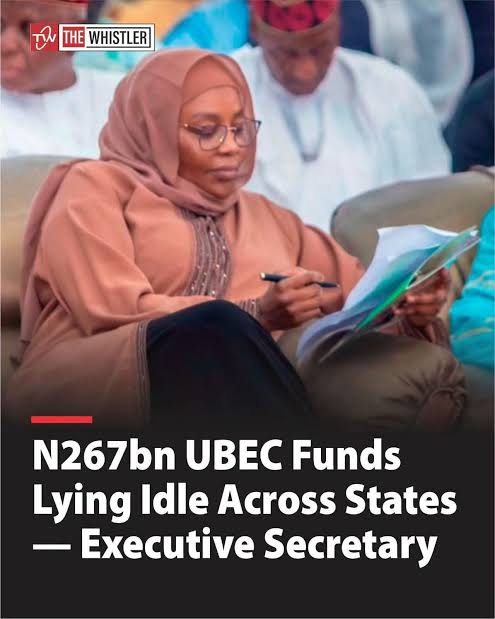
States across Nigeria are reportedly holding about N264 billion in funds allocated through the Universal Basic Education Commission (UBEC), raising concerns over the slow pace of infrastructure development and persistent challenges facing public primary and junior secondary schools.
The reported funds are intended to support basic education development, including the construction and renovation of classrooms, provision of learning materials, improvement of school facilities and expansion of access to quality education. However, the delay in accessing or utilising the money has drawn attention to the difficulties confronting the country’s basic education sector.
Across many communities, public schools continue to face challenges such as overcrowded classrooms, inadequate teaching materials, deteriorating buildings and insufficient facilities for pupils and teachers. These conditions have continued to raise questions about the effectiveness of efforts to improve basic education nationwide.
Concerns Over Unutilised Education Funds
The Universal Basic Education Commission is responsible for coordinating the implementation of the Universal Basic Education programme in Nigeria. Through its funding arrangements, the commission provides support to states for projects designed to improve access to basic education and enhance learning conditions.
Under the matching-grant arrangement, states are generally required to provide their counterpart contributions before they can access corresponding federal intervention funds. The arrangement is intended to encourage state governments to invest in basic education alongside the Federal Government.
However, when states fail to provide the required counterpart funding or complete the necessary procedures, access to the federal grants can be delayed. This can prevent available resources from reaching schools when they are most needed.
The reported N264 billion therefore raises questions about the extent to which states have fulfilled the requirements for accessing UBEC funds and the reasons the money has remained unutilised or inaccessible for education projects.
A detailed breakdown of the amount by state, the period covered and the specific reasons for the delays would be necessary to establish the extent of the problem.
Public Schools Continue to Face Challenges
The reported situation comes amid longstanding concerns about the condition of public schools in different parts of the country.
In some communities, pupils learn in overcrowded classrooms, while other schools struggle with damaged roofs, inadequate desks, poor sanitation facilities and limited access to teaching and learning materials.
These challenges can affect the quality of instruction, pupils’ attendance and the overall learning environment. Where classrooms and other essential facilities are inadequate, teachers may also find it more difficult to deliver lessons effectively.
The availability of education funding is therefore important, but ensuring that the money reaches schools and is spent on approved projects is equally critical.
Education stakeholders have consistently emphasised the need for governments at all levels to prioritise basic education, particularly as primary and junior secondary schools provide the foundation for children’s future academic and professional development.
How Delays Could Affect Pupils
When education funds are not accessed and deployed promptly, schools may have to wait longer for improvements that could support teaching and learning.
Projects such as classroom construction, renovation of dilapidated buildings, provision of furniture and installation of sanitation facilities may be delayed, leaving pupils and teachers to continue working under difficult conditions.
The consequences can extend beyond the physical state of school buildings. Poor learning environments may affect pupils’ concentration, participation and educational outcomes, particularly in communities where families have limited alternatives to public schools.
For parents, inadequate school facilities can also create additional concerns about their children’s safety, comfort and access to quality education.
The reported funds could potentially support improvements in these areas, depending on the amounts available to individual states, the projects approved and the applicable funding requirements.
Questions for State Governments
The reported N264 billion has renewed attention on the responsibilities of state governments in managing and accessing education intervention funds.
State governments are expected to provide counterpart contributions where required, submit eligible projects and comply with the relevant procedures for accessing grants. They are also responsible for ensuring that approved projects are properly implemented and that public funds are accounted for.
Where funds remain unutilised, affected states would need to explain whether the delays resulted from unpaid counterpart contributions, administrative bottlenecks, procurement challenges, project approvals or other factors.
Transparency would help parents, teachers, civil society organisations and other stakeholders understand why the funds have not translated into visible improvements in schools.
It would also help distinguish between money that has been allocated but not released, grants that remain unclaimed because of unmet conditions, and funds that have been accessed but not fully spent. These categories have different implications for accountability and public expenditure.
Calls for Greater Accountability
The situation highlights the importance of stronger monitoring and accountability in the management of education funds.
Relevant authorities could improve public understanding by publishing state-by-state information showing the amounts available, counterpart contributions paid, grants accessed, projects approved and the status of implementation.
Such disclosures would make it easier to identify states experiencing delays and determine what measures are needed to ensure that funding reaches its intended beneficiaries.
Parents, teachers, school administrators and community leaders could also play a role in monitoring projects in their areas and reporting cases where approved facilities are not delivered or completed.
At the same time, state governments would need to ensure that funds released for education are used for their approved purposes and that contractors deliver projects according to agreed standards.
The Need to Prioritise Basic Education
Basic education remains a critical part of Nigeria’s development, providing children with the foundational skills needed for further learning and participation in society.
Improving the sector requires more than budgetary allocations. Governments must also ensure that available resources are accessed on time, properly managed and translated into measurable improvements in classrooms and learning conditions.
The reported N264 billion in UBEC-related funds underscores the importance of resolving funding bottlenecks and strengthening cooperation between federal and state authorities.
Ultimately, the impact of education funding should be measured not only by the amount allocated but also by the improvements pupils and teachers experience in their schools.
As concerns over the reported funds continue, attention is likely to remain on the steps state governments and relevant education authorities take to ensure that resources intended for basic education contribute to better facilities, improved learning conditions and stronger educational outcomes.