

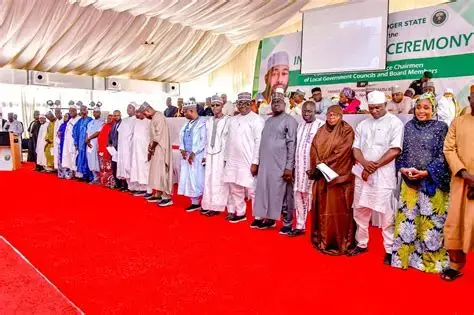
Niger State Governor, Mohammed Umaru Bago, says his administration has remained focused on service delivery and driven by the principles of good governance over the past three years, with agriculture serving as the cornerstone of its development agenda.
Speaking on the agricultural transformation being implemented across the state, Governor Bago—popularly known as the “Farmer Governor”—said revitalising the sector has remained central to his administration’s strategy for driving economic growth, ensuring food security and promoting sustainable development.
In a statement issued by his Chief Press Secretary, Bologi Ibrahim, the governor said agriculture occupies a strategic position in the New Niger Agenda because of the state’s comparative advantage in the sector.
“We are aware of the enormous benefits and prosperity that revitalising the agricultural sector will bring to the state and its people. That is why we have deliberately implemented policies aimed at improving efficiency and increasing productivity across the entire agricultural value chain,” he said.
Governor Bago explained that, having identified agribusiness as the primary engine of economic growth and improved living standards, his administration has encouraged farmers to transition from traditional farming methods to modern, mechanised agriculture through the provision of improved seedlings, agrochemicals, farm machinery and other essential inputs.
To accelerate the shift from subsistence farming to mechanised agriculture, he said the state government has procured tractors and distributed a wide range of agricultural equipment, including rice millers, power tillers, de-stoners, rice transplanters, water pumps, improved seedlings and fertilisers. Farmers across the state’s three senatorial districts have also received training in sustainable farming practices.
“We have partnered to acquire tractors, ploughs and other industrial land preparation equipment to move our farmers from subsistence agriculture to advanced mechanised farming. We also distribute 100,000 bags of fertiliser every farming season, alongside herbicides, pesticides and fungicides, to boost crop yields,” he added.
The governor further disclosed that the state has earmarked 250,000 hectares for sugarcane cultivation and 1.2 million hectares for ranching and livestock development. In addition, the government has installed more than 5,000 tube wells and procured 3,000 solar-powered water pumps to support year-round irrigation and dry-season farming.
According to him, the directive requiring each of the state’s 25 local government areas to cultivate 10,000 hectares of farmland has already resulted in bumper harvests, including the production of one million metric tonnes of maize within a single farming season.
As part of efforts to deepen food security, the Niger State Ministry of Agriculture recently aligned with the First Lady of Nigeria’s “Every Home a Garden” initiative and officially flagged off the 2026 farming season.
Under the programme, the government distributed 250 75-horsepower tractors—10 to each of the state’s 25 local government areas—alongside 50 combine harvesters aimed at reducing post-harvest losses.
The intervention also included the distribution of 30 tonnes of assorted fertilisers to support more than 40,000 smallholder farmers, as well as 1,500 mechanised farming implements, including planters, boom sprayers, ploughs and harrows.
Governor Bago said the initiative is expected to generate more than 2,000 direct jobs and 100,000 indirect jobs, while delivering an estimated 500,000 tonnes of assorted food produce during both the wet and dry farming seasons.
He noted that the investments are expected to support farming activities across more than 120,000 hectares of land statewide, describing the intervention as part of a comprehensive strategy to position Niger State at the forefront of Nigeria’s drive towards food security and food sovereignty.
The governor also said his administration has established a robust support system for artisanal farmers and small-scale agribusiness operators over the past three years, helping to build a resilient ecosystem for agricultural entrepreneurship and self-employment.
According to him, the state’s agricultural reforms have attracted investments and partnerships from the Lagos State Government, the Dangote Group, and international stakeholders from the United States, the United Kingdom, Germany, China and Brazil, securing more than $1 billion in agricultural investments.
Governor Bago reaffirmed his administration’s commitment to people-centred governance, expressing confidence that the state’s agricultural revolution is already yielding results and that its ambition of contributing significantly to Nigeria’s food production is achievable.
“We are laying the foundation for the collective prosperity of our state and our country, and agriculture remains the catalyst for achieving that vision. We are encouraged by the overwhelming support of our people, and we believe our journey towards greater prosperity has only just begun,” he said.