

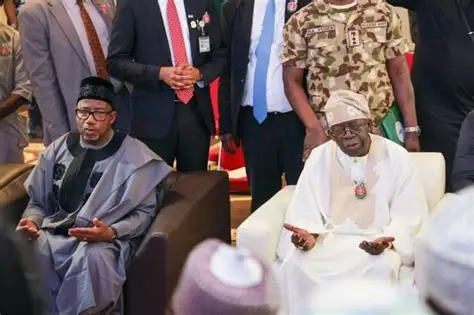
President Bola Ahmed Tinubu has praised the Hausa people for their longstanding contributions to Nigeria’s unity, stability and socio-economic development, describing them as an important pillar of the country’s national identity and progress.
The President made the remarks while acknowledging the cultural, historical and economic contributions of the Hausa people to Nigeria’s development, stressing the importance of preserving the values that promote peaceful coexistence among the country’s diverse ethnic groups.
Tinubu noted that Nigeria’s strength lies in its diversity and the ability of different communities to work together towards shared national objectives.
He said the Hausa people, through their historical influence in commerce, agriculture, education, public service and culture, have played a significant role in shaping the country.
Hausa heritage and national identity
The Hausa people constitute one of the largest ethnic groups in Nigeria, with a rich history that predates the emergence of the modern Nigerian state.
Their cultural influence extends across northern Nigeria and beyond, with the Hausa language serving as an important means of communication across large parts of West Africa.
The President highlighted the community’s heritage and traditions as important components of Nigeria’s broader cultural identity.
He noted that the preservation of cultural values should not conflict with national unity but should instead strengthen Nigerians’ understanding and appreciation of their diverse backgrounds.
According to the President, celebrating Nigeria’s different cultures provides an opportunity to reinforce the idea that diversity can serve as a source of strength rather than division.
Contributions to commerce and economic development
Tinubu also recognised the role of the Hausa people in Nigeria’s commercial development.
For centuries, Hausa communities have been involved in regional and trans-Saharan trade, helping establish commercial networks that connected different parts of West Africa.
In contemporary Nigeria, Hausa traders and entrepreneurs remain active across numerous sectors of the economy, including agriculture, livestock, manufacturing, transportation and retail.
Their participation in domestic and regional commerce has contributed to the movement of goods and services across communities and borders.
The President said such economic activities are part of the broader contribution of ordinary Nigerians to national development.
Promoting national unity
At a time when Nigeria continues to grapple with ethnic, religious and regional tensions, Tinubu stressed the need for Nigerians to strengthen the bonds that unite them.
He said national development requires cooperation among citizens regardless of ethnicity, religion or geographical location.
The President’s remarks highlighted the importance of building a country where every community feels represented and valued.
He urged Nigerians to resist narratives that promote division and instead focus on shared aspirations, including security, economic prosperity, education and improved living standards.
Cultural diversity as a strength
Nigeria is home to hundreds of ethnic groups, each with distinct languages, traditions and cultural practices.
Tinubu said the diversity should be viewed as an asset that gives Nigeria a unique identity on the global stage.
The Hausa people’s cultural heritage, including traditional architecture, literature, music, clothing, cuisine and festivals, forms an important part of that national tapestry.
The President encouraged Nigerians to preserve their cultural heritage while embracing values that promote tolerance and cooperation.
He stressed that cultural pride should complement, rather than undermine, national identity.
Role of traditional institutions
Traditional institutions also remain important in preserving culture and promoting peace within communities.
The Hausa-speaking areas of northern Nigeria have a long history of traditional leadership, with emirates and other institutions playing important social and cultural roles.
Tinubu acknowledged the influence of traditional leaders in maintaining community relationships and encouraging peaceful coexistence.
He called for continued collaboration among traditional institutions, government authorities and community leaders in addressing challenges facing citizens.
Youth and the future of Nigeria
The President also emphasised the importance of young Nigerians in determining the country’s future.
Nigeria has one of Africa’s largest youth populations, creating both enormous opportunities and significant responsibilities for government and society.
Tinubu said young people must be equipped with education, skills and opportunities that enable them to contribute meaningfully to national development.
He noted that communities across Nigeria, including Hausa communities, have an important role to play in preparing younger generations to participate in the country’s economic and social transformation.
Investment in education, entrepreneurship, technology and vocational training, he stressed, remains critical to unlocking the potential of Nigerian youth.
Building an inclusive Nigeria
Tinubu’s message also centred on the need for inclusiveness.
He said every ethnic group has a role to play in building a prosperous and peaceful Nigeria, and no community should be excluded from the country’s development process.
The President’s recognition of the Hausa people’s contributions was therefore framed within a broader call for national cohesion.
He urged Nigerians to appreciate their shared history and recognise that the country’s progress depends on collective effort.
Looking towards a stronger future
As Nigeria confronts economic, security and social challenges, the President said national unity remains essential to achieving sustainable progress.
The contributions of communities such as the Hausa, he noted, demonstrate that Nigeria’s development has always been the product of efforts from different parts of the country.
By celebrating cultural contributions while promoting a shared national identity, the country can strengthen its sense of belonging and encourage greater cooperation among citizens.
Tinubu’s commendation of the Hausa people therefore serves as both recognition of their historical contributions and a reminder of the importance of unity in Nigeria’s future.
The President called on citizens to continue working together, regardless of ethnic or regional differences, to build a country defined by peace, opportunity and shared prosperity.
For Nigeria to achieve its full potential, he stressed, its greatest strength must remain the ability of its diverse peoples to live, work and progress together as one nation.