

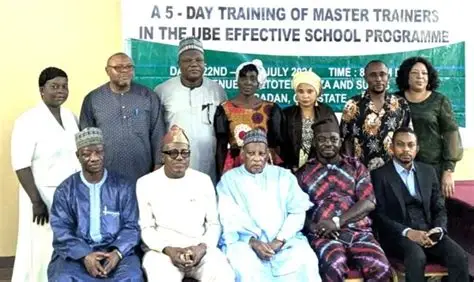
The Universal Basic Education Commission (UBEC) has commenced capacity-building programmes for education directors and support officers across the North-Central and South-West geopolitical zones as part of efforts to strengthen the delivery and management of basic education in Nigeria.
The training is designed to equip key education personnel with improved knowledge and practical skills needed to effectively implement programmes aimed at enhancing teaching, learning and educational administration at the basic education level.
The initiative forms part of UBEC’s broader efforts to strengthen the capacity of education managers and other stakeholders responsible for implementing basic education policies and programmes across the country.
Participants drawn from relevant education institutions and agencies are expected to gain practical knowledge in areas considered critical to effective planning, implementation, monitoring and evaluation of basic education interventions.
The commission said strengthening the capacity of education officials was essential to ensuring that government investments in basic education translate into measurable improvements in schools and learning outcomes.
Education directors and support officers play important roles in coordinating programmes, monitoring implementation and ensuring that policies and interventions reach schools and pupils at the grassroots.
By exposing these officials to updated approaches and best practices, the training is expected to improve their ability to identify challenges, develop appropriate solutions and ensure more effective utilisation of resources.
The programme also provides an opportunity for participants from different states to share experiences, discuss challenges and exchange ideas on how to improve the quality of basic education in their respective jurisdictions.
Basic education remains a critical component of Nigeria’s education system, providing the foundation upon which children develop the knowledge and skills required for further education and future employment.
However, the sector continues to face challenges, including inadequate infrastructure, shortages of qualified teachers, overcrowded classrooms, poor learning outcomes and limited access to quality education in some communities.
UBEC has therefore continued to emphasise the importance of institutional capacity and effective management in addressing some of these challenges.
The latest training in the North-Central and South-West zones is expected to contribute to efforts to improve the implementation of basic education programmes and ensure that available resources are deployed more efficiently.
Participants are also expected to acquire stronger skills in monitoring and reporting, which could improve accountability and provide policymakers with better information for decision-making.
The commission has consistently stressed the need for effective collaboration among federal, state and local education authorities to achieve meaningful progress in the sector.
The training is therefore expected to strengthen coordination among education stakeholders and promote a more consistent approach to implementing basic education programmes.
In addition to technical knowledge, the capacity-building exercise could help officials develop stronger problem-solving and leadership skills, enabling them to respond more effectively to emerging challenges in the education sector.
The programme also aligns with broader national efforts to improve access to quality basic education and ensure that children across Nigeria have better opportunities to learn and develop.
For the North-Central and South-West regions, the initiative provides an opportunity for education officials to examine region-specific challenges and identify strategies that can improve educational outcomes at the state and local levels.
UBEC is expected to continue supporting capacity development as part of its mandate to coordinate and strengthen the implementation of the Universal Basic Education programme nationwide.
The commission’s intervention underscores the recognition that investments in physical infrastructure must be matched with investments in the people responsible for managing and delivering education services.
With better-trained education directors and support officers, UBEC expects states to improve the planning, execution and monitoring of basic education interventions.
The success of the programme will ultimately depend on how participants apply the knowledge and skills acquired during the training to their daily responsibilities.
Stakeholders are therefore expected to translate the lessons from the capacity-building programme into practical improvements in schools, particularly in the areas of teaching quality, resource management, programme implementation and accountability.
As Nigeria continues to pursue reforms in the basic education sector, sustained investment in human capacity will remain essential to achieving better learning outcomes and ensuring that public education programmes deliver meaningful benefits to children.
The latest UBEC training is consequently being viewed as part of a wider effort to strengthen the institutional foundation of basic education and improve the quality of educational services available to Nigerian children.