

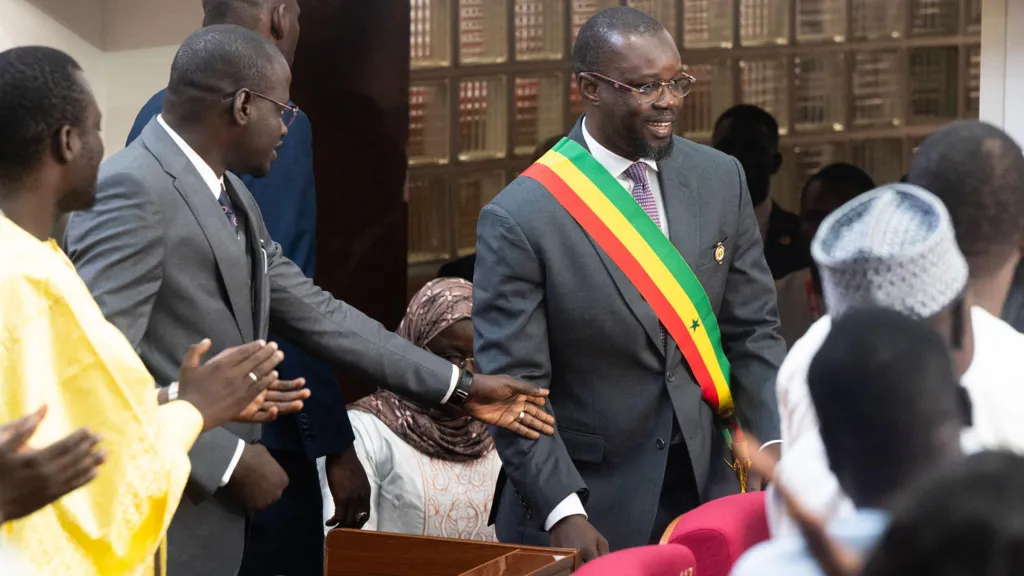
Former Prime Minister Ousmane Sonko, dismissed on Friday by President Bassirou Diomaye Faye, has been elected Speaker of Senegal’s National Assembly, setting up a new power struggle at the top of Senegalese politics.
Political Shift
- Parliament’s previous Speaker stepped down Sunday, clearing the way for Sonko.
- His Pastef party holds a majority in the Assembly.
- On Monday, Faye appointed economist Ahmadou Al Aminou Lo as the new prime minister.
Sonko, once a close ally of Faye, has become a vocal critic, particularly over the president’s handling of Senegal’s debt crisis.
Sonko’s Position
Sonko pledged not to use his new role to “fight against anyone,” but to ensure parliament serves citizens’ interests. Still, he insisted his dismissal does not mark the end of his political career. Analysts say his position as Speaker — Senegal’s second-highest political office — could significantly limit Faye’s ability to push policies without parliamentary backing.
Debt Disputes and IMF Talks
Senegal’s public debt now stands at 132% of GDP, a major source of friction.
- Sonko has opposed IMF‑backed austerity measures.
- Lo, 60, a former head of the Central Bank of West African States, is seen as more of an establishment figure aligned with belt‑tightening policies.
- Talks with the IMF are expected to resume in June.
Outlook
The rift between Faye and Sonko raises uncertainty over Senegal’s political future. Sonko, barred from running in the 2024 presidential election due to a defamation conviction, remains a powerful figure with strong youth support. His new role as Speaker ensures he will continue to shape the country’s direction — and challenge the president’s authority.