

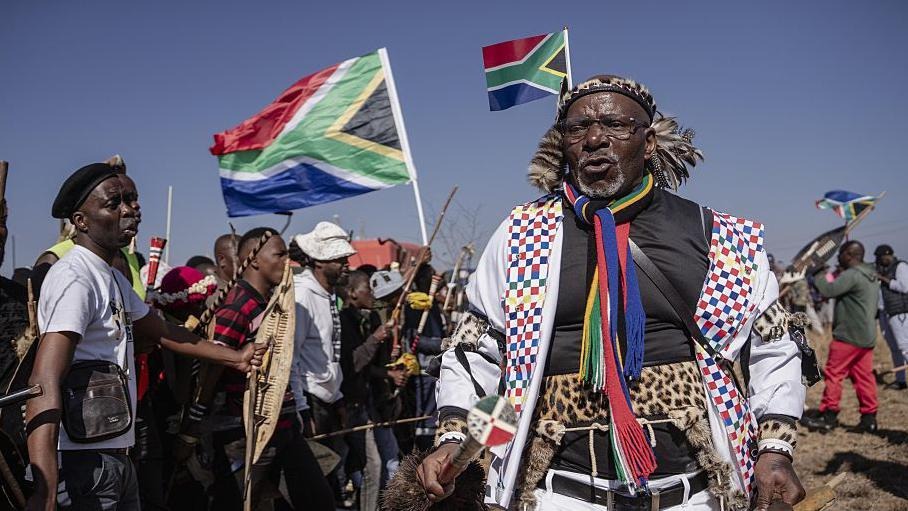
South Africa is on edge as heavy security forces have been deployed nationwide ahead of planned anti-migrant protests. The demonstrations coincide with an unofficial deadline set by campaigners for undocumented foreign nationals to leave the country, sparking fears of violence and intimidation.
President Cyril Ramaphosa has urged protesters to exercise restraint, reminding citizens that while the right to protest is protected, it does not extend to threats, vandalism, or violence. In his weekly newsletter, he emphasized that many foreign nationals live lawfully in South Africa, contributing positively to the economy and society.
Johannesburg, one of the protest hotspots, has fallen unusually quiet, with shops shuttered near the planned gathering points. Police have already repatriated more than 25,000 migrants, mostly from neighboring African countries, while thousands more await processing in temporary camps.
In Durban, where some of the largest demonstrations have taken place, migrants—many from Malawi—are boarding buses home. Stories of heartbreak abound: Nelson Mbewe, who came to South Africa seeking work, lamented being forced to leave due to lack of documentation. Others, like Hassan Phiri, called for unity, stressing that “Africa must remain Africa” and urging solidarity across borders.
Authorities have authorized marches in Durban, Johannesburg, and other cities but warned organizers to prevent violence. Traditional weapons, often carried by ethnic Zulu marchers, have been banned, raising concerns about clashes with police.
Xenophobia has long plagued South Africa, with past waves of violence leaving deep scars. In 2008, more than 60 people were killed in anti-immigrant riots. This year alone, two deaths have already been recorded, according to the African Centre for Migration and Society’s Xenowatch tracker.
As the protests unfold, the continent watches closely. For many migrants, the journey home is filled with sorrow, but their voices echo a powerful reminder: Africa’s strength lies in unity, not division.