

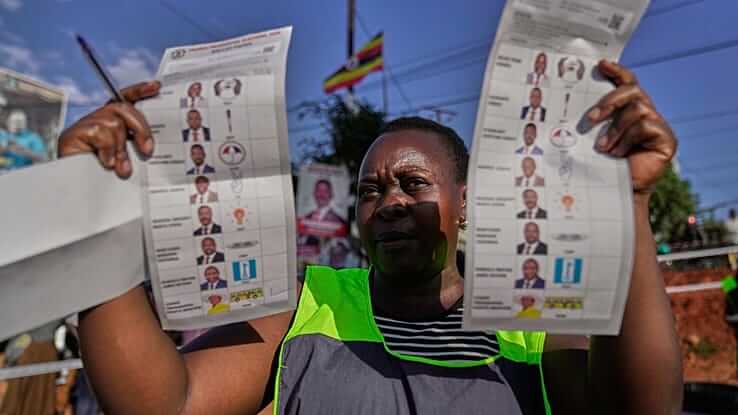
KAMPALA, Uganda — Polls closed Thursday in Uganda’s presidential election after a day marked by long delays, technical breakdowns, and an internet blackout, as President Yoweri Museveni bids to extend his 40 years in power.
Uganda’s Election Day Challenges
- Voting was delayed at many polling stations due to late ballot box deliveries and malfunctioning biometric machines.
- The government imposed an internet shutdown, which critics say facilitated irregularities.
- Opposition leader Bobi Wine accused authorities of “massive ballot‑stuffing” and the arrest of his party officials under cover of the blackout.
- Wine told reporters: “We are holding elections in the dark… this is done to facilitate rigging.”
Counting and Atmosphere
Inside a Kampala stadium in an opposition stronghold, crowds cheered as ballots were read in Wine’s favor. Official results are expected within 48 hours.
Despite tensions, the Ugandan Red Cross reported no substantive violence, though the day saw a heavy police and army presence aimed at preventing protests similar to those in neighboring Kenya and Tanzania.
Museveni’s Position
Museveni, 81, came to power in 1986 after leading a rebel army. He is widely expected to win a seventh term, backed by his control of the state and security apparatus.
- He acknowledged difficulties with voting machines, saying his thumbprints were rejected before facial recognition allowed him to cast his ballot.
- Supporters credit him with ending post‑independence chaos and overseeing economic growth, though critics point to corruption scandals and suppression of dissent.
Opposition Landscape
- Wine, 43, styles himself as the “ghetto president,” drawing support from Uganda’s youth. His campaign has faced brutal repression, according to rights groups.
- Hundreds of his supporters were arrested in the run‑up to the vote.
- Veteran opposition figure Kizza Besigye, who ran four times against Museveni, remains on trial for treason after being abducted in Kenya in 2024.
International Concerns
- Human Rights Watch condemned the suspension of 10 NGOs, including election monitors.
- The United Nations called the internet blackout “deeply worrying.”
- Western governments have historically tolerated Museveni’s rule due to his cooperation on neoliberal reforms in the 1980s and his role as a partner in the US‑led war on terror, particularly through troop contributions in Somalia.
Outlook
With ballots now being counted, Uganda faces a familiar crossroads: Museveni’s promise of “peace and security” versus opposition calls for change. The outcome will determine whether Africa’s longest‑serving leaders continue to extend their grip on power or whether Uganda’s restless youth can force a political shift.