

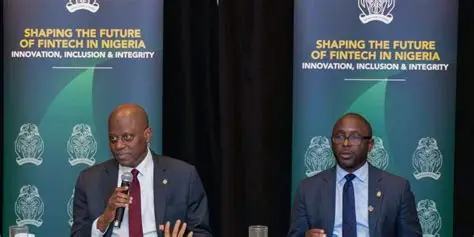
Nigeria’s financial technology sector is entering a new phase as the Central Bank of Nigeria’s regulatory sandbox creates a controlled environment where innovative financial products and services can be tested before being introduced to the wider market.
The initiative is designed to balance two important objectives: encouraging innovation in Nigeria’s rapidly expanding fintech ecosystem while ensuring that new products do not expose consumers or the financial system to unnecessary risks.
For a country that has emerged as one of Africa’s leading fintech markets, the sandbox could play an important role in determining how quickly new ideas move from development to commercialisation.
Creating room for financial innovation
Financial technology has transformed the way Nigerians save, transfer money, borrow, pay bills and conduct business.
Digital banks, payment platforms, fintech lenders, mobile applications and other technology-driven services have expanded access to financial services, particularly among people and businesses that were previously underserved by conventional banking institutions.
However, innovation can also create regulatory challenges.
New technologies often develop faster than existing regulations, leaving authorities with the difficult task of determining how emerging products should be supervised without unnecessarily slowing innovation.
The CBN’s regulatory sandbox provides a middle ground.
Rather than immediately subjecting an experimental product to the full range of regulatory requirements, eligible innovators can test their solutions under controlled conditions while the regulator monitors their activities.
What the CBN sandbox does
The CBN launched its Regulatory Sandbox in 2021 as part of efforts to foster responsible innovation within Nigeria’s financial system.
The framework allows eligible financial technology companies, licensed institutions and other innovators to test new products, services, business models and technologies in a controlled environment.
Participants are expected to meet specific eligibility requirements and operate within defined parameters while undergoing testing.
The idea is straightforward: allow regulators and innovators to learn from real-world testing before a product reaches the wider market.
For startups, this can provide an opportunity to identify technical, operational and regulatory weaknesses early.
For the CBN, it provides valuable information about emerging technologies and business models that may require new regulatory approaches.
From idea to market
One of the biggest challenges facing fintech startups is the gap between developing a promising product and obtaining the necessary regulatory approval to launch it commercially.
The sandbox can help narrow that gap.
By testing a product in a controlled environment, developers can gather evidence about how it performs, how consumers respond to it and what risks may emerge.
Regulators can also determine whether existing rules are adequate or whether additional safeguards are necessary.
This creates a feedback loop between innovation and regulation.
Instead of regulation simply reacting to new technologies after they become widespread, the sandbox allows the regulator to engage with innovation much earlier.
Protecting consumers
While encouraging innovation is important, consumer protection remains a central consideration.
Financial products can directly affect people’s savings, personal information and livelihoods. A poorly designed payment system, lending platform or digital financial service could expose users to fraud, financial losses or privacy risks.
The sandbox therefore provides an opportunity to identify potential problems before they affect a much larger customer base.
Testing can help establish whether a product has adequate safeguards for customer funds, data protection, cybersecurity, complaints management and operational resilience.
This is particularly important in Nigeria, where the rapid growth of digital financial services has been accompanied by concerns over fraud, cybercrime and the misuse of customer information.
Strengthening Nigeria’s fintech ecosystem
Nigeria has produced some of Africa’s most successful fintech companies, attracting significant international investment and demonstrating the commercial potential of the country’s digital economy.
The industry has also created thousands of jobs and contributed to the expansion of digital payments and financial inclusion.
A predictable regulatory environment could further strengthen the ecosystem by giving entrepreneurs greater clarity about the requirements for developing and launching innovative financial products.
For investors, effective regulation can also provide greater confidence.
A fintech environment where companies can test ideas transparently and engage with regulators may be more attractive to investors than a market where regulatory requirements are uncertain or change unexpectedly.