

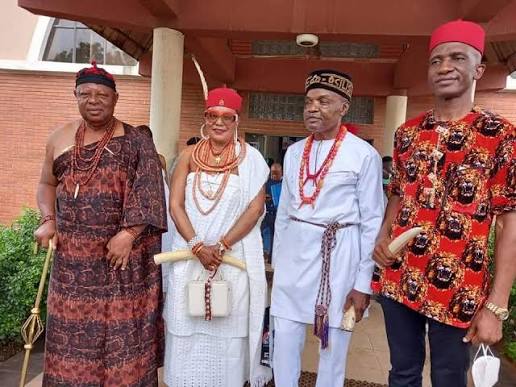
The Omu of Anioma, Queen Obi Martha Dunkwu, has explained that her traditional position as Omu means she cannot marry a man, saying she can only marry a woman.
Dunkwu, a prominent traditional ruler and advocate for the cultural heritage of the Anioma people of Delta State, made the remark while speaking about the responsibilities and expectations attached to the Omu institution.
According to her, the Omu occupies a unique position within Anioma traditional society and is regarded as a female counterpart to the Obi. The position comes with traditional responsibilities that require the occupant to remain dedicated to her role and duties.
Dunkwu explained that the traditions surrounding the Omu institution place restrictions on marriage to a man because of the implications for the authority and responsibilities attached to the stool.
She said that, as Omu, her role requires her to maintain the cultural traditions associated with the institution and uphold the expectations placed on the female traditional ruler.
The statement has generated conversations about the distinctive traditional institutions among the Anioma people and the cultural expectations surrounding women who occupy prominent traditional positions.
The Omu institution is an important part of Anioma traditional governance, with the female monarch playing roles in community leadership, cultural preservation and the promotion of the interests of women and families.
Dunkwu has over the years been associated with efforts to promote Anioma culture and development. Her comments have again drawn attention to the unique customs governing traditional leadership in parts of Delta State.
The Omu of Anioma position differs from conventional expectations of marriage and family life, reflecting the traditional responsibilities attached to the stool and the cultural values it represents.
Her remarks have therefore continued to fuel discussions about the intersection of tradition, leadership, gender roles and modern societal expectations within Anioma communities.