

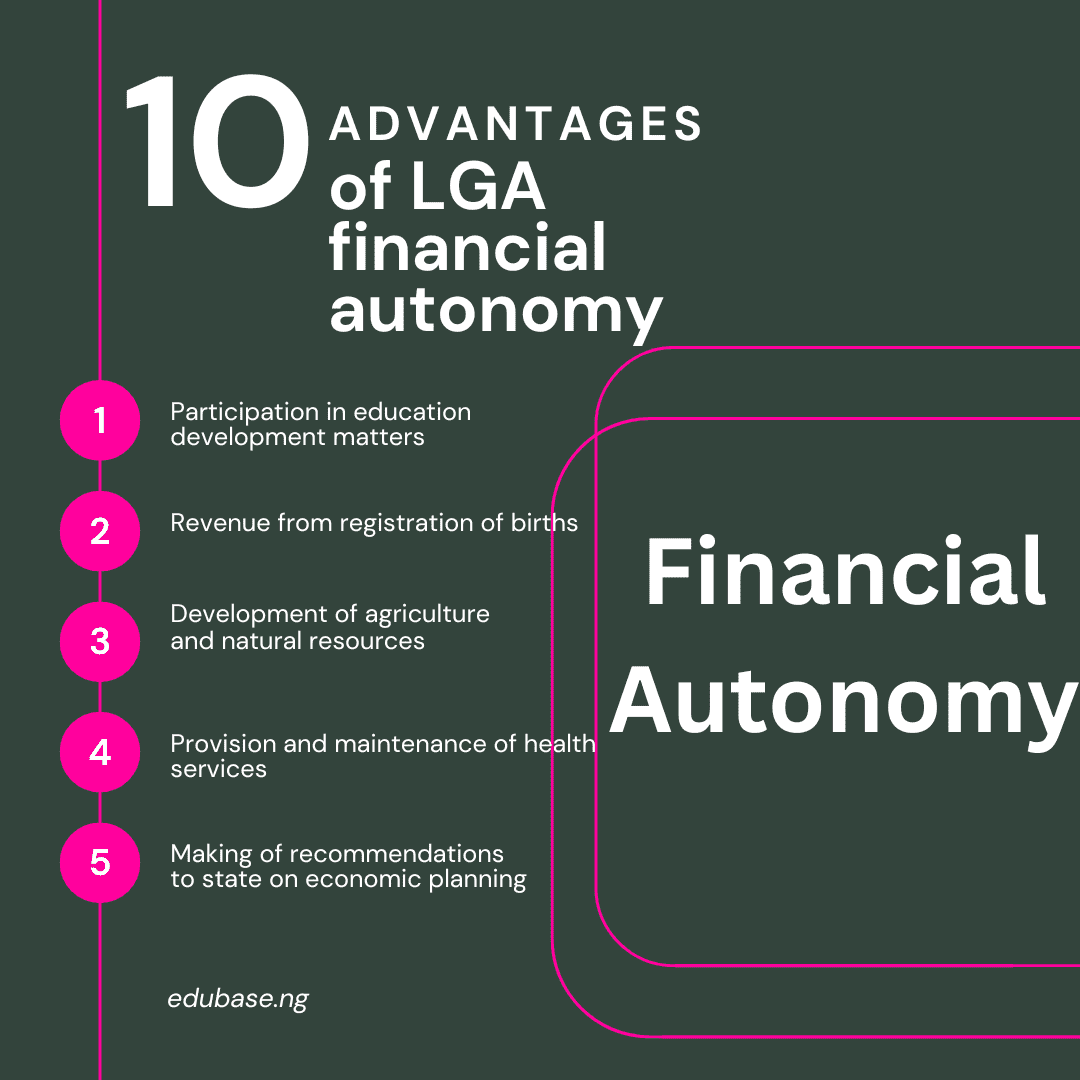
In a landmark judgment on 11 July 2024, the Supreme Court ruled that statutory funds for the 774 local government areas in Nigeria should be paid directly to democratically elected councils, while abolishing the state-local government joint account system. But two years after, financial independence for the third tier of government is still a mirage as the judgment has remained largely unenforced. A handful of states claimed they have taken their hands off the council funds. Most are still predominantly in charge of the management of the funds as the Federation Account Allocation Committee (FAAC) allocations are processed through the old distribution structure. For instance, the N1.46trn allocated to the local government councils for the first quarter of 2026 were received by the state governments.
President Bola Tinubu authorised the suit to seek a less complex way to free council funds from the stranglehold of the governors. And in its judgment, the apex court nullified Section 162 (6) of the constitution which establishes the joint account into which monies due to the councils from the Federation Account are paid for onward disbursement to them by the states. But the abuse of local governments by state governments has persisted. Ironically, there is also no evidence that any of the 774 local government areas had opened accounts with the Central Bank of Nigeria (CBN) to enable the direct disbursement of statutory allocations.
In Imo State, allocations from Federation Account are reportedly paid directly to the governor, who in turn disburses funds for salaries and running costs to the 27 council chairmen. In nearby Enugu State, the funds are still disbursed through the state’s Joint Allocation Accounts Committee (JAAC). Besides, the 17 local government chairmen reportedly granted a power of attorney to the state government, through the Board of Internal Revenue, authorising it to collect and manage both tax and non-tax revenues of the councils.
Even though there is no reported interference with the council funds in Lagos State, allocations for the 20 local governments are still paid through JAAC, and shared among councils and local council development areas by a joint committee of the state and councils. Osun State is in a more complex situation as it awaits resolution of the lingering local government crisis between the state and the federal government.
While financial control remains an issue, it is by no means the only one. The control of the local councils is reinforced through council elections. Section 197 establishes State Independent Electoral Commissions (SIECs) to conduct local government polls. The SIECs are mainly appointed and funded by state governments, making them answerable to governors.
For the third tier of government to be accountable, there must be a free and fair electoral process. But the process of electing council officials is skewed as governors still hold the aces. Over the years in states that conduct elections for local government chairmen and councillors, winners get rigged into their offices with the support of the governors. After their elections, many of them are either only too grateful to do the bidding of the governors or are too scared to assert their independence.
The effects of these have been chronic underdevelopment of the council areas which, castrated as they are, remain unable to deliver on their primary mandate of providing basic social infrastructure, including primary healthcare, primary education, feeder roads and modern markets. While Tinubu even threatened executive order to enforce compliance of the Supreme Court ruling, many are of the view that constitutional reform remains the only imperative. In many federations, local governments are administrative units of the states. Perhaps that is the only way to resolve this problem.
P1
SA and the Rest of Africa
Xenophobia shouldn’t be allowed to replace apartheid or fester much longer, writes Monday Philips Ekpe
The peculiarity of South Africa goes beyond its geography, being located at the southern-most part of Africa. Same for its enduring status as arguably the continent’s most successful and thriving economy. That makes it a beautiful bride that’s attractive to opportunity seekers from the less-endowed nations in its part of the planet and elsewhere. But, quite unfortunately, more than many countries on earth, the rainbow nation has hosted two of humanity’s worst conditions: apartheid and xenophobia. While history doesn’t restrict these extreme abnormalities to SA, its association with them has become an albatross. And with the advancement in information and communication technology (ICT) somewhat on steroid, it’s left to the imagination how posterity will remember this enchanting land.
So much has been said about the manic attacks on African migrants by irate South Africans whose angst stems from the belief that their jobs are being snatched by foreigners, particularly blacks. This illogic has been begging to be seen for what it is. A rare chance for official intervention presented itself the other day when South African President Cyril Ramaphosa hosted his Mozambican counterpart, Daniel Chapo, in Pretoria. Ramaphosa challenged his continental colleagues to fix their underperforming economies which make “people to migrate in large numbers and seek refuge in different parts of the continent, including South Africa”. He bungled it right there. It was an endorsement of the sad premise upon which his uninformed, violent compatriots have built their defence. Your Excellency, Sir, no further proofs are needed to show the overarching failure at the various levels of leadership across Africa but framing the issue this way is simplistic.
A presidential statement later tried to clarify Ramaphosa’s stand thus: “These (xenophobic assaults) are the acts of opportunists who are exploiting the legitimate grievances, particularly those of the poor, under the false guise of ‘community activism.’ Some of these people are assuming functions that only state officials are permitted to perform. Such lawlessness will not be tolerated, regardless of who the perpetrators or victims are… In a country with high unemployment, some employers are exploiting undocumented, cheaper foreign labour over hiring citizens and paying them legal wages. This is fuelling social tension and undermining labour protection laws… We are stepping up workplace enforcement against employers who hire undocumented foreign nationals in violation of labour and immigration laws….”
This attempt misses the mark still. If there’s anything black South Africans should avoid like a plague, it’s the “we vs they” narrative. For one, it is a variant of the segregation they suffered in the hands of their white tormentors. True, no one should deny them their right to nationalism having gone through a lot to reach where they are now.
The very arduous route to the freedom that has resulted in their present relative peace and national pride ought to teach them the wisdom in remaining loyal to the famed African brotherhood. South Africans should legally handle the criminals in their midst – citizens and immigrants alike – without resorting to the kind of barbarism that is tarnishing the image of this vibrant and otherwise welcoming country.
Personally, I’ve used five SA visas and forged lasting friendships in the process. I visited different parts and acquired memories that would be with me for the rest of my life. On one occasion, I travelled by road from Johannesburg to Bloemfontein to Cape Town just to catch some of the nation’s energies before flying back to Joburg. Which experience should I even narrate? Is it the tour of Robben Island where the great Nelson Mandela and some other legends of anti-apartheid struggles were kept in confinement?
The day I went to the apartheid museum in Soweto, I came face to face with the harsh, heart-wrenching realism I first encountered in my study of literature. Race-based discrimination and brutality can test anyone’s very soul to the limits. It was by divine intervention that I did not become a racist that day. A re-enactment of some sort of my call on the museum of slave trade in Calabar, Nigeria some years ago. Those who rush to blame South Africans for being protective of their country which is rightfully their heritage are hasty and insincere. They’re clearly misguided and disproportionate in their actions and reactions but measures like retaliation would equally be off-mark.
At this point, our South African brothers and sisters, especially those pushing to get rid of fellow Africans, should kindly take this unsolicited counsel: Be considerate, humble and sober. Most of the attackers are youths who may not be conversant with the country’s quest for emancipation and are left with only whatever the social media dish out. The unprecedented supports that came from the rest of Africa in those days were highly sacrificial and products of genuine love for the victims of the prolonged white rule. Of course, South Africa can’t be blackmailed into throwing its borders open for reckless entry on that score. But it won’t be too much to expect decent, reasonable treatment of aliens from its people.
Let’s not forget that other African nations were not always this hopeless and helpless. What has happened in many cases is an inexorable slide into retrogression. It shouldn’t also be difficult for the rabid South African aggressors to accept that SA today isn’t the same as the one Madiba left behind. Politically, socially and economically, it’s been looking south. The then almighty African National Congress (ANC), an epitome of black power and resurgence in SA, what’s its stature now? Its hold on the reins of national government can no longer be taken for granted. No bad wishes here but tables do turn. Black South Africans can’t say with certainty that they won’t ever need other Africans again.
Ramaphosa needs this introspection urgently. Instead of admonishing his peers to provide adequate amenities in their domains to disincentivise unbridled emigration, he should weigh his own stewardship as president. Has his government done enough to satisfy the basic expectations of the people, to meaningfully bridge the gap between them and their erstwhile masters?
The continent nurses largely self-inflicted wounds, chiefly the over-indulgent, perpetuating, inept and wicked political leaders who have contributed to its underdevelopment more than any other factor. This self-sabotage in a world that’s increasingly contemptuous of weakness and mediocrity is truly tragic. Even if African countries don’t metamorphose into a single geo-political entity, it can and should explore avenues for understanding, integration, cooperation and brotherliness among them and their peoples. Divisive tendencies like the hate monster which periodically bursts loose in SA surely has no place in that equation.