

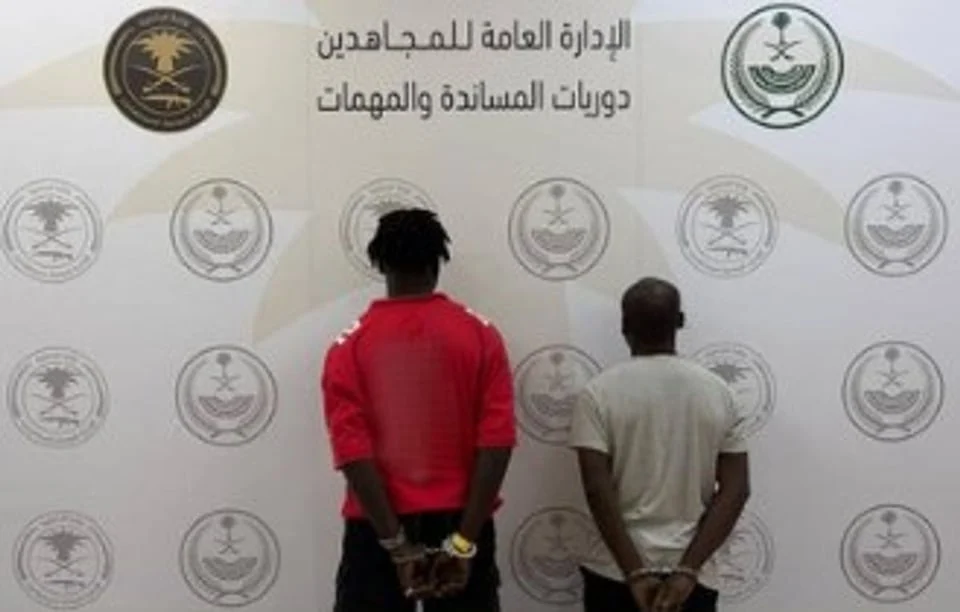
Saudi Arabian security authorities have arrested two Nigerian nationals in the Riyadh region over their alleged involvement in the trafficking and distribution of prohibited drugs, including hashish and amphetamine.
The arrests were carried out by patrol officers of the General Directorate of Mujahideen during an operation targeting individuals suspected of promoting illegal narcotic substances in the kingdom.
According to reports published by Saudi newspaper Ajel on Wednesday, November 25, 2026, the suspects were allegedly involved in the distribution of hashish, amphetamine and pills classified as controlled medical substances.
The Saudi authorities described the two Nigerians as violators of the kingdom’s border security regulations and confirmed that they had been taken into custody.
Following their arrest, the necessary legal procedures were initiated before the suspects were transferred to the relevant authorities for further investigation and possible prosecution.
The substances mentioned in the Saudi authorities’ announcement include hashish, amphetamine and medically regulated pills.
Hashish is a cannabis-derived substance, while amphetamine is a stimulant that affects the central nervous system and is subject to strict controls in many countries.
The authorities also mentioned pills classified as medicines requiring medical regulation. However, they did not disclose the specific types of pills allegedly involved or whether the suspects possessed valid prescriptions for any of the substances.
The quantity of the drugs allegedly recovered during the operation was also not made public.
Saudi Arabia Intensifies Crackdown on Drug Trafficking
The arrests come amid continued efforts by Saudi Arabian security agencies to combat drug trafficking, smuggling and the unauthorised distribution of controlled substances.
The kingdom maintains strict laws against narcotics-related offences, with security agencies regularly conducting operations to identify and apprehend individuals suspected of involvement in the illegal drug trade.
The General Directorate of Mujahideen plays an important role in these operations, particularly in monitoring suspected criminal activities and enforcing security regulations.
Saudi authorities have repeatedly warned that individuals involved in drug trafficking and distribution could face severe legal consequences if convicted.
The applicable penalties, however, depend on the specific offence, evidence presented and outcome of judicial proceedings.
Authorities Urge Residents to Report Drug-Related Activities
Following the arrests, the General Directorate of Mujahideen urged members of the public to cooperate with security agencies by reporting suspected drug trafficking and smuggling activities.
The agency provided emergency contact numbers for residents across different parts of the kingdom.
Residents in Makkah, Madinah, Riyadh and the Eastern Province were advised to report suspicious activities through 911.
Those living in other regions of Saudi Arabia were encouraged to use 999 or 995 to provide relevant information to security authorities.
The agency stressed the importance of public cooperation in tackling the distribution of prohibited substances and protecting communities from drug-related activities. Punch Newspapers+1
Identities of Suspects Remain Unknown
Despite confirming the arrests, Saudi authorities have not released the names, ages or other personal details of the two Nigerian nationals.
They have also not disclosed whether the suspects have formally appeared before a court or whether specific charges have been filed against them.
There has equally been no detailed public statement from the Nigerian Ministry of Foreign Affairs concerning the latest arrests in the reports reviewed.
The two individuals remain suspects, and the allegations against them have not yet been established through a judicial process.
As investigations continue, attention will be focused on the next steps by Saudi authorities and whether Nigerian diplomatic officials will provide consular assistance to the detained nationals.
Conclusion
The arrest of the two Nigerians in Saudi Arabia highlights the continuing enforcement of the kingdom’s drug laws and the legal challenges faced by foreign nationals accused of involvement in narcotics-related offences.
While the authorities have confirmed that the suspects were arrested and transferred for further legal proceedings, important details about the case remain undisclosed.
The outcome of the investigation will determine the next steps in the matter, including whether formal charges will be brought against the suspects.