

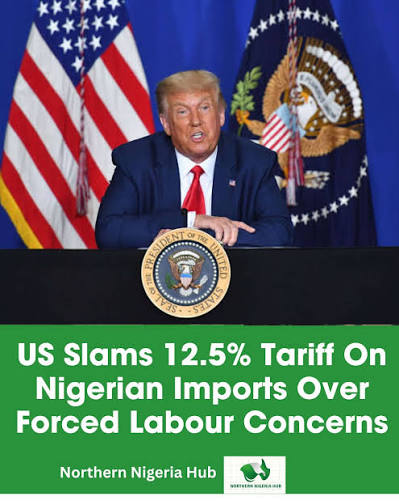
The United States Government has imposed a 12.5 per cent tariff on selected imports from Nigeria, citing concerns over alleged forced labour practices linked to certain supply chains.
The decision, announced by U.S. trade authorities, forms part of Washington’s broader effort to enforce ethical sourcing standards and ensure that goods entering its market comply with international labour and human rights obligations. Officials stated that the tariff is intended to discourage exploitative labour practices and push for greater accountability among exporting countries and companies.
According to U.S. officials, investigations and compliance reviews identified potential risks of forced labour in segments of Nigeria’s export sector. While specific industries were not comprehensively detailed, the measure is expected to affect a range of goods subject to heightened scrutiny under U.S. trade and customs regulations.
In response, the Federal Government of Nigeria expressed concern over the development, noting that the tariff could have adverse implications for trade relations and economic activities between both countries. Government representatives emphasized Nigeria’s commitment to upholding international labour standards and pledged to engage with U.S. authorities to address the concerns raised.
Trade experts warn that the new tariff could reduce the competitiveness of Nigerian exports in the U.S. market, potentially affecting businesses and exporters reliant on American demand. They also noted that the measure may prompt increased compliance costs for Nigerian firms seeking to meet stricter verification and certification requirements.
However, some analysts view the development as an opportunity for Nigeria to strengthen regulatory oversight, improve labour conditions, and enhance transparency within its export sectors. By aligning more closely with global best practices, stakeholders say Nigeria could ultimately boost investor confidence and expand access to premium international markets.
Labour and civil society organisations have also weighed in, urging the government to take proactive steps to investigate the claims, protect workers’ rights, and ensure that supply chains remain free from exploitation.
As diplomatic engagements continue, both countries are expected to explore avenues for resolving the issue, with the goal of maintaining strong trade ties while ensuring adherence to internationally accepted labour standards.