

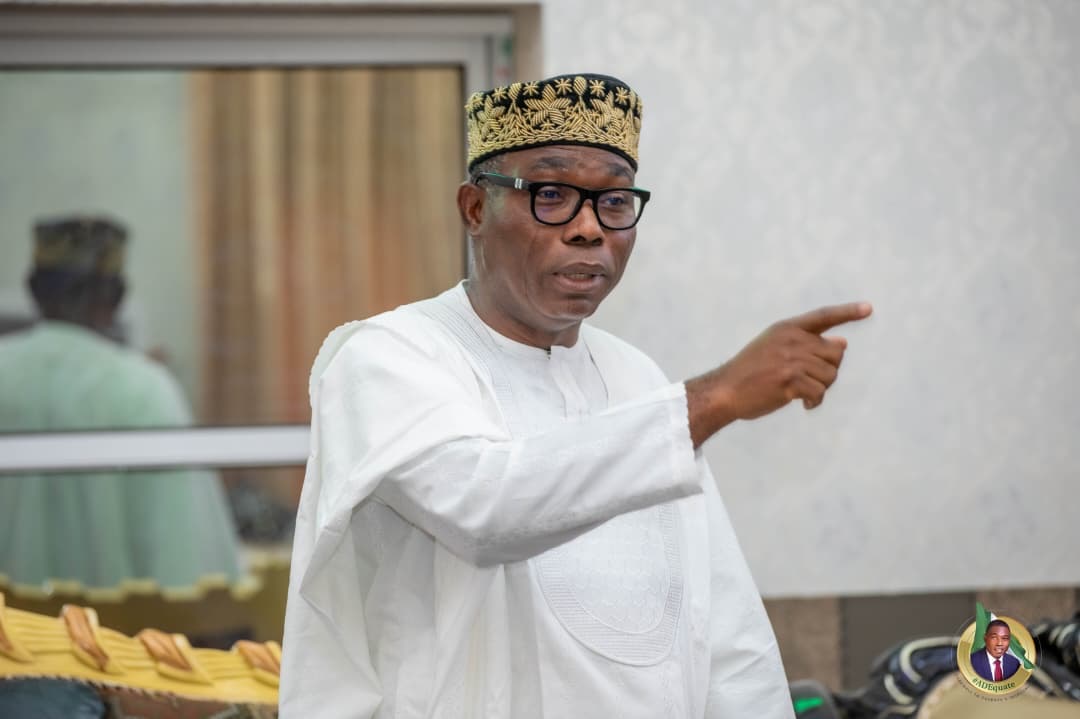
As Nigeria moves closer to renewed constitutional discussions on the creation of state police, remarks made about four years ago by former Social Democratic Party (SDP) presidential candidate, Prince Adewole Adebayo, are gaining fresh relevance.
In an interview conducted ahead of the 2023 presidential election, Adebayo strongly advocated the establishment of state and local government policing, arguing that Nigeria’s highly centralised security architecture has become ineffective and disconnected from local realities.
According to him, any level of government empowered to make laws should also have the authority to enforce them.
He described it as contradictory for states to legislate on issues such as criminal offences, sanitation, public order, and local administration while relying almost entirely on a centrally controlled police system headquartered in Abuja.
Adebayo maintained that most crimes affecting everyday life—including murder, theft, arson, and other serious offences—are prosecuted under state laws, raising concerns about why states have limited operational control over policing.
Using Lagos as an example, he questioned situations in which incidents occurring entirely within a state still require intervention or approval from federal authorities, noting that such arrangements weaken accountability and delay justice.
The former presidential candidate also called for broader police reforms beyond decentralisation, urging a shift from what he described as a culture of force to one rooted in public service and community trust.
He stressed that the police should serve the people, rather than function primarily as an extension of government power.
Adebayo further proposed strengthening institutional linkages between policing and the justice system, including reforms to reinforce the role of legal institutions in ensuring accountability.
Beyond security, he linked Nigeria’s challenges to deeper structural issues in economic governance.
He rejected claims that the country’s fiscal constraints are primarily due to low taxation, arguing instead that significant revenue is lost through leakages, resource theft, and weak administrative systems.
He urged government to prioritise the recovery of legally due revenues rather than impose additional tax burdens on citizens and businesses.
Adebayo cited crude oil theft and illegal solid mineral extraction as key areas where improved governance could substantially boost national income.
He also criticised arbitrary tax practices, warning that unrealistic assessments discourage productivity and fuel corruption.
According to him, meaningful economic recovery depends on efficient revenue collection, transparent administration, and stronger protection of public resources.
Although the interview was conducted several years ago, many of the issues raised—particularly around decentralised policing, insecurity, and economic management—remain central to Nigeria’s ongoing governance discourse.
With the debate on state police once again gaining policy traction, Adebayo’s earlier arguments are re-emerging in public discourse as part of broader calls for security and structural reforms.