

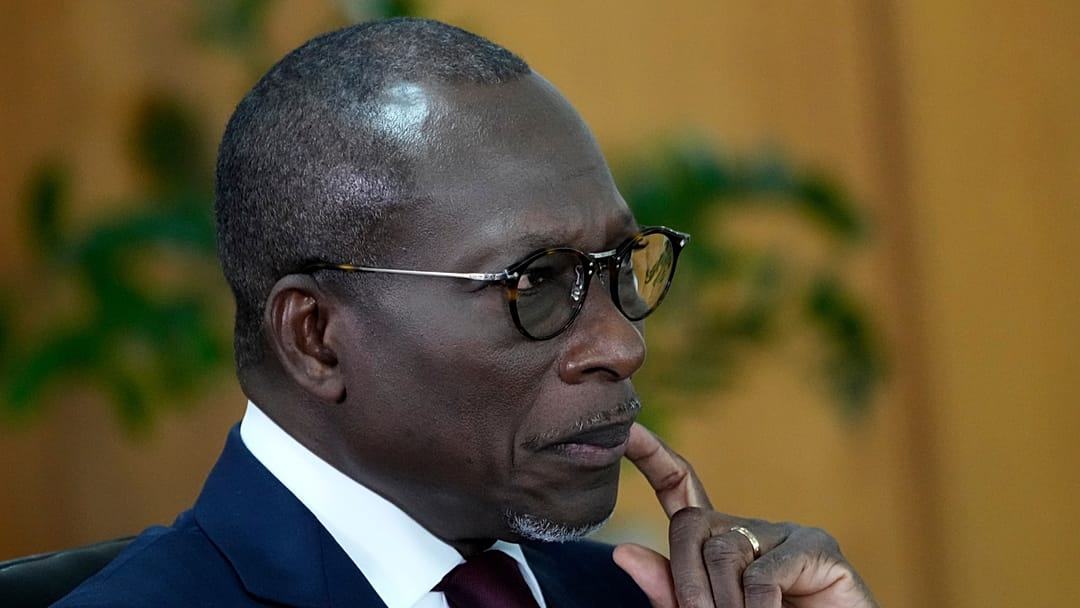
As President Patrice Talon prepares to hand over power on 24 May 2026, the nation reflects on a decade marked by economic transformation but political controversy.
Political Farewell in Benin
Talon chaired his final cabinet meeting on Wednesday, while government spokesman Wilfried Houngbédji defended his record at a last press conference.
- He rejected the label of “political prisoners” for detained opposition figures such as Reckya Madougou and Joël Aïvo.
- On democracy, Houngbédji argued: “We don’t have fifty years of continuous democratic practice in Benin… We must take the principles and adapt them.”
- Asked about possible pardons before Sunday, he cryptically replied: “In 96 hours, many things can happen.”
Economic Achievements
Talon’s tenure saw a dramatic turnaround:
- GDP growth rose from 3.3% in 2016 to 7.5% in 2024
- Inflation contained at 2.2%
- Public debt projected at 52.4% of GDP in 2025, below regional thresholds
- Budget deficit reduced from 6% in 2015 to 2.9% in 2025
- Sovereign ratings upgraded by S&P and Fitch
- Benin raised €1 billion in 2025 through innovative financing
The Glo‑Djigbé Special Economic Zone (GDIZ) created over 14,000 jobs, positioning the country as an industrial processor rather than a raw‑material exporter.
Social Policies
- Expanded drinking water access through Aqua‑Vie
- School feeding programme covering 1.2 million pupils
- Free schooling for girls extended nationwide to lower secondary education in 2024
- Rural electrification at 36%, urban coverage at 69%
Legacy and Succession
Talon’s technocratic, results‑driven style reshaped the economy but left political divisions unresolved. His successor, Romuald Wadagni, widely praised as Africa’s best finance minister in 2024, inherits both the economic momentum and the challenge of reconciling a polarized political landscape.