

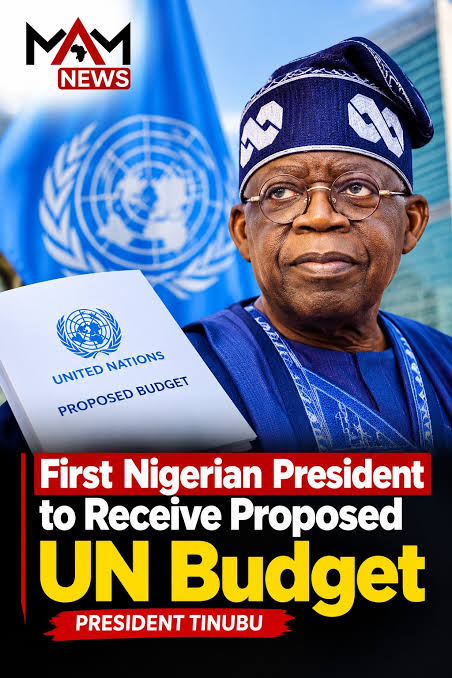
President Bola Tinubu has made history by becoming the first Nigerian president to receive the proposed budget of the United Nations, marking a significant moment in Nigeria’s diplomatic engagement with the international organisation.
The development highlights Nigeria’s longstanding relationship with the UN and underscores the country’s continued interest in global affairs, international cooperation and multilateral diplomacy.
Tinubu’s receipt of the proposed budget represents a notable diplomatic milestone, placing Nigeria in a unique position in the history of its engagement with the world body. The move also draws attention to the importance of Nigeria’s role in international discussions on peace, security, development and global economic cooperation.
Nigeria has maintained an active relationship with the United Nations since becoming a member of the organisation in 1960, shortly after gaining independence. Over the decades, the country has participated in various UN initiatives, including peacekeeping operations, humanitarian programmes and efforts to promote sustainable development across Africa and beyond.
As one of Africa’s largest economies and most populous nations, Nigeria has consistently sought a stronger voice in international decision-making. Its participation in UN affairs has covered issues ranging from regional security and counterterrorism to climate change, poverty reduction and the reform of global institutions.
Tinubu’s emergence in this historic development comes amid his administration’s efforts to strengthen Nigeria’s international partnerships and attract greater support for the country’s economic and development priorities.
The United Nations plays a central role in coordinating international responses to global challenges. Its proposed budget typically outlines funding requirements for the organisation’s programmes, administrative operations and other approved activities, depending on the budget framework concerned.
The UN budget process involves consultations and deliberations among member states and relevant UN bodies. These processes are designed to determine the financial resources required to implement the organisation’s mandates and programmes.
Nigeria’s involvement in such high-level engagements reflects the importance of diplomatic relations between member states and the UN system. However, the receipt of a proposed budget does not, in itself, mean that the recipient country has approved the document or that the proposal has become an adopted budget.
The development is also likely to attract attention to Nigeria’s diplomatic standing at a time when the country continues to pursue a more influential role in international affairs.
Tinubu’s administration has repeatedly emphasised the need for Nigeria to strengthen its global partnerships, improve economic cooperation and expand its influence in international institutions.
Beyond diplomacy, Nigeria’s relationship with the United Nations remains important in areas such as humanitarian assistance, public health, education, food security and development financing. UN agencies continue to work with the Nigerian government and other partners on programmes addressing challenges affecting communities across the country.
The significance of the reported milestone will ultimately depend on the precise nature of the proposed budget presented to the president and the circumstances surrounding its delivery.
Further details about the budget, the official responsible for presenting it and the implications of the development for Nigeria’s diplomatic relations would provide additional context for understanding the event.
Nevertheless, the report has drawn attention to Tinubu’s engagement with the United Nations and the broader question of Nigeria’s place in global diplomacy.
As the country seeks to strengthen its international partnerships, developments involving the presidency and major multilateral institutions remain important indicators of Nigeria’s diplomatic priorities and ambitions.