

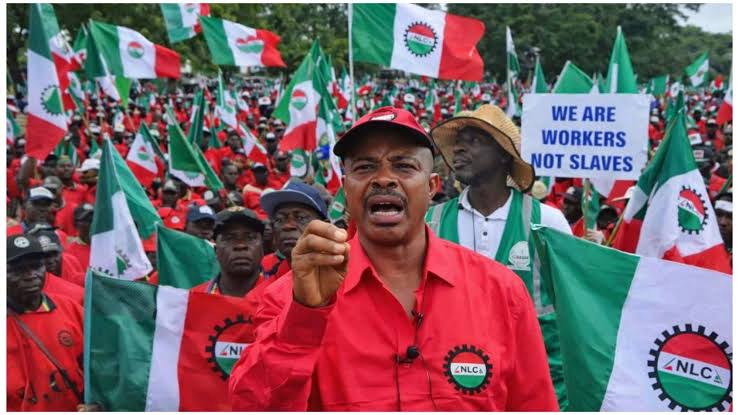
Tensions between organised labour and the Federal Government have intensified following a strike ultimatum issued by the Nigeria Labour Congress (NLC), raising concerns over a possible industrial action and its impact on workers, businesses and the Nigerian economy.
The ultimatum underscores the growing disagreement between the labour movement and the government over issues affecting workers’ welfare, labour rights and the implementation of agreements reached between both parties.
The NLC, one of Nigeria’s leading labour organisations, has consistently called on the Federal Government to address workers’ concerns, particularly those relating to wages, the rising cost of living and the deteriorating purchasing power of Nigerian households.
The latest development has heightened uncertainty over the possibility of a nationwide strike if the outstanding issues are not resolved within the period stipulated by the union.
Labour Insists on Workers’ Welfare
The NLC has repeatedly maintained that protecting workers’ interests remains central to its engagement with the government. The union has also expressed concerns about the economic hardship facing millions of Nigerians amid rising prices of food, transportation, housing and other essential commodities.
For many workers, the rising cost of living has made it increasingly difficult to meet basic household needs, despite adjustments to wages and other government interventions.
Organised labour has therefore continued to demand concrete measures to improve workers’ living conditions, insisting that agreements reached with the government must be implemented in good faith.
The union’s strike ultimatum is seen as a means of increasing pressure on the authorities to address its demands and prevent further deterioration in relations.
FG Faces Pressure to Resolve Dispute
The Federal Government, meanwhile, faces the challenge of balancing labour’s demands with the country’s economic realities and competing fiscal obligations.
A prolonged disagreement with organised labour could disrupt government offices, public institutions and essential services, depending on the scope of any industrial action.
Previous disputes between labour unions and the government have often involved negotiations, consultations and appeals for dialogue to avert nationwide strikes.
The latest confrontation could follow a similar path if both parties agree to return to the negotiating table and work towards a mutually acceptable resolution.
However, failure to reach an agreement before the expiration of the ultimatum could increase the likelihood of industrial action, potentially affecting economic activities and public services.
Potential Impact on Nigerians
A nationwide strike could have significant consequences for workers, employers and ordinary citizens, particularly if it affects critical sectors such as public administration, transportation and other essential services.
Businesses could experience disruptions, while commuters and people seeking government services might face additional difficulties.
The uncertainty could also affect productivity and deepen public concerns about the country’s economic outlook.
Labour disputes frequently place low-income earners in a difficult position, as they are often among those most affected by economic disruptions and the rising cost of essential goods.
For this reason, resolving the disagreement before it escalates remains important to workers and the wider public.
Calls for Dialogue
As tensions rise, sustained dialogue between the NLC and the Federal Government is likely to remain crucial to preventing an escalation of the dispute.
Labour leaders are expected to press for clear commitments, while the government would need to demonstrate its willingness to address legitimate workers’ concerns.
A successful resolution would depend on both parties’ readiness to negotiate in good faith, agree on practical steps and establish a credible timeline for implementing any commitments reached.
Ultimately, the latest ultimatum highlights the fragile relationship between organised labour and the government at a time when many Nigerians are grappling with economic hardship.
Whether the dispute ends in a negotiated settlement or a nationwide strike will depend largely on the outcome of discussions between both sides before the ultimatum expires.