

Certain things lie beyond the confines of the calendar. In every generation, history reserves a special place for leaders whose influence transcends the boundaries of public office. Such individuals are remembered not merely for the positions they held, but for the lives they transformed, the institutions they strengthened, and the enduring values they embodied.
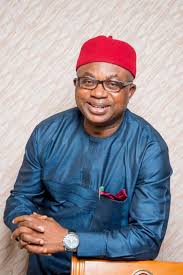
It is against this lofty backdrop that one is compelled to recognise the remarkable strides of Rt. Hon. Sir Sam Onuigbo. Widely acknowledged for sponsoring Nigeria’s landmark Climate Change Act of 2021, Onuigbo belongs unmistakably to that distinguished class of statesmanlike leaders.
In contemporary political discourse, where leadership is often measured through the narrow prism of electoral victories and official titles, attention is frequently fixed on numbers rather than impact. Yet, when leadership is assessed in its truest, most fundamental sense, figures like Onuigbo present a compelling alternative—one rooted in service, sacrifice, vision, and enduring relevance.
Even before his foray into competitive partisan politics, Onuigbo had established a consistent record of public service, demonstrating that true leadership is neither transactional nor seasonal. It is this lifelong commitment to societal advancement that underscores the significance of his contributions.
What distinguishes him, therefore, is not merely his legislative accomplishments or developmental interventions, noteworthy as they are. Rather, it is the depth of humanity that defines his leadership philosophy. His approach to governance reflects a profound understanding that public office is, above all, a platform for service—not self-glorification.
This conviction has earned him widespread respect across political, academic, professional, and community circles, reinforcing his reputation as a man whose honour transcends political affiliation. Perhaps no appraisal captures this essence better than the reflections of respected scholars and administrators who have encountered his work firsthand.
Professor John Ihendinihu, former Dean of the College of Management Sciences at Michael Okpara University of Agriculture, Umudike, described Onuigbo as “the most honourable and the people’s active voice,” noting that he deserves every fitting tribute accorded to a leader whose impact exceeds conventional political boundaries.
Such assessments speak not only to his legislative and developmental achievements but also to the enduring values of accessibility, service, and visionary leadership that define his public life. At the heart of this narrative lies a clear emphasis on legacy over position, impact over popularity, and service over self-interest.
In an era where public trust in leadership is increasingly fragile, this reflection serves as a timely reminder that true greatness is measured by lives touched, communities transformed, and institutions strengthened. Political offices may be transient, but character, service, and legacy endure.
This reality is further underscored by the testimony of Professor Michael C. Ekwe, Director of the School of Postgraduate Studies at the same university, who offered a deeply personal perspective on Onuigbo’s impact. He described him as “a rare breed” whose genuine concern for people has translated into tangible opportunities for thousands of students.
The restoration and expansion of Management Sciences programmes at the university—benefiting thousands of students—stand as a powerful testament to a leadership style grounded in empathy and action. It highlights a crucial, often overlooked dimension of leadership: the willingness to identify with the struggles of others and to transform compassion into meaningful outcomes.
Taken together, these testimonies reinforce a singular truth—Onuigbo’s nobility is not anchored in titles, but in character, validated consistently through service. The phrase “a man of honour,” therefore, transcends ceremonial recognition; it reflects a reputation painstakingly built on credibility, consistency, and purposeful leadership.
His public record attests to a leader whose actions align with the highest ideals of governance, with contributions that continue to yield positive outcomes long after the end of formal mandates.
As societies continue the search for models of transformational leadership, Onuigbo stands out as a compelling example. His life offers a simple but profound lesson: true greatness is measured not by personal accumulation, but by collective advancement—not by fleeting applause, but by enduring relevance.
History ultimately distinguishes between those who merely occupy office and those who genuinely serve. Within that distinction lies the enduring significance of Onuigbo’s legacy.
His record speaks with clarity. His impact resonates across communities and institutions. And his example continues to inspire confidence in the possibility of principled, people-centred leadership.
In the final analysis, while honours may be conferred by institutions, the honour earned through a lifetime of service surpasses them all. By every meaningful measure, Rt. Hon. Sir Sam Onuigbo remains, unmistakably, a man of honour.