

Here’s a polished and refined version of your report:
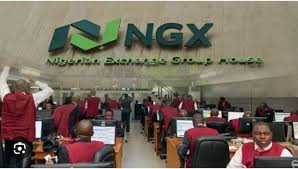
The equities segment of the Nigerian Exchange Limited (NGX) lost about N4.9 trillion in the first trading week of June 2026, reflecting a broad-based decline in investor sentiment.
The downturn came in the same week the T+1 settlement cycle was introduced to enhance market efficiency, reduce risk and improve global competitiveness.
Market capitalisation, which opened the month at N160.509 trillion, fell by N4.9 trillion to close last week at N155.593 trillion.
Out of the five trading sessions, the market recorded sustained losses, with the only marginal recovery occurring on Friday. Persistent profit-taking in blue-chip stocks, including MTN Nigeria Communications Plc, weighed heavily on overall market performance.
The decline began at the start of the month, with market capitalisation shedding N1.8 trillion due to increased profit-taking in stocks such as BUA Cement Plc, Red Star Express Plc, First Holdco Plc, Oando Plc and Zenith Bank Plc.
Midweek, the market recorded another significant drop of N2.28 trillion, marking a third consecutive decline as investors continued to take profits in MTN Nigeria Communications and over 40 other equities.
Consequently, the NGX All-Share Index (ASI) fell by 3.11 per cent, or 7,792.16 basis points, to close at 242,593.31 points, down from 250,385.47 points at the start of June.
Despite the weekly loss, the ASI has maintained a year-to-date (YtD) gain of 55.90 per cent. In May 2026, the index posted a modest 3.35 per cent month-on-month increase, bringing its cumulative gain for the first five months of the year to 60.90 per cent.
Capital market analysts expressed mixed reactions to the N4.9 trillion week-on-week decline in market capitalisation.
Investment banker and stockbroker, Tajudeen Olayinka, attributed the trend partly to institutional investors adjusting to the liquidity demands of the T+1 settlement cycle.
“I think the traditional buy-side investors, largely institutional players, are still grappling with the risks and significant funding requirements associated with prefunding transactions under the T+1 regime. As a result, many are holding back,” he said.
He added that profit-taking and cautious positioning had started even before the formal launch of T+1, noting that a market rebound could occur as investors redeploy funds into financial instruments.
On his part, Vice President of Highcap Securities, David Adnori, said the bearish trend was not directly linked to the T+1 rollout but rather reflected a typical market correction.
“I don’t think the downturn can be attributed to the introduction of T+1. It is more of a seasonal adjustment, where stock prices align with fundamentals following year-end corporate disclosures,” he said.
Adnori also noted that some investors may have liquidated positions to prepare for the anticipated Dangote Refinery IPO, while others adjusted portfolios in response to rising political risks and new capital requirements.